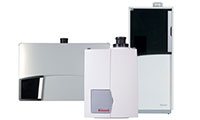


Direct Vent Wall Furnace
Showing 10–10 of 10 results

Direct Vent Wall Furnaces for Toronto & GTA Homes
Direct vent wall furnaces are ductless gas heating systems that mount against an exterior wall, draw combustion air from outdoors and vent exhaust directly outside. They are designed for targeted room or zone heating without requiring central ductwork or a traditional chimney, making them useful for additions, basements, cottages, converted spaces and homes where extending an existing heating system is difficult.
For Toronto and GTA properties, choosing the right wall furnace depends on room heat loss, heating capacity, fuel availability, exterior-wall access and how the space is currently heated. A properly sized unit can provide dedicated heat to a difficult area, while an oversized or poorly located furnace can create uncomfortable temperature swings and unnecessary fuel use.
When Does a Direct Vent Wall Furnace Make Sense?
This heating category is most useful when a specific area needs dependable heat without extending ductwork throughout the building. Before choosing one, consider how the room is used, whether an exterior wall is available and whether the furnace will provide primary or supplemental heat.
Rooms Without Ductwork
A wall furnace can heat finished additions, workshops, basements and other spaces where adding conventional supply and return ducts would be difficult or expensive.
Cold Areas of the Home
Dedicated zone heating can make sense when one area remains cold while the central system already maintains comfortable temperatures elsewhere.
Exterior Wall Access
Direct vent installation requires a suitable exterior-wall location for combustion air and exhaust. Interior-wall placement can significantly complicate or eliminate this option.
Natural Gas or Propane
Fuel availability affects system selection and installation cost. The correct furnace must be configured for the fuel supplied to the property.
Supplemental Heating
A wall furnace can reduce the need to overheat an entire home when only one frequently used room or zone needs additional warmth.
Primary Zone Heating
Larger-capacity systems can heat substantial open areas, but room layout and heat loss should determine whether one furnace can adequately serve the intended zone.
How Direct Vent Wall Furnaces Work
A direct vent wall furnace uses sealed combustion. Outdoor air is brought directly to the burner while combustion gases are discharged outside, keeping the combustion process separated from the room air.
This differs from heating equipment that draws combustion air from inside the home. The sealed arrangement is particularly useful in tighter buildings because operation does not rely on continuously drawing conditioned indoor air into the combustion process.
Direct Vent Wall Furnace vs Baseboard Heaters
Both systems can provide room-by-room heating, but they operate differently and create different installation and operating considerations. The better choice depends on available fuel, electrical capacity, heating demand and whether the homeowner wants gas or electric zone heating.
Choosing the Right Heating Capacity
Heating capacity should reflect the actual heat loss of the room or zone. Square footage provides only a starting point because insulation, ceiling height, exterior walls, windows and air leakage all affect how much heat the space requires.
Toronto winters make proper sizing particularly important. A unit that is too small may run continuously without maintaining the desired temperature during colder weather, while an oversized furnace can heat the room rapidly and cycle more frequently than necessary.
Why Bigger Is Not Automatically Better
A homeowner selects a high-capacity wall furnace for a relatively small insulated room because they want faster heating. The furnace satisfies the thermostat quickly, shuts down and then restarts as the room cools. Correct sizing can provide steadier comfort and a more appropriate operating pattern.
Natural Gas vs Propane Wall Furnaces
Direct vent wall furnaces are available for different fuel types, and the correct configuration must match the property's gas supply. Natural gas is generally the practical choice where an existing gas service is readily available, while propane can serve properties without access to a natural gas network.
A furnace designed for one fuel should not be assumed suitable for another without an approved conversion method. Fuel type should therefore be confirmed before equipment is ordered.
Exterior Wall Placement
Installation location is one of the most important limitations of a direct vent system. The furnace normally needs access to an exterior wall so the combustion-air intake and exhaust termination can be installed within the permitted venting configuration.
The best wall location also needs adequate indoor clearance and suitable outdoor termination space. Windows, doors, air intakes, property conditions and other building features can affect where the vent can safely terminate.
Wall Thickness and Venting Requirements
Direct vent components pass through the exterior wall, so wall construction and thickness need to be reviewed before installation. Vent assemblies have defined installation ranges and should be installed using components approved for the heating appliance.
An unusually thick wall, exterior cladding or difficult wall construction can change the installation scope. Confirming these conditions before purchasing the furnace reduces the risk of discovering that the planned location cannot accommodate the required venting.
Direct Vent Wall Furnaces for Toronto Winters
A direct vent wall furnace can provide dedicated heating during Toronto's cold season without relying on ductwork to distribute heat from another part of the home. This can make it useful in areas that are consistently colder than the main living space.
Cold-climate performance still depends on sizing and building heat loss. A poorly insulated addition with large windows may require significantly more heating capacity than a similarly sized interior room.
Heating a Basement With a Wall Furnace
Basements are a common application when existing central heating does not deliver enough warm air to the lower level. A dedicated wall furnace can provide local heat without redesigning the entire duct system.
The main decision is whether the basement has an appropriate exterior-wall location and gas access. If the space is divided into several closed rooms, one wall-mounted furnace may not distribute heat evenly throughout the entire level.
Heating an Addition or Renovated Space
Home additions can be difficult to integrate into an existing central HVAC system. Extending ductwork may reduce airflow elsewhere in the home or require major structural modifications.
A direct vent wall furnace can provide independent heating for the addition, allowing its temperature to be controlled separately. This can be particularly useful for sunrooms, converted garages, workshops and other spaces with heating loads that differ substantially from the original home.
Direct Vent Wall Furnace vs Extending Central Heating
Extending an existing furnace system may appear to be the simplest solution, but available duct capacity should be checked first. Adding supply runs does not create additional blower capacity or heating output.
If the existing system was not designed for the added space, extending ductwork can reduce comfort in other rooms. Independent wall heating can avoid that problem when the new zone has substantially different heating requirements.
When Adding Another Duct Is Not the Best Solution
A finished addition remains cold, so another supply duct is added from the existing furnace. The central system was already near its airflow limit, and the new branch reduces airflow to other areas without delivering enough heat to the addition. Independent zone heating can be a better solution when the central system cannot support the extra load.
Direct Vent Wall Furnace vs Ductless Heat Pump
A wall furnace provides gas heating, while a ductless heat pump can provide both heating and cooling. The better option depends on climate performance, fuel preference, electrical capacity and whether summer cooling is also required.
A ductless heat pump can be attractive when year-round temperature control is the goal. A direct vent wall furnace may be preferable when the priority is dedicated gas heat, an existing gas connection is available or the space does not require cooling.
Direct Vent Wall Furnace vs Portable Heating
Portable heaters require little installation, but they are generally intended for localized temporary heating rather than permanent gas-fired zone heating.
A permanently installed direct vent furnace provides dedicated capacity and thermostatic control without occupying floor space like many portable alternatives. Installation cost is higher, so it makes more sense for spaces requiring regular heating throughout the winter.
Thermostat and Temperature Control
Temperature-control options vary between wall furnace configurations. Some systems use built-in controls, while others can operate with a compatible wall thermostat or remote control.
For frequently occupied spaces, thermostatic control can provide more consistent comfort than manually adjusting heat output. Control location also matters because placing a thermostat near drafts, exterior doors or the furnace itself can affect temperature sensing.
Modulating vs Fixed-Output Heating
Some wall furnaces can adjust heat output as room demand changes, while simpler systems operate with fewer output levels. Modulation can provide steadier temperatures by reducing output when less heat is needed instead of repeatedly delivering maximum capacity.
The additional control can be valuable in frequently occupied living areas. For a workshop, utility space or occasionally used room, a simpler heating configuration may provide adequate comfort at a lower equipment cost.
Does a Direct Vent Wall Furnace Need Electricity?
Electrical requirements depend on the furnace design. Some wall furnaces use electrical power for blowers, ignition, controls or advanced operating features, while certain simpler configurations can provide heat with little or no normal electrical dependence.
This distinction matters when power-outage heating is part of the buying decision. Electrical requirements should be verified before installation rather than assuming all direct vent wall furnaces operate the same way.
Wall Furnace Installation Requirements
Installation involves more than fastening the furnace to a wall. The project can include a gas connection, wall penetration, intake and exhaust venting, electrical work, thermostat controls and commissioning.
Gas pressure, combustion operation and venting need to be verified after installation. Because the equipment burns natural gas or propane, installation should follow applicable equipment instructions and local requirements.
Direct Vent Wall Furnace Replacement
Replacing an older wall furnace may be simpler when the new equipment can use a suitable existing location, but existing wall openings and vent components should not automatically be reused.
Vent dimensions, clearances and installation requirements can differ between furnaces. The gas supply and electrical setup should also be checked rather than assuming an older installation is automatically suitable for current equipment.
Repair or Replace a Wall Furnace?
Repair can make sense when the furnace is otherwise in good condition and the problem involves a serviceable component. Replacement becomes more attractive when reliability is declining, significant components have failed or the existing furnace no longer matches the heating requirements of the space.
An older furnace that requires repeated service can also create a false economy. Comparing the repair cost with the expected remaining service life and performance of replacement equipment provides a better decision than considering the current repair bill alone.
What Affects Direct Vent Wall Furnace Cost?
Total cost depends on heating capacity, control features, fuel type and installation conditions. The gas line location, exterior-wall construction, vent termination, electrical requirements and removal of existing equipment can all change the project scope.
A replacement using a suitable existing gas supply may be simpler than installing a wall furnace in a room that has never had gas heating. Comparing complete installed quotations is more useful than comparing equipment prices alone.
What to Check Before Choosing a Direct Vent Wall Furnace
A wall furnace works best when capacity, fuel supply and installation location are evaluated together. These checks can help prevent sizing and venting problems before the project begins.
Direct Vent Wall Furnace Selection Checklist
- Calculate the heating requirement of the room or zone rather than choosing capacity from square footage alone.
- Confirm whether natural gas or propane will supply the furnace.
- Identify a suitable exterior-wall installation location.
- Check indoor clearances and available service space.
- Confirm that the planned outdoor vent termination location is suitable.
- Review wall construction and thickness before selecting vent components.
- Determine whether the furnace will provide primary or supplemental heating.
- Decide whether basic, thermostatic or modulating temperature control is appropriate.
- Confirm electrical requirements before installation.
- Compare a wall furnace with electric baseboard heating or a ductless heat pump when those alternatives suit the space.
- Evaluate existing equipment condition before choosing repair over replacement.
- Compare complete installed costs rather than appliance prices alone.
Choosing a Direct Vent Wall Furnace in Toronto and the GTA
Direct vent wall furnaces are a practical option for heating individual rooms and zones where central ductwork is unavailable, difficult to extend or unnecessary. Their sealed combustion and through-wall venting allow dedicated gas heating without relying on a conventional chimney system.
For Toronto and GTA homes, the best system should be selected around heat loss, room layout, available fuel, exterior-wall access and installation conditions. Proper sizing and vent planning are especially important because the furnace needs to provide enough heat during winter without being unnecessarily oversized for the space.
FREE In-Home Estimate