


Vent-free Fan Convectors
Showing all 2 results
-

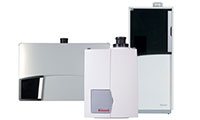
Rinnai FC510 Vent-free Fan Convectors Baseboard Heaters
-

Rinnai FC824 Vent-free Fan Convectors Baseboard Heaters
Vent-Free Fan Convectors for Room and Zone Heating
Vent-free fan convectors are compact gas-fired zone heaters that use a built-in convection fan to distribute warm air through a room without ductwork or a conventional exhaust vent. They are designed primarily for supplemental heating and difficult-to-heat spaces where extending a central HVAC system may not be practical.
For homeowners considering this type of equipment in Toronto and the GTA, system selection involves more than heating capacity. Fuel type, room size, air circulation, electrical requirements, indoor-air considerations and local appliance approval all need to be confirmed before purchase or installation.
When Does a Vent-Free Fan Convector Make Sense?
This heating approach is intended for targeted comfort rather than whole-home distribution. The strongest applications are rooms where independent heating and active air circulation are more useful than modifying the central duct system.
Hard-to-Heat Rooms
A fan convector can provide dedicated warmth when a basement, addition or other room remains colder than the rest of the home.
No Ductwork Required
Because heat is delivered directly into the room, the system can avoid the construction and airflow changes associated with extending central ducts.
Active Heat Distribution
The convection fan moves warm air beyond the immediate heater area, making this configuration more suitable than passive heating when broader room circulation is required.
Supplemental Heating
Independent zone heat can reduce the need to raise the whole-home thermostat simply because one frequently used room feels cold.
Natural Gas or Propane
Fuel availability should be established before equipment selection because the heater must be configured and approved for the fuel supplied to the property.
Local Approval
Vent-free gas appliances have specific certification and installation requirements. Canadian and Ontario eligibility should be confirmed for the exact equipment before purchase.
How Vent-Free Fan Convectors Distribute Heat
A conventional passive room heater relies heavily on natural convection and radiant heat. A fan convector adds powered airflow, helping move warmed air farther across the room and reducing the concentration of heat immediately around the appliance.
This can make fan-assisted heating more suitable for larger or irregular rooms. The trade-off is that the heater requires electricity to operate the fan and controls, so it should not be selected under the assumption that gas automatically means electricity-free heating.
Vent-Free Fan Convectors vs Vented Zone Heating
The primary difference is how combustion products are handled. Vent-free systems release combustion products into the installed space, while vented zone heaters discharge them outdoors through an approved venting system.
Vent-Free Fan Convectors vs Direct Vent Wall Furnaces
Direct vent wall furnaces use a sealed system that brings combustion air from outdoors and vents combustion gases back outside. Vent-free fan convectors eliminate that exterior venting arrangement but operate within the room environment.
A direct vent system can therefore be a stronger choice when sealed combustion is a priority or when local requirements limit the use of unvented appliances. A vent-free convector may offer simpler physical installation only where the exact appliance is approved for the intended application.
Choosing the Right Heating Capacity
Heating capacity should match the heat loss of the room rather than being selected from square footage alone. Insulation, window area, exterior exposure, ceiling height and air leakage can substantially change the amount of heating required.
Toronto winters make this particularly important. An undersized heater may struggle to maintain comfort during colder conditions, while excessive capacity can cause rapid temperature changes and unnecessary cycling.
Why Bigger Is Not Always Better
A fan convector can distribute heat quickly, which makes oversizing especially noticeable in smaller spaces. Correct capacity generally produces more stable temperatures than selecting the largest available heater.
Too Much Heat for the Room
A high-output fan convector is installed in a modest room because faster heating sounds desirable. The room warms quickly, the burner reduces output or shuts down, and the temperature changes become more noticeable. Matching capacity to the actual heat loss can provide steadier comfort and better use of the heater's modulation range.
Modulating Heat Output
Some fan convectors can reduce or increase gas input as room demand changes rather than operating continuously at maximum output. This allows the heater to maintain temperature more gradually after the room approaches the thermostat setting.
Modulation is particularly useful in spaces used for long periods because comfort depends not only on reaching the desired temperature but also on maintaining it without large swings.
Natural Gas vs Propane Fan Convectors
Vent-free fan convectors may be configured for natural gas or propane. The fuel type must match both the appliance and the property's supply.
Natural gas is generally the practical option where a suitable household gas service is already available. Propane may be considered where natural gas is unavailable, but storage and fuel delivery become part of the operating decision.
The two versions should not be treated as interchangeable. Fuel configuration and approval need to be confirmed before installation.
Indoor Air and Moisture Considerations
Because a vent-free gas heater does not discharge combustion products through an exterior flue, room conditions become a central part of system selection. Gas combustion produces both combustion gases and water vapour, so indoor-air and moisture considerations are materially different from those of a sealed direct vent heater.
This distinction becomes especially important in modern homes with tighter building envelopes. A heater should not be chosen solely because eliminating venting appears convenient.
Approval and Installation in Toronto and the GTA
Vent-free gas appliances require careful verification before being considered for a Canadian installation. Product availability, certification and permitted applications can differ between Canada and other markets, even when apparently similar equipment is advertised online.
Before purchasing a vent-free fan convector for a Toronto or GTA property, confirm that the exact appliance is approved for the intended Canadian installation and that the proposed use complies with applicable gas and building requirements. If those conditions cannot be satisfied, a vented or direct vent zone-heating system should be considered instead.
Vent-Free Heating for Basements
Basements often create demand for supplemental heat because they can remain cooler than the main living areas. Fan-assisted zone heating can distribute warmth through an open basement more effectively than a small passive heater.
The limitation is that basements can also have restricted airflow and tighter room conditions. Appliance approval, room volume and combustion-air requirements should therefore be established before treating vent-free heating as the preferred solution.
Heating Additions and Converted Spaces
Additions and converted rooms can be difficult to connect to existing central heating. Extending ductwork can affect airflow elsewhere, while a separate zone heater allows the new room to operate independently.
A fan convector can provide quick localized heat without ductwork, but the absence of a vent should not be the only reason to choose one. Direct vent and ductless alternatives should also be compared when planning a permanent heating system.
Vent-Free Fan Convectors vs Electric Baseboard Heaters
Electric baseboard heaters and fan convectors both provide localized heating, but their operating characteristics are very different. Electric baseboards require no combustion or gas connection, while gas fan convectors provide active warm-air circulation.
Electric baseboards can be straightforward where adequate electrical capacity already exists. Fan convectors can distribute heat more aggressively through a larger room, but fuel supply, certification and indoor-air considerations add complexity.
Vent-Free Fan Convectors vs Ductless Heat Pumps
A ductless heat pump provides both heating and cooling, while a fan convector is dedicated to heating. This difference can substantially affect long-term value for a room that also becomes uncomfortable during summer.
A heat pump may require a higher initial installation investment but provides year-round temperature control. A fan convector is more specialized and should be considered where dedicated supplemental heat is the main objective and the installation is permitted.
Vent-Free Fan Convectors vs Central Heating
Central heating is designed to maintain temperatures throughout the home, while a fan convector targets one room or zone. Adding localized heating can make sense when the central system performs well everywhere except one difficult space.
If several rooms throughout the house are consistently cold, adding multiple zone heaters may treat the symptoms rather than the underlying problem. Furnace capacity, heat pump performance, duct balancing and building insulation should be evaluated first.
Electrical Requirements
The gas burner supplies the heat, but the convection fan and electronic controls require electrical power. A suitable electrical connection should therefore be included in installation planning.
This also means the fan-assisted heating function may not operate normally during a power outage. Homeowners seeking outage heating should verify operating requirements rather than assuming a gas appliance will remain functional without electricity.
Temperature Controls and Programming
Programmable temperature controls can improve zone-heating efficiency by reducing output when full heating is unnecessary. This is especially useful for basements, workshops or secondary rooms that are not occupied continuously.
The controls should be easy to access while remaining protected from unintended changes. If children use the space, control-locking and cabinet-temperature characteristics can also become practical selection factors.
Safety Features to Compare
Vent-free equipment depends heavily on integrated safety controls because combustion takes place within the occupied environment. Buyers should compare safety systems rather than treating all fan convectors as equivalent.
Relevant features can include flame-failure protection, oxygen-depletion monitoring, overheat protection, automatic gas shutoff during abnormal operating conditions, tip or tilt protection, cool-touch cabinet design and control locking.
Vent-Free Fan Convector Installation
The lack of a conventional exhaust vent reduces some installation work, but professional installation can still involve gas piping, electrical supply, clearances, appliance setup and operational testing.
Installation should begin with verification that the appliance is approved for the property and intended application. A physically easy installation is not automatically an acceptable installation.
Replacing an Existing Vent-Free Heater
Replacement should not assume that an older installation establishes approval for a new appliance. Equipment certification, gas connection requirements, clearances and local rules may have changed since the original heater was installed.
The replacement is also an opportunity to compare vent-free operation with direct vent or other zone-heating systems. If indoor-air concerns or approval requirements have become limiting factors, changing system type may provide a better long-term solution.
What Affects Vent-Free Fan Convector Cost?
Total project cost depends on heating capacity, fuel type, controls, gas piping, electrical requirements and the condition of the installation area. Eliminating an exhaust vent can reduce part of the installation scope, but it does not eliminate gas and electrical work.
For Toronto and GTA projects, product eligibility and installation approval should be established before comparing pricing. A lower equipment cost offers little value if the selected appliance cannot be used in the intended application.
What to Check Before Choosing a Vent-Free Fan Convector
Vent-free heating requires more than selecting a capacity and fuel type. Confirm the application, approval status and room conditions before deciding whether this category is appropriate.
Vent-Free Fan Convector Selection Checklist
- Confirm that the exact appliance is approved for the intended Canadian installation.
- Calculate the heating load of the room rather than choosing capacity by square footage alone.
- Determine whether the heater will provide supplemental or primary zone heating.
- Confirm whether natural gas or propane is available and appropriate.
- Evaluate room size and indoor-air conditions for an unvented combustion appliance.
- Compare fan-assisted heat distribution with passive zone-heating alternatives.
- Check the electrical supply required for the convection fan and controls.
- Review modulation and temperature-control capabilities.
- Compare integrated safety features when evaluating equipment.
- Consider a direct vent alternative when sealed combustion is preferred.
- Compare ductless heat pumps when both heating and cooling are required.
- Compare complete installed-system costs only after installation eligibility has been confirmed.
Choosing Vent-Free Fan Convectors in Toronto and the GTA
Vent-free fan convectors are specialized zone-heating products designed to combine gas heat with fan-assisted room circulation without conventional ductwork or exhaust venting. Their strongest advantage is targeted heat distribution in difficult rooms, but their unvented combustion design creates additional indoor-air and approval considerations that do not apply to direct vent systems.
For Toronto and GTA properties, the first decision should therefore be whether the exact appliance is approved and appropriate for the intended Canadian installation. Once that is established, heating capacity, room layout, fuel type, electrical requirements, controls and alternative zone-heating options can be compared to determine the most suitable system.
FREE In-Home Estimate