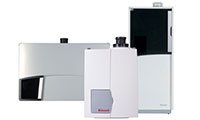


E Series
Showing all 5 results
-
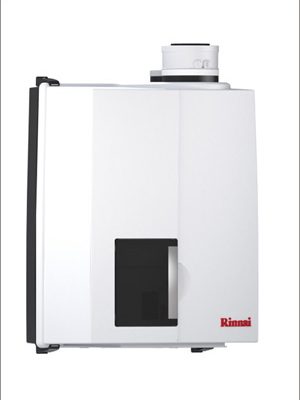
Rinnai E110 Condensing Gas Boiler
-
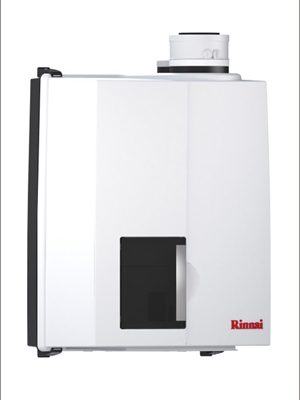
Rinnai E50CRN Condensing Gas Boiler
-
Rinnai E60 Condensing Gas Boiler
-
Rinnai E75 Condensing Gas Boiler
-
Rinnai E85 Condensing Gas Boiler
E Series Condensing Gas Boilers for Hydronic Heating
E Series boilers are compact wall-mounted condensing gas boilers designed for residential hydronic heating, with heat-only and combination configurations available within the category. The lineup covers different heating capacities for radiator, baseboard and radiant-floor systems, while selected combi models can also provide domestic hot water.
For Toronto and GTA homes, selection should start with calculated heat loss, heat-only versus combi operation, domestic hot-water demand, minimum firing capacity, existing radiation, water-temperature requirements, venting and condensate drainage. Choosing a boiler mainly from maximum BTU capacity can create unnecessary cycling and reduce the benefit of condensing operation.
E Series Models in This Category
The category includes E50, E60, E75, E85 and E110 configurations. Some are dedicated space-heating boilers, while others combine hydronic heating and domestic hot-water production, so model numbers should not be compared by capacity alone.
Heat-Only vs Combi E Series Boilers
The first decision is whether the boiler should provide space heating only or also produce domestic hot water. Heat-only models allow domestic water heating to be sized independently, while combi models can reduce equipment count and mechanical-room space.
E50 Combi Boiler
The E50 is the smallest combi option represented in the category, combining approximately 50,000 BTU of central-heating capacity with domestic hot-water production. Its smaller heating output can make it relevant to lower-load homes where a larger boiler would be unnecessary.
The important limitation is domestic hot-water demand. A small heating load does not automatically mean a small household water load, so simultaneous showers and fixtures should be evaluated separately before selecting the E50.
E60 Heat-Only Boiler
The E60 provides approximately 60,000 BTU of central-heating capacity without integrated domestic hot-water production. It can suit smaller hydronic homes where a separate tankless water heater, storage tank or other water-heating system is already in place.
The advantage is independent sizing. The boiler can be selected for the home's actual heat loss without increasing its capacity simply to satisfy domestic hot-water demand.
E75 Combi Boiler
The E75 combines approximately 75,000 BTU of central-heating capacity with domestic hot-water production. It occupies a middle position between the smaller E50 combi and the higher-capacity E110 configuration.
Moving from the E50 to E75 should be justified by heating or hot-water requirements. Increasing boiler capacity without a matching load can increase cycling during mild Toronto weather.
E85 Heat-Only Boiler
The E85 is a heat-only configuration with approximately 85,000 BTU of central-heating capacity. It can suit homes whose calculated load exceeds the E60 range while still allowing domestic hot water to remain on a separate system.
The E85 should not be selected simply because an older boiler was in a similar capacity range. Existing homes may have lower current heat loss after insulation, window or air-sealing improvements.
E110 Heat-Only and Combi Configurations
The E110 provides the highest heating capacity represented in the category, with approximately 110,000 BTU of central-heating capacity and both heat-only and combi configurations available. It is most relevant where the building load genuinely requires the larger output.
The larger capacity makes minimum firing performance particularly important. A high maximum output is useful on the coldest design day, but oversized equipment can spend much of the heating season operating at its lowest firing rate or cycling.
Choosing Between E50, E60, E75, E85 and E110
The correct model should be determined by both peak heating demand and part-load operation. The largest boiler is not automatically the safest choice because most Toronto heating hours occur below the design-day load.
Smaller Home With Combi Demand
E50 can fit a lower heating load when its domestic hot-water capability also matches household demand.
Smaller Heat-Only Application
E60 allows the boiler to be sized specifically for space heating when domestic water is handled separately.
Mid-Range Combi Application
E75 provides additional heating capacity while retaining an integrated domestic-water configuration.
Mid-Range Heat-Only Load
E85 can serve a larger hydronic load without tying domestic hot water to the same appliance.
Higher Heating Demand
E110 becomes appropriate when a heat-loss calculation supports its larger central-heating capacity.
High Hot-Water Demand
Compare combi output with simultaneous fixture use before deciding that an integrated boiler is preferable to separate water heating.
E Series Boiler Efficiency
E Series boilers operate in the high-efficiency condensing range, with applicable configurations reaching approximately 95% to 96% AFUE. Their stainless-steel condensing heat exchangers recover additional heat that conventional non-condensing boilers allow to leave through the vent.
Maximum AFUE should not be the only selection factor. Hydronic water temperature, boiler sizing, outdoor reset, cycling and installation quality determine how much of the rated efficiency can be realized in actual operation.
Why Return-Water Temperature Matters
Condensing boilers achieve their strongest efficiency advantage when return water is cool enough for moisture in the combustion gases to condense. Lower-temperature hydronic systems create more opportunities for this heat recovery.
A boiler connected to a system that requires high water temperatures for most of the Toronto winter can still provide efficient heating, but it may spend less time in its most efficient condensing range.
E Series for Radiant Floor Heating
Radiant-floor heating typically operates with lower water temperatures than conventional baseboards, which can create favourable conditions for condensing operation. The pairing can provide long heating cycles and steady comfort when the boiler is sized correctly.
Small radiant zones still require attention to minimum boiler output. A boiler that cannot reduce firing rate far enough may cycle even though the water-temperature conditions are ideal for condensing.
E Series for Cast-Iron Radiators
Cast-iron radiators can work effectively with a condensing boiler when the installed radiation provides enough output at the selected water temperature. Large radiators in older Toronto homes may allow lower water temperatures during much of the heating season.
Simply copying the high supply temperature used by the previous boiler can reduce condensing efficiency. The new heating curve should reflect actual room loads and radiator output.
E Series for Hydronic Baseboards
Fin-tube baseboards can also be served by the E Series, but available baseboard length affects the water temperature required to meet room load. A system with generous baseboard coverage can operate differently from one with marginal radiation.
Increasing boiler capacity cannot compensate for inadequate baseboard length. If one area has always been cold, radiation output and water flow should be investigated before choosing a larger replacement boiler.
Outdoor Reset and Toronto Heating Conditions
An outdoor reset sensor can reduce boiler water temperature during milder weather and raise it as outdoor temperatures fall. This helps align heat delivery with the changing building load rather than operating at maximum water temperature all season.
A properly configured reset curve can increase condensing operation and improve comfort. A curve set unnecessarily high can reduce efficiency, while one set too low can prevent the home from reaching temperature during colder conditions.
Boiler Modulation and Part-Load Performance
E Series boilers use modulating burner operation, allowing heat input to decrease when the home needs less than full capacity. This is important in Toronto because design-day heating demand represents only a small portion of annual operating hours.
Modulation improves control but does not make boiler sizing irrelevant. If the minimum output remains higher than a small active zone can absorb, the boiler can still short cycle.
Why Boiler Oversizing Matters
Oversizing is particularly problematic in hydronic homes with multiple thermostats or small heating zones. The building may need the boiler's full capacity during severe cold, but only a fraction of that output during shoulder seasons or when one zone is active.
Replacing an Old Boiler With the Same BTU Capacity
An older Toronto home may have received new windows, insulation or air-sealing upgrades since its original boiler was installed. Matching the old boiler capacity without recalculating heat loss can leave the replacement oversized, increasing cycling and reducing part-load efficiency.
Heat-Loss Sizing for E Series Boilers
Boiler size should follow calculated design heat loss rather than square footage or the rating of existing equipment. Exterior wall area, windows, insulation, air leakage and design outdoor temperature all affect the required capacity.
The correct model is generally the smallest boiler that can reliably satisfy design-day demand while also operating effectively at lower loads. Excess capacity should not be treated as additional comfort.
Combi Boiler Hot-Water Performance
E Series combi models produce domestic hot water on demand rather than storing a large volume in a tank. The practical output depends on both burner capacity and the temperature rise required between incoming cold water and the desired outlet temperature.
Households should therefore consider simultaneous fixture use rather than simply counting bathrooms. Two homes with the same number of bathrooms can have very different peak hot-water requirements.
Cold Toronto Inlet Water and Combi Sizing
Incoming municipal water is colder in winter, increasing the amount of heat required to produce comfortable domestic hot water. As required temperature rise increases, available hot-water flow decreases.
Using Maximum GPM as the Only Combi Sizing Number
A maximum flow figure may reflect warmer inlet-water conditions than a Toronto winter installation experiences. If winter temperature rise is ignored, simultaneous showers or fixtures can receive less hot-water flow than expected.
E Series Combi vs Separate Water Heating
A combi boiler consolidates heating and domestic hot water into one wall-mounted appliance. A heat-only boiler with separate water heating uses more equipment but allows each load to be sized independently.
E Series Boiler Installation
Installation should include heat-loss sizing, hydronic-system assessment, gas-supply verification, venting, condensate drainage, circulation, expansion control, air elimination, electrical connections, controls and combustion commissioning. Combi models also require domestic-water connections and performance checks.
A compact wall-mounted boiler may save floor space, but installation complexity depends heavily on the existing system. Replacing an older chimney-vented floor boiler can require extensive venting and piping changes.
Gas Supply Requirements
The gas line must support the selected boiler at maximum firing rate while accounting for other gas appliances that can operate at the same time. Combi operation can create a larger short-term gas requirement than the home's normal space-heating load.
An existing gas line should therefore be calculated rather than assumed adequate. A higher-capacity replacement may require piping changes even when the previous appliance also used natural gas.
E Series Venting Requirements
Condensing boilers require an approved combustion-air and exhaust arrangement with suitable vent material, equivalent length, termination location and clearances. Venting feasibility can determine whether a proposed boiler location is practical.
Replacing an older chimney-connected boiler normally requires a different venting strategy. Vent layout should be established before final installation pricing rather than treated as a minor detail after equipment selection.
Condensate Drainage
Condensing operation produces condensate that must be routed to an appropriate drain. Boiler placement should therefore consider drainage along with gas, hydronic piping and venting.
A location without practical drainage can require a condensate pump or additional routing, adding installation complexity and another component that may eventually require service.
Hydronic Pumps and Zone Controls
Boiler performance depends on maintaining appropriate water flow through both the heat exchanger and connected heating zones. Existing circulators, zone valves and piping resistance should be evaluated during replacement.
A new boiler cannot correct poor distribution caused by failed pumps, restricted piping or unbalanced zones. Those issues should be separated from the boiler-capacity decision.
E Series Boiler Replacement
Replacing an E Series boiler requires more than identifying another model with similar BTU capacity. Heat loss, water temperatures, piping, controls, pumps, gas supply, venting and domestic hot-water requirements should all be reassessed.
The category represents an established boiler generation, so current product availability should also be verified before planning a direct model-for-model replacement. A newer condensing boiler may offer the more practical long-term replacement path.
Replacing an Older Conventional Boiler With E Series
Converting from a traditional floor-standing boiler to a wall-mounted condensing boiler can reduce mechanical-room footprint and improve rated efficiency. The project can also require substantial changes to venting, condensate handling and hydronic piping.
Existing radiators or baseboards do not necessarily need replacement. Their condition and required water temperatures should be evaluated separately from the boiler itself.
E Series vs Current-Generation Condensing Boilers
The E Series remains relevant for existing installations and for the products represented in this category, but condensing boiler platforms have continued to evolve. New installation decisions should therefore consider current product availability, capacity range, controls, piping requirements and long-term replacement support.
For an existing E Series boiler, choosing a newer platform can make more sense when an exact replacement is unavailable or when the project already requires significant piping or control changes.
E Series vs Conventional Non-Condensing Boiler
The E Series provides condensing operation, modulation and a compact wall-mounted format compared with many conventional fixed-output boilers. Its higher efficiency potential comes with additional requirements for condensate drainage and compatible venting.
A non-condensing boiler may integrate more simply into certain older high-temperature systems, but installation simplicity should be weighed against seasonal efficiency and part-load performance.
E Series Boiler vs Furnace
A boiler supplies hot water to radiators, baseboards or radiant floors, while a furnace heats air and requires ductwork. In a Toronto home with an existing hydronic system, replacing the boiler generally preserves substantially more of the existing distribution infrastructure.
Converting to forced air can involve extensive duct installation, so boiler and furnace equipment prices should not be compared without the cost of changing the distribution system.
E Series Boiler vs Cold-Climate Heat Pump
A cold-climate heat pump provides electric heating and cooling, while an E Series boiler serves a hot-water heating system. The two technologies therefore differ not only in energy source but also in how heat is distributed through the home.
A hydronic home can often keep its existing radiators with a boiler replacement. A heat-pump conversion may require ducted or ductless indoor equipment, electrical upgrades and a different room-by-room distribution strategy.
E Series Boiler Installation Cost
Total installed cost depends on boiler model, heat-only or combi configuration, gas piping, venting, condensate drainage, pumps, hydronic piping, controls, domestic-water work and removal of existing equipment. The condition of the mechanical room can change project scope substantially.
A wall-mounted condensing boiler replacing similar equipment can be a very different project from converting a decades-old chimney-vented boiler. Equipment price alone is therefore not a reliable measure of installation cost.
What Affects E Series Boiler Replacement Cost?
The following factors should be identified before quotations are compared. They determine whether the work is primarily a boiler replacement or a broader hydronic-system upgrade.
- E50, E60, E75, E85 or E110 capacity requirement
- Heat-only or combi configuration
- Current building heat loss
- Household domestic hot-water demand
- Existing radiators, baseboards or radiant-floor heating
- Required supply and return water temperatures
- Number and size of heating zones
- Gas-line capacity
- Combustion-air and venting requirements
- Condensate drainage
- Existing hydronic piping
- Circulator and zone-control condition
- Expansion and air-elimination equipment
- Domestic-water piping for combi configurations
- Removal of existing equipment
- Availability of compatible replacement equipment
E Series Boiler Selection Checklist
The right model should cover design-day heating requirements while maintaining stable operation at lower loads. Combi applications must also be checked against realistic domestic hot-water demand before equipment is selected.
Choose the Right E Series Boiler
- Complete a heat-loss calculation before selecting boiler capacity.
- Do not automatically duplicate the BTU rating of an older boiler.
- Choose heat-only equipment when domestic water heating will remain separate.
- Choose a combi configuration only after evaluating both heating and hot-water demand.
- Calculate combi performance using realistic Toronto winter inlet-water temperatures.
- Compare minimum boiler output with the smallest active heating zone.
- Determine the water temperature required by existing radiators or baseboards.
- Use outdoor reset settings matched to the actual hydronic system.
- Check gas-line capacity before installation.
- Plan combustion-air and exhaust venting before choosing the final mounting location.
- Plan condensate drainage as part of the installation.
- Review circulators, zone valves, expansion control and air elimination.
- Investigate persistent cold rooms before increasing boiler capacity.
- Verify model availability when replacing an existing E Series boiler.
- Compare current condensing boiler alternatives if an exact replacement is impractical.
- Compare total installed cost rather than equipment price alone.
Choose an E Series Boiler for Toronto and the GTA
The E Series category includes heat-only and combi condensing boilers spanning approximately 50,000 to 110,000 BTU of central-heating capacity. E50 and E75 focus on combination heating and domestic water, E60 and E85 provide dedicated space heating, and E110 offers higher-capacity configurations.
For Toronto and GTA homes, the strongest selection starts with current building heat loss and then accounts for domestic hot-water demand, minimum firing capacity, radiation temperature, hydronic zoning, gas supply, venting, condensate drainage and replacement availability. Correct sizing and integration are more important than choosing the largest model in the category.
FREE In-Home Estimate