


M Series
Showing all 4 results
-
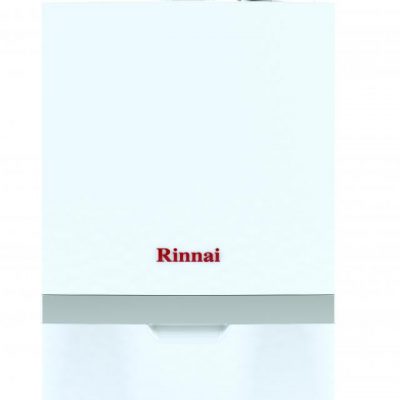
Rinnai M060CN-SN Combi Natural Gas Boilers
-
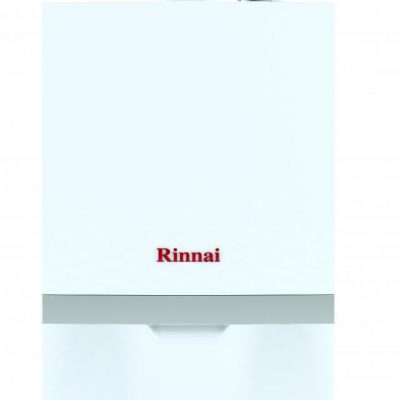
Rinnai M090CN-SN Combi Natural Gas Boilers
-
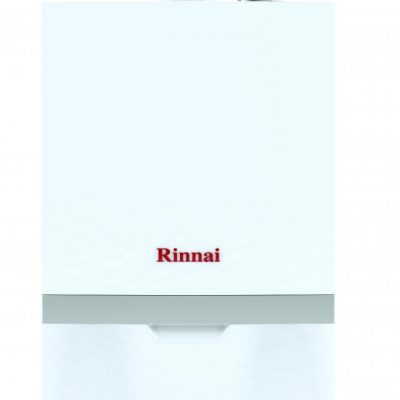
Rinnai M120CN-SN Combi Natural Gas Boilers
-
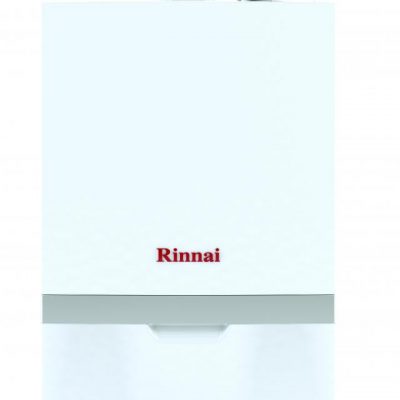
Rinnai M160CN-SN Combi Natural Gas Boilers
M Series Condensing Gas Boilers for Hydronic Heating
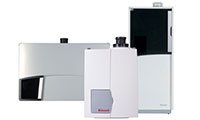
M Series boilers are compact wall-mounted condensing gas boilers designed for residential hydronic heating, with heat-only and combination configurations available across several heating capacities. The category can serve radiator, baseboard and radiant-floor systems, while combi configurations can also produce domestic hot water without a separate storage tank.
For Toronto and GTA homes, choosing the right model depends on calculated heat loss, heat-only versus combi operation, domestic hot-water demand, minimum firing capacity, existing radiation, required water temperature, gas supply, venting, condensate drainage and hydronic piping. Selecting a boiler mainly from maximum BTU capacity can lead to short cycling or unnecessary equipment size.
M Series Models and Heating Capacities
The category includes 60,000, 90,000, 120,000 and 160,000 BTU classes, with corresponding heat-only and combi configurations. Moving to a larger model should follow an actual heating or hot-water requirement rather than a preference for additional capacity.
Heat-Only vs Combi M Series Boilers
The first system-selection decision is whether the boiler should provide hydronic space heating only or both heating and domestic hot water. Combi equipment can reduce appliance count, while a heat-only model provides more flexibility when domestic water is handled separately.
Choosing Between M060, M090, M120 and M160
The model number should follow the building load rather than floor area alone. Insulation, windows, air leakage, building exposure, radiation and Toronto winter design conditions can create very different heating requirements in homes of similar size.
Smaller Heating Load
The M060 range can be appropriate when a heat-loss calculation confirms that 60,000 BTU of maximum heating input provides sufficient capacity.
Mid-Range Heating Load
The M090 provides additional heating capacity without automatically moving into the larger 120,000 or 160,000 BTU classes.
Larger Residential Load
The M120 becomes relevant where a calculated load exceeds the smaller models or a combi installation requires greater domestic-water capability.
High Heating Demand
The M160 should be reserved for applications that genuinely need its greater output rather than being selected as extra capacity for reassurance.
Low Heat, High Hot-Water Demand
A larger combi can improve hot-water capability but may provide more space-heating capacity than the building needs, making modulation especially important.
Separate Water Heating
A heat-only model can be sized specifically to the building load when domestic hot water is provided by another properly sized appliance.
M Series Combi Boiler Hot-Water Performance
A combi model must satisfy two different loads: building heating and instantaneous domestic hot water. A home can have a modest heating requirement yet need substantial burner input when multiple showers or fixtures operate at the same time.
This is why the largest combi model should not automatically be selected from bathroom count alone. Both the domestic-water requirement and the boiler's minimum space-heating output need to suit the property.
Toronto Winter Water Temperature Matters
Combi hot-water performance changes with incoming water temperature. Colder winter inlet water requires the boiler to create a greater temperature rise before delivering comfortable shower or faucet temperatures.
A maximum hot-water flow figure can therefore overstate what is available during a Toronto winter if it was established with warmer inlet-water conditions. Household demand should be evaluated at a realistic seasonal temperature rise.
Selecting a Combi From Maximum Hot-Water Flow Alone
A boiler that appears capable of supplying several fixtures may deliver less usable flow when winter inlet water is colder. If simultaneous hot-water demand is not checked at the required temperature rise, users can experience reduced flow when showers and other fixtures operate together.
M Series Boiler Efficiency
M Series equipment uses condensing combustion technology and reaches efficiency levels around 95% AFUE in applicable configurations. The potential advantage over an older conventional boiler is greatest when the replacement is correctly sized and the hydronic system permits favourable return-water temperatures.
Maximum rated efficiency should not be treated as guaranteed seasonal performance. Water temperature, cycling, outdoor reset, radiation design, boiler sizing and commissioning all influence actual fuel use.
How Condensing Boiler Efficiency Works
A condensing boiler recovers additional heat by cooling combustion gases enough for water vapour to condense. Cooler return water generally allows more of that heat-recovery process to occur.
A hydronic system that requires very high water temperatures for much of the winter can still operate with a condensing boiler, but it may spend less time in its highest-efficiency operating range. Radiation performance therefore matters when comparing replacement options.
M Series Boilers for Radiant Floor Heating
Radiant-floor heating commonly operates at lower water temperatures, which can pair well with condensing boiler operation. Lower return-water temperatures can help the boiler remain in its condensing range for longer periods.
The potential efficiency advantage does not remove the need for correct sizing. A very small radiant zone can still cause cycling if its heat demand is below the boiler's minimum firing capability.
M Series Boilers for Cast-Iron Radiators
Cast-iron radiators can work well with a modern condensing boiler when their output and required water temperatures are properly evaluated. Large existing radiators may provide enough surface area to heat the home at lower water temperatures through much of the season.
Automatically maintaining the high supply temperature used by an older boiler can reduce condensing opportunities. The new system should be commissioned around the actual radiation requirement rather than copying previous settings.
M Series Boilers for Hydronic Baseboards
Fin-tube baseboard systems can also be served by an M Series boiler, but available baseboard length determines how much heat can be delivered at a given water temperature. Shorter baseboard installations may require hotter water during peak winter conditions.
Replacing the boiler will not correct inadequate radiation. If a room has always struggled to maintain temperature, the baseboard output and water flow should be checked before increasing boiler capacity.
Boiler Modulation and Turndown
M Series boilers use modulating burner operation rather than running only at full input. The boiler can reduce firing rate when heating demand falls, which is important because a Toronto home's load changes continuously with outdoor temperature.
Turndown capability improves part-load performance, but it cannot eliminate the consequences of severe oversizing. The minimum firing rate should be considered along with maximum capacity, especially in homes with several small heating zones.
Why Minimum Firing Rate Matters
Maximum heating input answers whether the boiler can meet the coldest design-day load. Minimum input helps determine whether it can operate steadily when only a small amount of heat is required.
This becomes particularly important during spring and fall or when only one small zone is calling. If the smallest zone cannot absorb the boiler's minimum output, water temperature can rise quickly and force frequent burner cycling.
Choosing the M160 When the Home Only Needs a Smaller Boiler
A larger maximum BTU rating does not improve comfort when the building load is much lower. The oversized boiler can spend more time near minimum firing rate and may cycle repeatedly when smaller zones call, reducing the benefit of modulation.
Heat-Loss Sizing Before Boiler Installation
A replacement boiler should be sized from the home's current heat loss rather than the nameplate on the existing boiler. Many older Toronto homes received boilers with substantial excess capacity, and later improvements to insulation, windows and air sealing can reduce the load further.
Installing another boiler at the old capacity can preserve an oversizing problem for the life of the new system. The correct model is the one that meets calculated design demand without unnecessary excess output.
Outdoor Reset for Toronto Heating Conditions
Outdoor reset changes boiler water temperature as outdoor conditions change. Lower supply temperatures can be used during mild weather, with hotter water reserved for colder conditions when the radiation system needs more output.
This approach can increase condensing opportunities and provide steadier comfort. The reset curve still needs to match the building and radiation; a setting that is too aggressive can leave rooms cool, while an unnecessarily high curve reduces efficiency potential.
Hydraulic Separation and System Flow
M Series boiler installations require careful separation of boiler flow from heating-system flow in applicable configurations. Primary and secondary piping or another approved hydraulic-separation arrangement allows the boiler circuit and building circuit to operate with appropriate flow conditions.
Connecting the boiler directly to a complex existing hydronic system without considering flow requirements can create pressure and circulation problems. Pump selection and piping design are therefore part of equipment selection, not merely installation details.
Small Zones and Multi-Zone Hydronic Systems
Homes with several thermostats may have individual zones whose heat demand is only a small fraction of the boiler's maximum capacity. The smallest zone can therefore be more important to part-load operation than the largest zone.
Before choosing an M090, M120 or M160 simply to cover total building load, the installer should also evaluate what happens when only a bathroom floor, small bedroom zone or other low-load circuit is active.
M Series Boiler Installation in Toronto and the GTA
Installation should include heat-loss sizing, hydronic assessment, gas-line verification, venting, condensate drainage, hydraulic separation, circulation, expansion control, air elimination, electrical work, controls and combustion commissioning. Combi installations also require domestic-water piping and performance evaluation.
A wall-mounted boiler can reduce equipment footprint, but installation complexity is determined by the existing mechanical system. Converting an older floor-standing boiler can involve substantially more work than replacing another modern wall-mounted condensing unit.
Gas Supply for M Series Boilers
The available gas supply must support the boiler's maximum input along with other gas appliances that can operate simultaneously. This is especially important for larger combi models because domestic hot-water production can require high burner input.
Existing gas piping should be calculated rather than assumed adequate. Moving from an older lower-input boiler to a higher-capacity combi can require gas-line changes even when both appliances use natural gas.
M Series Boiler Venting
Condensing boilers require approved combustion-air and exhaust venting with appropriate material, length, fittings and exterior clearances. The most convenient wall location is not necessarily the best boiler location if it creates a difficult vent route.
Replacing a chimney-vented boiler commonly requires a new venting strategy. Vent feasibility should be established before equipment selection and installation pricing are finalized.
Condensate Drainage
High-efficiency condensing operation creates condensate that must be routed to a suitable drainage point. Drain location, pipe routing and any required condensate treatment should be considered when choosing where the boiler will be mounted.
A location without practical drainage can add pumps and additional service components. Planning condensate management early can prevent avoidable installation complexity.
M Series Combi vs Separate Boiler and Water Heater
A combi boiler reduces equipment count by providing space heating and domestic hot water from one appliance. Separate equipment requires more space but lets each system be sized and replaced independently.
M Series vs I Series Boilers
Both categories use high-efficiency wall-mounted condensing technology and offer heat-only and combi approaches, but they represent different boiler platforms with different capacity, internal-component and installation characteristics. Model selection should therefore be made from the complete project rather than assuming one series is universally better.
For a replacement, existing hydronic piping can influence which platform provides the cleaner installation. For a new boiler project, heat load, domestic-water demand, minimum firing rate, current product availability and required piping arrangement are more useful comparison points than series name alone.
M Series vs Conventional Gas Boiler
An M Series condensing boiler offers modulation, wall-mounted packaging and higher rated efficiency than many traditional non-condensing boilers. The trade-off is that the installation requires condensate handling, compatible venting and careful hydronic integration.
A conventional boiler can be simpler to integrate into certain older high-temperature systems, but retaining an older system architecture should not automatically outweigh the potential efficiency and control advantages of a properly designed condensing replacement.
M Series Boiler vs Furnace
A boiler heats water and supplies radiators, baseboards or radiant floors, while a furnace heats air through ductwork. For a Toronto home with a functioning hydronic distribution system, replacing the boiler generally preserves more of the existing infrastructure.
Converting to a furnace can require extensive duct installation. The equipment purchase price is therefore only one part of a boiler-versus-furnace decision.
M Series Boiler vs Cold-Climate Heat Pump
A cold-climate heat pump uses electricity to provide heating and can also provide cooling, while an M Series boiler uses gas to serve a hydronic heating system. The better option depends heavily on the home's existing distribution and renovation goals.
A house with radiators or radiant floors can often retain that infrastructure with a boiler replacement. Converting fully to an air-source heat pump may require ducted or ductless indoor equipment, electrical work and a different approach to room-by-room heat distribution.
M Series Boiler Replacement
Replacement should begin with a review of actual heat loss, existing radiation, zoning, piping, pumps, gas supply, venting, controls and domestic-water needs. Matching the old boiler's capacity is not enough to determine the correct replacement.
If the existing boiler is already an M Series model, exact replacement availability and compatibility should still be checked. Similar maximum input does not guarantee identical piping, controls or installation requirements across product generations.
Replacing an Older Floor-Standing Boiler
Changing from a large floor boiler to a compact wall-mounted M Series unit can free mechanical-room space and improve rated efficiency, but it can also require significant piping modification. Venting and condensate drainage usually differ substantially from older chimney-connected equipment.
The existing radiators or baseboards may remain useful, so the replacement project should separate distribution-system condition from boiler condition. A sound hydronic network does not need to be discarded simply because the heat source is being modernized.
When Boiler Replacement Should Include Hydronic Upgrades
A new boiler cannot compensate for poor system flow, failed zone valves, undersized radiation or ineffective air removal. If the existing system has chronic comfort or circulation problems, addressing those issues during replacement can be more valuable than simply moving to a larger boiler.
The strongest project scope distinguishes between heat-generation problems and heat-distribution problems so new equipment is not expected to solve issues elsewhere in the system.
M Series Boiler Installation Cost
Installed cost depends on model capacity, heat-only or combi configuration, gas piping, venting, condensate drainage, hydraulic separation, pumps, hydronic piping, controls, domestic-water plumbing and the condition of the existing boiler system.
A direct replacement of another wall-mounted condensing boiler can require substantially less work than converting an older floor-standing boiler. Comparing equipment prices without identifying the piping and installation scope can therefore produce misleading cost expectations.
What Affects M Series Boiler Replacement Cost?
The following factors determine how extensive the installation will be. They should be identified before comparing quotations for different boiler sizes or configurations.
- M060, M090, M120 or M160 capacity selection
- Heat-only or combi configuration
- Calculated building heat loss
- Domestic hot-water demand
- Existing radiator, baseboard or radiant-floor system
- Number and size of hydronic zones
- Required water temperatures
- Gas-line size and available gas capacity
- Combustion-air and venting route
- Condensate drainage requirements
- Hydraulic separation and pump requirements
- Existing supply and return piping
- Zone valves and control changes
- Expansion tank and air-elimination equipment
- Domestic-water piping for combi models
- Removal of existing boiler and water-heating equipment
M Series Boiler Selection Checklist
The right boiler should meet design-day heating and household hot-water requirements while still operating effectively during low-load conditions. Check the complete hydronic and mechanical system before choosing the final model.
Choose the Right M Series Boiler
- Complete a heat-loss calculation before selecting maximum boiler capacity.
- Do not automatically match the BTU rating of the existing boiler.
- Choose between M060, M090, M120 and M160 from the calculated heating requirement.
- Decide whether domestic hot water should come from the boiler or a separate appliance.
- Calculate realistic simultaneous hot-water demand before choosing a combi model.
- Account for colder Toronto winter inlet-water temperatures when evaluating combi performance.
- Compare minimum boiler input with the smallest hydronic zone.
- Determine the water temperatures required by radiators, baseboards or radiant floors.
- Use outdoor reset where the hydronic system can benefit from variable water temperature.
- Plan required hydraulic separation and circulator arrangements.
- Verify gas-line capacity for the selected maximum input.
- Confirm the combustion-air and exhaust vent route before installation.
- Plan condensate drainage before selecting the mounting location.
- Review pumps, zone valves, expansion control and air elimination during replacement.
- Compare combi equipment with separate heating and hot-water systems when demand is high.
- Compare total installed cost rather than boiler price alone.
Choose an M Series Boiler for Toronto and the GTA
The M Series category spans 60,000, 90,000, 120,000 and 160,000 BTU heating classes with heat-only and combi configurations, allowing the boiler to be matched to different hydronic and domestic-water requirements. The strongest choice is not automatically the largest model or the configuration that combines the most functions.
For Toronto and GTA homes, model selection should start with current building heat loss and then account for hot-water demand, minimum firing rate, hydronic water temperatures, zoning, gas capacity, hydraulic separation, venting and condensate drainage. Correct sizing and system integration determine whether the boiler can deliver efficient, stable heating throughout the season.
FREE In-Home Estimate