


NCB-E Series
Showing all 4 results
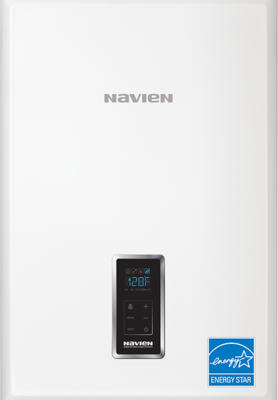
NCB-E Series Condensing Combi Boilers for Heating and Hot Water
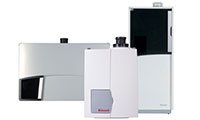
NCB-E Series boilers are wall-mounted condensing combination boilers that provide hydronic space heating and on-demand domestic hot water from one appliance. The series includes four output levels, allowing system selection to account separately for the home's heating load and its hot-water demand.
For Toronto and GTA homes, choosing the correct model requires more than selecting the highest BTU rating. Space-heating capacity, minimum firing rate, simultaneous hot-water demand, winter incoming-water temperature, venting, gas supply and the existing hydronic distribution system all affect real-world performance.
Compare NCB-150E, NCB-180E, NCB-210E and NCB-240E
The four models increase in both space-heating and domestic-hot-water input. Comparing these two loads separately is important because a home can have a modest heating requirement but still need substantial domestic-hot-water capacity.
NCB-150E Combi Boiler
The NCB-150E has the lowest space-heating and domestic-hot-water inputs in the series, with a 12,000 to 60,000 BTU/h heating range and up to 120,000 BTU/h for domestic hot water. Its lower output can be a better match for properties with smaller calculated heating loads and moderate hot-water requirements.
The key limitation is domestic-hot-water capacity. Its 2.6 GPM rating at a 43°C temperature rise leaves less capacity for simultaneous fixtures than the larger NCB-E models, making peak hot-water demand an important selection factor.
NCB-180E Combi Boiler
The NCB-180E increases the space-heating range to 14,000–80,000 BTU/h and domestic-hot-water input to 150,000 BTU/h. At a 43°C temperature rise, its rated domestic-hot-water flow increases to 3.4 GPM.
This intermediate capacity can suit a home that needs more hot-water production than the NCB-150E without requiring the heating input of the larger models. A heat-loss calculation is still important because selecting it primarily for hot water can leave more space-heating capacity than the building requires.
NCB-210E Combi Boiler
The NCB-210E provides 18,000–100,000 BTU/h for space heating and up to 180,000 BTU/h for domestic hot water. Its rated DHW flow reaches 4.0 GPM at a 43°C temperature rise, increasing its ability to support higher hot-water loads.
The trade-off is its 18,000 BTU/h minimum space-heating input. In a property with small heating zones or a low building load, minimum firing rate becomes an important consideration because oversized heating capacity can contribute to shorter operating cycles.
NCB-240E Combi Boiler
The NCB-240E is the highest-output model in this category, with an 18,000–120,000 BTU/h space-heating range and up to 199,900 BTU/h for domestic hot water. Its rated DHW flow is 4.5 GPM at a 43°C temperature rise.
The NCB-240E should not automatically be selected simply because it has the highest capacity. Its additional domestic-hot-water capability can be valuable for greater simultaneous demand, but the home's hydronic heating load still needs to be compatible with its operating range.
How to Choose an NCB-E Series Model
Model selection should balance two separate loads: the building's design heat loss and the household's peak domestic-hot-water requirement. The best model is the one that satisfies both without unnecessarily increasing space-heating capacity.
Design Heat Loss
Calculate how much heat the building actually requires during Toronto design conditions. Choosing from square footage alone can result in unnecessary boiler capacity.
Peak Hot-Water Demand
Count fixtures likely to operate simultaneously. A model that satisfies the heating load can still be undersized for showers and other concurrent hot-water use.
Minimum Heating Input
Lower minimum firing capacity helps the boiler follow smaller heating loads without cycling as frequently, particularly during milder weather or small-zone operation.
Radiation Type
Radiant floors, baseboards, radiators and hydronic fan coils operate at different water temperatures and flow requirements, affecting boiler performance and system design.
Existing Gas Supply
Gas-line capacity must be verified for the selected model and total connected building load rather than assuming existing piping can support a higher-input replacement.
Venting Route
Available termination location, equivalent vent length and intake arrangement can affect where the wall-mounted unit can practically replace an older boiler.
Space-Heating Capacity vs Domestic Hot-Water Capacity
A combi boiler has to perform two different jobs, and the required capacity for one does not necessarily predict the other. An energy-efficient Toronto home may need relatively little space-heating output while still having two bathrooms with substantial peak hot-water demand.
This is why the NCB-E models have different ratings for space heating and domestic hot water. Choosing from the larger DHW number alone can obscure whether the boiler's heating modulation range is appropriate for the hydronic system.
NCB-E Domestic Hot-Water Performance
The series produces domestic hot water on demand rather than relying on a conventional large storage tank. As the model size increases, available DHW input and flow capacity increase from the NCB-150E through the NCB-240E.
Flow ratings need to be interpreted with their stated temperature rise. The amount of hot water available at the fixtures changes when incoming water is colder or when a higher outlet temperature is required.
Why Toronto Winter Water Temperature Matters
Cold incoming water requires the combi boiler to add more heat to reach the desired fixture temperature. That larger temperature rise reduces the amount of hot water a given burner input can produce continuously.
This makes winter conditions particularly important when selecting an NCB-E model for multiple showers or other simultaneous loads in Toronto and the GTA.
Choosing a Combi Boiler From GPM Alone
A household may expect a published flow number under every condition, then find that simultaneous hot-water performance changes during winter because incoming water is colder. Comparing models at a realistic temperature rise helps prevent selecting a combi boiler that cannot support the household's peak demand.
Combi Boiler vs Boiler With an Indirect Tank
The NCB-E combines space heating and tankless domestic-hot-water production in one wall-mounted appliance. A heat-only boiler paired with an indirect tank separates boiler heating from stored domestic-hot-water capacity, creating a different balance between footprint and peak performance.
NCB-E Efficiency and Condensing Operation
NCB-E models are high-efficiency condensing combi boilers with approximately 95% AFUE. Their stainless-steel heat-exchanger design allows heat to be recovered from combustion gases when operating conditions support condensation.
Rated efficiency does not mean every hydronic installation operates at peak condensing performance all the time. Return-water temperature and heating-water setpoint influence how effectively the boiler can recover latent heat from the exhaust.
Return-Water Temperature and Real Boiler Efficiency
Condensing performance improves when the hydronic system can operate with sufficiently low return-water temperatures. Radiant floors and properly sized low-temperature emitters can provide favourable conditions, while some existing radiator or baseboard systems may require hotter water during cold weather.
An NCB-E replacement should therefore include a review of the existing radiation system. Installing a condensing boiler without evaluating required water temperatures can limit the efficiency benefit expected from the upgrade.
NCB-E Series for Radiant Floor Heating
Radiant floor systems often operate at lower water temperatures than traditional high-temperature hydronic emitters, which can complement condensing boiler operation. The actual design still depends on floor construction, tubing layout, flow and calculated room loads.
Water temperature must match the radiant system rather than simply using the boiler's available maximum. Excessive supply temperature can reduce condensing performance and create uncomfortable floor temperatures.
NCB-E Series for Hydronic Baseboards
An NCB-E can serve hydronic baseboard systems when boiler output, flow and supply-water temperature are appropriate for the installed radiation. Existing baseboards should be evaluated for how much heat they can deliver at different water temperatures.
Older systems designed around hotter boiler water may not provide the same output if temperatures are reduced aggressively for condensing efficiency. The heating system has to satisfy the home's design load before lower-temperature operation becomes the priority.
NCB-E Series for Radiators
Radiator systems can work with a condensing combi boiler, but their required water temperature depends on radiator size and the building's heating load. Oversized radiators may provide enough output at lower temperatures, while smaller emitters can require hotter water during severe weather.
Replacement planning should therefore consider the radiation already installed rather than assuming all radiator systems operate the same way.
Minimum Firing Rate and Boiler Cycling
Maximum BTU capacity determines whether the boiler can meet peak load, while minimum firing rate affects how well it operates when heating demand is low. The NCB-E range begins at 12,000 BTU/h for the NCB-150E, 14,000 BTU/h for the NCB-180E and 18,000 BTU/h for the two larger models.
This matters during milder Toronto weather and when only a small hydronic zone calls for heat. If the active zone cannot absorb the boiler's minimum output, the boiler can reach its target temperature quickly and cycle more frequently.
Why Oversizing an NCB-E Can Cause Problems
Selecting the largest model for extra hot-water capacity can create a mismatch on the space-heating side. This is especially relevant in upgraded homes with better insulation or hydronic systems divided into several small zones.
Sizing Only for Maximum Hot-Water Demand
A home with a modest heating load may be assigned a larger combi boiler primarily to support simultaneous showers. If the hydronic zones are small, the higher minimum heating input can make it harder for the boiler to run continuously at light loads, increasing cycling during shoulder seasons.
Heat-Loss Calculation Before NCB-E Selection
A room-by-room or building heat-loss calculation establishes how much space-heating output is actually required during design winter conditions. Existing boiler size is not reliable evidence of the current heating load because older equipment was often selected with substantial excess capacity.
Renovations can also change the result. New windows, insulation and air sealing can reduce heating demand enough that replacing an old boiler with the same nominal capacity creates unnecessary oversizing.
Outdoor Reset and Heating-Water Temperature
The NCB-E platform can work with outdoor-reset control so heating-water temperature responds to outdoor conditions. Instead of operating at one high supply temperature throughout the season, the system can reduce water temperature when the weather is milder.
Properly configured outdoor reset can extend boiler run times and support condensing operation, but the reset curve must still provide enough emitter output on Toronto's coldest days. Setting the curve too low can leave rooms unable to reach their target temperature.
NCB-E Series Installation
NCB-E installation requires coordination of the hydronic supply and return, domestic cold-water and hot-water piping, gas supply, combustion air, exhaust venting, condensate drainage, electrical supply and system controls. The wall-mounted format can simplify mechanical-room layout, but it does not eliminate the need for proper hydronic design.
Retrofit installations should also assess existing system cleanliness, zoning, pumps and radiation. Connecting a new condensing combi boiler to an old hydronic system without addressing flow or contamination can compromise performance.
Gas Supply for an NCB-E Boiler
The NCB-E models use a 3/4-inch gas connection and can operate on natural gas or propane when properly configured. Some installations may be able to use an existing 1/2-inch gas line over a limited run, but that possibility should never replace an actual gas-piping calculation.
Total connected gas load, pipe length, fittings, supply pressure and the selected model all affect whether existing piping is adequate. The larger DHW inputs of the NCB-210E and NCB-240E make gas-supply verification particularly important during replacement.
NCB-E Venting
The series uses forced-draft direct venting and supports approved 2-inch or 3-inch vent configurations. Smaller vent diameter can simplify some retrofit routes, while longer or more restrictive runs may require a different configuration.
Equivalent vent length, fittings, intake arrangement, termination clearances and Canadian installation requirements need to be checked as one system. An existing boiler vent cannot automatically be reused simply because its location is convenient.
Condensate Drainage
Condensing operation produces acidic condensate that must be drained through an appropriate route. Drain location should be considered during equipment placement because a difficult condensate path can complicate an otherwise straightforward wall-hung replacement.
Condensate piping also needs protection from freezing where applicable. A boiler installation should not depend on a drainage route that exposes condensate to Toronto winter conditions without suitable protection.
NCB-E Replacement in Toronto and the GTA
The NCB-E Series is an earlier combi-boiler generation and the NCB-150E, NCB-180E, NCB-210E and NCB-240E are discontinued models. Existing units can still require repair or replacement planning, but a new project should compare current replacement equipment rather than assuming an identical NCB-E will be available.
Replacement is also an opportunity to reassess the original sizing. Changes to insulation, windows, bathrooms, household occupancy or hydronic zoning can mean the best current replacement capacity differs from the existing NCB-E model.
Replacing an NCB-150E or NCB-180E
For lower-output NCB-E installations, replacement planning should preserve the advantage of a relatively low space-heating input while confirming that current domestic-hot-water demand is still satisfied. Moving automatically to a larger replacement can create unnecessary heating capacity.
If the household has added bathrooms or increased simultaneous hot-water use, the DHW requirement may have changed even when the building's heating load has not. Both sides of the combi application should be recalculated.
Replacing an NCB-210E or NCB-240E
Higher-output NCB-E installations often require careful review of why the larger unit was originally selected. The capacity may have been driven by building heat loss, domestic-hot-water demand or simply conservative historical sizing.
A current replacement should not inherit that assumption without verification. If domestic hot water drove the original selection but heating demand is relatively low, a different equipment configuration may provide a better balance.
NCB-E Series vs Current Combi Boilers
Current combi-boiler platforms should be compared with an NCB-E replacement using more than maximum BTU input. Heating turndown, minimum firing rate, domestic-hot-water output, venting requirements, controls, serviceability and compatibility with the existing hydronic system all influence the replacement decision.
An identical-capacity replacement is not necessarily the closest functional match. The better comparison is how the new boiler performs at both the home's minimum heating demand and its peak domestic-hot-water demand.
NCB-E Series vs Heat-Only Boiler
A heat-only boiler is designed around the hydronic space-heating load, while an NCB-E also has to satisfy domestic-hot-water demand. Separating the two functions can provide more flexibility when the home has unusually high hot-water requirements or already has a suitable indirect storage tank.
The combi approach can reduce equipment footprint and eliminate a separate storage tank, but those advantages should be weighed against the home's peak DHW requirement and desired recovery characteristics.
NCB-E Boiler Installation and Replacement Cost
Installed cost depends on the replacement scope rather than boiler model alone. Existing gas capacity, vent routing, condensate drainage, hydronic piping, domestic-water connections, pumps, zoning, controls and removal of old equipment can all change the project requirements.
A simple wall-hung replacement with suitable infrastructure can require less work than converting from a floor-standing boiler and storage tank. Comparing equipment-only prices therefore does not provide a reliable picture of total installed cost.
NCB-E Series Selection Checklist
For an existing NCB-E installation or replacement project, verify both the hydronic and domestic-hot-water sides before selecting capacity. These checks help distinguish a true equipment requirement from capacity inherited from the previous system.
Evaluate an NCB-E Series Boiler
- Calculate the home's current design heat loss rather than matching the old boiler's maximum input.
- Identify the number of hot-water fixtures likely to operate simultaneously.
- Evaluate domestic-hot-water performance using a realistic Toronto winter temperature rise.
- Compare minimum heating input as well as maximum capacity.
- Confirm radiator, baseboard, radiant-floor or fan-coil water-temperature requirements.
- Review small hydronic zones for potential cycling issues.
- Verify total gas-piping capacity for the selected equipment.
- Check vent diameter, equivalent length and termination options.
- Plan a suitable condensate drainage route.
- Assess existing hydronic water quality and system cleanliness before connecting replacement equipment.
- Confirm whether current hot-water demand still makes a combi configuration the best choice.
- Compare current replacement equipment because the NCB-E Series is discontinued.
- Compare total installation scope rather than equipment price alone.
Choosing an NCB-E Replacement for Toronto and the GTA
The NCB-E Series combined hydronic heating and tankless domestic hot water in four capacities, but the correct replacement decision starts with the home's current loads rather than the model number already on the wall. Heating demand, winter hot-water requirements, minimum firing rate and existing hydronic distribution all need to be considered together.
For Toronto and GTA homes, this is particularly important when replacing a larger NCB-E model. A current combi boiler may remain the right configuration, but some homes are better served by a different capacity or by separating space heating from stored domestic hot water when peak demand and heating load are poorly matched.
FREE In-Home Estimate