


NCB-H Series
Showing all 5 results
-
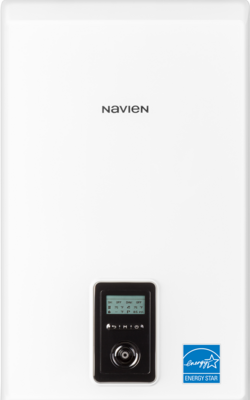
Navien NCB-190/060H Boiler
-
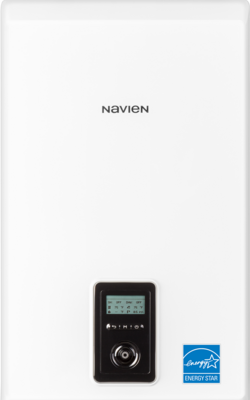
Navien NCB-190/080H Boiler
-
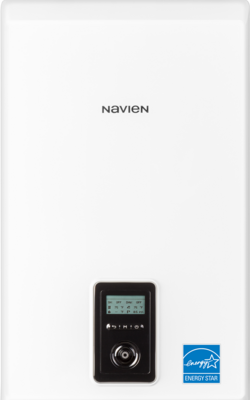
Navien NCB-240/110H Boiler
-
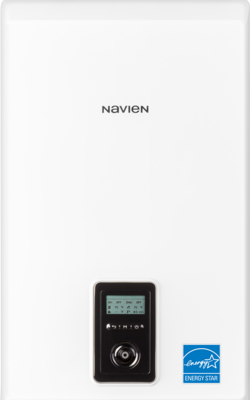
Navien NCB-240/130H Boiler
-
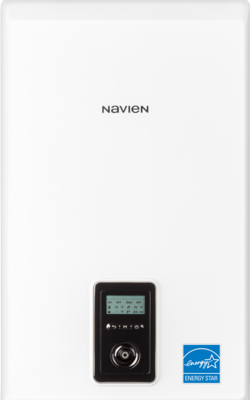
Navien NCB-250/150H Boiler
NCB-H Series Condensing Combi Boilers for Heating and Hot Water
NCB-H Series boilers are high-efficiency wall-mounted condensing combi boilers that provide hydronic space heating and on-demand domestic hot water from one appliance. Five models cover space-heating inputs from 60,000 to 150,000 BTU/h and domestic-hot-water inputs from 160,000 to 210,000 BTU/h, allowing the two loads to be evaluated separately when choosing a system.
For Toronto and GTA homes, the correct model depends on calculated heat loss, peak hot-water demand, winter incoming-water temperature, minimum firing rate and the type of hydronic distribution system. Selecting the largest model for extra hot water can create unnecessary heating capacity if the building load is much smaller.
Compare NCB-H Series Models
The five models provide progressively greater space-heating capacity, while domestic-hot-water capacity changes in three main steps. This makes it possible to select a model around both heating demand and the number of hot-water fixtures expected to operate at the same time.
NCB-190/060H Combi Boiler
The NCB-190/060H provides up to 60,000 BTU/h of space-heating input and 160,000 BTU/h for domestic hot water. It has 95% AFUE and can reduce its heating input to approximately 11,000 BTU/h, giving it useful modulation for homes with relatively modest heating loads.
Its domestic-hot-water output is rated at approximately 4.1 GPM with a 39°C temperature rise. That makes the required temperature rise important: higher winter temperature rise reduces available continuous flow, so fixture demand should be calculated before choosing the smallest model.
NCB-190/080H Combi Boiler
The NCB-190/080H increases maximum space-heating input to 80,000 BTU/h while retaining 160,000 BTU/h of maximum domestic-hot-water input. This makes the difference between the 060H and 080H primarily a space-heating decision rather than a way to gain substantially more DHW capacity.
If both models satisfy the household's hot-water requirement, the building heat-loss calculation becomes the stronger selection factor. Choosing the 080H simply for additional reserve is unnecessary when the calculated heating load fits comfortably within the 060H range.
NCB-240/110H Combi Boiler
The NCB-240/110H increases maximum space-heating input to 110,000 BTU/h and maximum domestic-hot-water input to 199,900 BTU/h. It is relevant when both the building load and peak hot-water requirement exceed what the smaller 190 models can comfortably support.
The larger DHW capacity should not be considered independently from heating modulation. A home can require substantial hot-water output while having a much smaller space-heating load, so minimum heating demand and zone size still matter.
NCB-240/130H Combi Boiler
The NCB-240/130H provides up to 130,000 BTU/h for space heating while retaining the same 199,900 BTU/h maximum DHW input as the 110H. The practical reason to move from the 110H to the 130H is therefore greater heating capacity, not additional maximum domestic-hot-water input.
For many replacement projects, this distinction prevents unnecessary upsizing. If the 110H satisfies the calculated building heat loss, choosing the 130H does not provide a meaningful DHW capacity advantage.
NCB-250/150H Combi Boiler
The NCB-250/150H is the highest-capacity model in the category, providing up to 150,000 BTU/h of space-heating input and 210,000 BTU/h for domestic hot water. It can deliver up to approximately 5.4 GPM at a 39°C domestic-water temperature rise.
The highest capacity does not make it the default choice for a larger house. The 150H is most appropriate when calculations demonstrate a need for its heating or hot-water capacity rather than when extra BTUs are being added as a safety margin.
How to Choose an NCB-H Series Model
A combi boiler has to satisfy two different demands: the building's peak heating load and the household's peak domestic-hot-water flow. These factors should be calculated independently and then used together to select the model.
Building Heat Loss
Calculate the design heating load for Toronto winter conditions rather than selecting capacity from floor area or the old boiler nameplate.
Peak DHW Demand
Determine which showers, faucets and appliances can operate simultaneously because combi sizing must support realistic peak flow.
Winter Temperature Rise
Colder incoming water requires more energy per gallon, reducing continuous hot-water flow compared with warmer inlet conditions.
Minimum Heating Load
The smallest active hydronic zone matters because a boiler that cannot reduce output enough can cycle frequently during light-load operation.
Emitter Temperature
Radiant floors, radiators, baseboards and hydronic air handlers require different water temperatures that affect system and condensing performance.
Installation Conditions
Gas capacity, vent routing, condensate drainage and existing hydronic piping can affect which replacement configuration is practical.
Heating Capacity and Hot-Water Capacity Are Different
The model name combines domestic-hot-water and space-heating capacity classes because these loads can differ substantially. A well-insulated Toronto home may require modest space heating while still having enough bathrooms to create a high peak DHW demand.
This is one of the most important combi-boiler sizing decisions. Sizing only for heat loss can leave inadequate hot-water performance, while sizing only for hot water can create more heating capacity than the hydronic system can use efficiently.
NCB-H Domestic Hot-Water Performance
The NCB-H Series uses a separate stainless-steel flat-plate heat exchanger for domestic hot water and provides up to 5.4 GPM at a 39°C temperature rise in the higher-capacity configuration. Domestic-hot-water turndown reaches 15:1 across the series.
Continuous flow should always be evaluated at the temperature rise expected in the home. A flow number without its temperature-rise condition does not provide enough information to determine whether the boiler can support simultaneous showers and fixtures.
Toronto Winter Hot-Water Performance
Incoming water temperature affects every tankless-style domestic-hot-water system. When Toronto water enters the building colder in winter, the boiler must produce a greater temperature increase before the water reaches the desired fixture temperature.
The greater the required temperature rise, the lower the continuous flow available from a fixed burner capacity. This is why winter conditions should be used when assessing whether an NCB-H model can support simultaneous hot-water demand.
Choosing a Model From Maximum GPM
A household can select a combi boiler from a headline flow rate and expect the same performance throughout the year. During colder Toronto conditions, the larger temperature rise requires more burner capacity per gallon, so simultaneous hot-water flow can be lower than expected.
NCB-H Heating Turndown and Minimum Firing Rate
Heating turndown reaches up to 11:1 within the series, allowing burner input to decrease substantially as building demand falls. This is important because a boiler selected for a Toronto design day spends much of the heating season operating below its maximum capacity.
Turndown should not be viewed only as a ratio. The actual minimum firing rate needs to be compared with the smallest heating zone because that determines whether the active system can absorb the boiler's lowest stable output.
Why Small Hydronic Zones Matter
A home may have the correct total boiler capacity and still experience short cycling when only one small zone calls for heat. Bathrooms, basement zones and small radiant circuits can require much less heat than the entire building.
Built-in zone control can simplify system design, but controls cannot eliminate a fundamental mismatch between minimum boiler output and a very small zone. Zone loads, flow and water volume should be reviewed during installation.
Built-In Multi-Zone Control
The NCB-H provides powered connections for up to three zone pumps or three zone valves. This can simplify common residential hydronic layouts by reducing the amount of separate zone-control hardware required.
The benefit depends on the actual system configuration. A home with more zones, mixed water temperatures or complex pumping requirements may still need additional hydronic controls rather than forcing the system into the simplest built-in arrangement.
NCB-H Series for Radiant Floor Heating
Radiant floors commonly use lower supply-water temperatures than conventional high-temperature emitters, which can provide favourable operating conditions for a condensing boiler. The NCB-H heating-water range and modulation allow it to serve properly designed radiant applications.
The boiler still needs to be matched to manifold flow and individual zone loads. Very small radiant zones can create cycling problems even when the overall house heat loss fits the selected model.
NCB-H Series for Radiators
Hydronic radiators can operate with the NCB-H when their output at the selected water temperature is sufficient for the room load. Large radiators can often release useful heat at lower temperatures, while smaller emitters may require hotter water during severe winter weather.
This affects condensing performance. Lower return-water temperatures create better conditions for heat recovery, but supply temperature should never be reduced so far that the radiators can no longer heat the home.
NCB-H Series for Hydronic Baseboards
Existing baseboard systems can be retained when their output, water temperature and flow are compatible with the new combi boiler. Baseboard output decreases as average water temperature falls, so existing radiation should be assessed before lowering boiler temperature.
A replacement that focuses only on the boiler can miss this relationship. The heating appliance and emitters need to be evaluated together if lower-temperature condensing operation is a project goal.
NCB-H Series for Hydronic Air Handlers
The NCB-H can be incorporated into compatible hydronic air-handler applications when the coil's required flow and entering-water temperature are coordinated with boiler operation. Air-side heating capacity changes as water temperature changes.
This can limit how aggressively boiler temperatures are reduced. If the air-handler coil was designed for high-temperature water, lowering the supply temperature without verifying coil output can reduce delivered heat during cold weather.
95% AFUE and Condensing Performance
The NCB-H Series provides 95% AFUE and uses dual stainless-steel heat exchangers for the space-heating circuit. Condensing operation recovers heat that would otherwise leave through the exhaust, but actual performance still depends on hydronic operating conditions.
A high efficiency rating does not mean every installation operates under maximum condensing conditions. Return-water temperature, cycling, outdoor-reset settings and emitter sizing influence seasonal system performance.
Return-Water Temperature and Efficiency
Lower return-water temperatures create more opportunity for a condensing boiler to recover latent heat from combustion gases. Hydronic systems that can satisfy the building load using lower water temperatures are therefore particularly compatible with condensing operation.
Emitter capacity sets the practical limit. A system with insufficient radiator or baseboard surface may need higher temperatures during cold Toronto weather, reducing the amount of time the boiler operates deeply in the condensing range.
Outdoor Reset for Toronto Heating
Outdoor reset adjusts the heating-water target as outdoor temperature changes. The system can use cooler water during mild weather and increase supply temperature as outdoor conditions become colder.
The reset curve needs to match the building and its emitters. Setting it unnecessarily high can reduce condensing efficiency, while setting it too low can leave the home unable to maintain temperature during the coldest conditions.
NCB-H vs NCB-E Series
The NCB-H is the later-generation combi platform compared with the NCB-E Series, with a broader model selection, higher available domestic-hot-water performance, improved modulation and updated controls. These differences matter when replacing an older NCB-E installation.
Replacement should not be done by simply matching the closest old and new model numbers. Recalculate both heating and DHW demand because improvements to the home or changes in household hot-water use may justify a different capacity.
NCB-H vs NFC-H Combi Boiler
Both categories combine hydronic heating and domestic hot water, but the NFC-H provides higher maximum space-heating capacity. The NCB-H reaches 150,000 BTU/h for heating, while the NFC-H category extends to larger heating loads.
NCB-H Combi Boiler vs Heat-Only Boiler With Indirect Tank
An NCB-H produces domestic hot water on demand inside the same wall-mounted appliance used for space heating. A heat-only boiler with an indirect tank separates space heating from stored domestic-hot-water production.
The combi configuration reduces equipment footprint and eliminates the need for a large storage tank. An indirect system provides stored hot water that can be useful when a household has unusually high simultaneous or short-duration peak demand.
Combi Boiler vs Separate Boiler and Tankless Water Heater
A combi consolidates hydronic heating and domestic-hot-water production into one appliance. A separate boiler and tankless water heater divide those functions between two independent units.
The single-appliance approach can reduce mechanical-room space and equipment count, while separate appliances can provide greater independence between heating and DHW loads. The better configuration depends on peak demand, redundancy priorities, available space and installation scope.
DHW Priority During Hot-Water Demand
When domestic hot water is requested, the combi boiler prioritizes DHW production and redirects heat through the domestic-water heat exchanger. Normal space-heating output resumes after the hot-water demand ends.
For typical residential use, these interruptions are short. Homes with unusually long or continuous DHW demands should still consider how extended priority periods interact with space heating during severe Toronto winter conditions.
Hot-Water Recirculation Options
Hot-water recirculation can reduce the wait for hot water at distant fixtures, which may be useful in larger homes or layouts with long plumbing runs. NCB-H systems can be configured with compatible recirculation options depending on the plumbing arrangement.
Recirculation improves convenience but can increase distribution heat loss when poorly controlled. The decision should consider pipe insulation, run length and recirculation schedule rather than operating circulation continuously without need.
NCB-H Series Installation
NCB-H installation requires coordination of the hydronic heating circuit, domestic-water piping, gas supply, venting, condensate drainage, electrical supply and controls. The boiler includes an integrated boiler pump, but system-side pumping and hydraulic design still depend on the distribution system.
Replacement projects should also assess existing system cleanliness and flow. Connecting a modern stainless-steel condensing boiler to contaminated older hydronic piping without proper preparation can affect long-term system performance.
Primary Manifold and Hydronic Piping
A compatible primary manifold can simplify hydraulic separation between the boiler circuit and the building distribution system. This can be useful when multiple zone pumps or valves cause system flow to change as zones open and close.
The manifold does not eliminate the need to size system circulation correctly. Required flow, pressure drop and emitter characteristics still determine whether additional circulators or control strategies are needed.
Gas Supply for NCB-H Installation
The NCB-H is field convertible between natural gas and propane when properly configured. Existing gas piping should be checked against the selected model's maximum input and the total connected gas load in the building.
Some installations can use a 1/2-inch gas line over limited conditions and distances, but this is not a universal sizing rule. Developed pipe length, fittings, available pressure and other gas appliances must be included in the gas-piping calculation.
NCB-H Venting Options
The NCB-H supports approved 2-inch and 3-inch venting configurations. Two-inch venting can extend up to approximately 65 feet in applicable configurations, while 3-inch venting can extend considerably farther, providing flexibility during retrofit installations.
Actual allowable length depends on fittings and the complete vent design. A convenient route is not automatically compliant if equivalent length or termination requirements are exceeded.
Condensate Drainage
Condensing operation produces condensate that requires an appropriate drain route. Drainage should be considered before finalizing the boiler location because a difficult condensate path can add complexity to an otherwise suitable installation.
Any portion exposed to freezing conditions needs suitable protection. Toronto winters make routing condensate through vulnerable exterior locations particularly problematic.
Replacing a Conventional Boiler With an NCB-H
Replacing a floor-standing or chimney-vented boiler with an NCB-H can reduce equipment footprint and add domestic-hot-water production, but it is more than a direct boiler swap. Venting, condensate, gas supply, hydronic piping and domestic-water connections can all change.
If the existing home also uses a separate water heater, the conversion should compare the household's current stored-water performance with the NCB-H's continuous DHW capacity before the tank is removed.
Replacing an NCB-E With an NCB-H
An older NCB-E installation provides a logical starting point for an NCB-H replacement because both combine hydronic heating and domestic hot water. Existing venting, gas, piping and controls still need to be checked rather than assumed compatible.
The old boiler's capacity should also be questioned. Building improvements can reduce heat loss, while bathroom renovations or household changes can increase hot-water demand, creating a different heating-to-DHW balance from the original installation.
Matching the Old Boiler BTU for BTU
A replacement selected only from the existing boiler's maximum capacity can repeat historical oversizing after insulation, window or air-sealing improvements. Recalculating heat loss and current hot-water demand can reveal that a different NCB-H model provides a better operating match.
NCB-H Installation and Replacement Cost
Installed cost depends on the selected model and the amount of mechanical work required. Gas-line changes, vent routing, condensate drainage, hydronic modifications, zone controls, domestic-water piping and removal of an existing boiler or storage tank can materially change the project scope.
Comparing boiler prices alone can therefore be misleading. A retrofit with suitable existing infrastructure can be much simpler than converting a conventional boiler and separate water heater into one wall-mounted combi system.
When an NCB-H Combi Boiler Is a Good Fit
The NCB-H Series is particularly relevant to residential properties with hydronic heating that also need on-demand domestic hot water and want to reduce mechanical-room equipment. Its five heating capacities provide more sizing flexibility than choosing between only one or two combi-boiler outputs.
A different configuration can be preferable when domestic-hot-water demand is exceptionally high, when substantial stored hot water is important, or when the heating and DHW requirements are too different to balance effectively within one combi appliance.
NCB-H Series Selection Checklist
The final model should satisfy both heating and domestic-hot-water requirements while fitting the existing mechanical system. Complete these checks before choosing capacity or planning an NCB-H installation or replacement.
Choose the Right NCB-H Series Model
- Calculate the current building heat loss for Toronto winter design conditions.
- Do not use the existing boiler nameplate or floor area as the only sizing method.
- Identify simultaneous showers, faucets and appliances that determine peak domestic-hot-water demand.
- Evaluate DHW flow using a realistic winter incoming-water temperature and required temperature rise.
- Compare maximum heating capacity with the calculated design load.
- Compare minimum firing rate with the smallest active hydronic zone.
- Verify water-temperature requirements for radiant floors, radiators, baseboards or hydronic air handlers.
- Confirm whether built-in zone controls suit the actual zoning configuration.
- Verify gas-piping capacity for the selected model and other connected appliances.
- Check vent diameter, equivalent length and termination requirements.
- Plan an appropriate condensate drainage route.
- Assess hydronic water quality and existing system cleanliness before installation.
- Determine whether hot-water recirculation is required for long plumbing runs.
- Compare combi operation with an indirect-tank configuration when peak DHW demand is high.
- Compare total installed scope rather than equipment price alone.
Choosing an NCB-H Series Boiler for Toronto and the GTA
The NCB-H Series offers five residential combi-boiler capacities, from 60,000 to 150,000 BTU/h for space heating and up to 210,000 BTU/h for domestic hot water. The range allows heating capacity to be matched more closely to the building while still accounting for the higher input often required for tankless hot-water production.
For Toronto and GTA homes, the strongest selection process combines a current heat-loss calculation with realistic winter DHW demand. Minimum firing rate, hydronic emitter temperature, zoning, gas capacity and venting should then be checked before the final model is selected. This avoids treating the largest combi boiler as the safest choice when a smaller model may provide the better system match.
FREE In-Home Estimate