
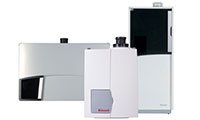


NHB Series
Showing all 4 results
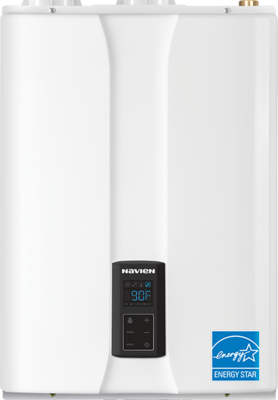
NHB Series Condensing Boilers for Hydronic Heating
NHB Series boilers are wall-mounted condensing gas boilers designed specifically for hydronic space heating rather than combined space heating and on-demand domestic hot water. The series includes four capacities from 55,000 to 150,000 BTU/h, with wide modulation ranges that help match boiler output to changing heating loads in radiant floor, radiator, baseboard and hydronic air-handler systems.
For Toronto and GTA homes, the right model should be selected from the building's calculated heat loss, minimum zone load and required water temperature. Choosing by maximum BTU alone can result in a boiler that handles the coldest day but cycles excessively through much of the heating season.
Compare NHB-55, NHB-80, NHB-110 and NHB-150
All four models provide 95% AFUE, but their maximum capacities and turndown ratios differ substantially. The minimum firing rate is particularly important for multi-zone systems because it determines how far boiler output can fall when only a small portion of the building needs heat.
NHB-55 Heating Boiler
The NHB-55 operates from approximately 8,000 to 55,000 BTU/h and has a 7:1 turndown ratio. Its lower maximum capacity makes it relevant to smaller or more energy-efficient properties where installing a conventional 80,000 or 100,000 BTU boiler would create unnecessary excess capacity.
The 8,000 BTU/h minimum input is equally important. A lower minimum firing rate can help the boiler remain operating when only a small radiant or radiator zone needs heat, although the active zone still needs enough capacity and water volume to absorb that output.
NHB-80 Heating Boiler
The NHB-80 increases maximum input to 80,000 BTU/h while maintaining an approximately 8,000 BTU/h minimum input. This gives it a 10:1 turndown ratio and a wider operating range than the NHB-55.
For a home whose design load falls between the smaller and larger models, the NHB-80 can provide additional cold-weather capacity without increasing minimum firing input. That can make it useful where both peak-load capability and small-zone operation matter.
NHB-110 Heating Boiler
The NHB-110 operates from approximately 10,000 to 110,000 BTU/h with an 11:1 turndown ratio. It provides greater peak heating capacity for larger residential or light commercial hydronic applications while still being able to reduce output substantially during part-load operation.
The decision between an NHB-80 and NHB-110 should come from calculated heat loss rather than floor area alone. Selecting the larger boiler for extra capacity that the building never needs can reduce the practical value of its higher maximum output.
NHB-150 Heating Boiler
The NHB-150 provides approximately 10,000 to 150,000 BTU/h of input and a 15:1 turndown ratio. It combines the highest maximum capacity in the series with the same approximate minimum input as the NHB-110.
This wide operating range can be useful for buildings with substantial design-day heating demand and much smaller loads during mild weather. The NHB-150 should still be selected from a heat-loss calculation rather than assuming the largest model provides the best performance.
How to Choose an NHB Series Boiler
The correct model needs enough output for Toronto winter design conditions without creating excessive capacity during normal and shoulder-season operation. The following factors have a direct impact on system selection and boiler performance.
Building Heat Loss
Maximum boiler capacity should cover the calculated design load. Existing boiler size and square footage alone can substantially overstate what the building actually requires.
Smallest Zone Load
Compare the smallest active hydronic zone with minimum boiler input. A very small zone can cause cycling even when maximum boiler sizing is correct.
Water Temperature
Radiant floors, radiators and baseboards can require different supply temperatures, which affects emitter output and condensing performance.
Domestic Hot Water
The NHB is a heating boiler, so homes requiring boiler-fed domestic hot water need a compatible indirect tank and appropriate controls.
Hydronic Flow
Boiler and system flow requirements need to be coordinated with pumps, zones and hydraulic separation to maintain stable operation.
Future Heating Changes
Planned additions or emitter upgrades should be quantified before capacity is added; arbitrary future-proofing can create an oversized boiler today.
NHB Series Boiler Sizing
Boiler sizing should start with a heat-loss calculation for the building at local winter design conditions. The result establishes the maximum heating output required to maintain indoor temperature when outdoor conditions approach the design point.
An older boiler's nameplate is not a reliable sizing method. Older equipment may have been intentionally oversized, while insulation, windows, air sealing or building additions may have changed the heating load since it was installed.
Maximum Capacity vs Minimum Firing Rate
Maximum input answers whether the boiler can meet peak demand. Minimum input answers whether it can reduce output enough when heating demand falls, making both numbers important for a Toronto heating season.
The NHB-80 is a useful example: it reaches 80,000 BTU/h but can reduce input to approximately 8,000 BTU/h. A boiler with similar maximum capacity but a substantially higher minimum input would behave differently when only a small heating load is active.
Why Turndown Ratio Matters
Turndown ratio describes the range between maximum and minimum burner input. The NHB Series progresses from 7:1 in the NHB-55 to 15:1 in the NHB-150, allowing the larger models to cover broad operating ranges.
A high turndown ratio is most useful when the building actually has a wide range between peak and minimum demand. It cannot correct undersized zones, poor flow, inadequate water volume or incorrect controls by itself.
Boiler Cycling in Small Hydronic Zones
Multi-zone hydronic systems can present a difficult part-load condition when one small zone calls for heat. If that zone cannot absorb the boiler's minimum output, supply temperature can rise quickly and end the burner cycle.
The Boiler Is Sized Correctly but Still Short Cycles
A boiler may closely match the home's total design heat loss but still cycle when one small bathroom or basement zone operates alone. The problem is the relationship between minimum boiler output and the active zone load, not necessarily excessive maximum boiler capacity.
NHB Series for Multi-Zone Heating
The wide modulation available within the NHB range makes these boilers relevant to homes divided into multiple hydronic zones. Integrated control functions include adjustable heat capacity, anti-cycle timing, minimum burner-time settings and outdoor-reset capability.
Good controls do not eliminate the need for proper zone design. Very small zones may require hydraulic or control strategies that prevent the boiler from repeatedly firing against loads below its practical minimum operating range.
NHB Series for Radiant Floor Heating
Radiant floors commonly operate at lower water temperatures than traditional baseboard or radiator systems, which can create favourable conditions for a condensing boiler. The NHB's modulation can also help follow the relatively steady heating loads typical of well-designed radiant systems.
Boiler selection still needs to account for the smallest manifold or zone. A small radiant area can require considerably less than the boiler's minimum input even when the complete building load is properly matched.
NHB Series for Hydronic Radiators
The NHB Series can serve radiator systems when boiler capacity, water temperature and system flow are matched to the installed radiation. Larger radiators may provide sufficient output at lower temperatures, while smaller or older systems can require hotter water during severe winter weather.
Before lowering water temperature to increase condensing operation, verify that the radiators can still release enough heat to satisfy the building load. Boiler efficiency should not be improved at the expense of room comfort.
NHB Series for Hydronic Baseboards
Hydronic baseboard output depends strongly on average water temperature and installed length. An NHB boiler can operate with baseboard heating, but the existing emitters determine how low supply temperature can be reduced while still maintaining room temperature.
A replacement project should therefore evaluate baseboard capacity before setting an aggressive outdoor-reset curve. Insufficient emitter output can make the coldest rooms fall behind even though the boiler itself has adequate capacity.
NHB Series for Hydronic Air Handlers
An NHB can supply hot water to compatible hydronic air-handler coils when required boiler output, water temperature and flow are properly coordinated. Air-handler performance can change significantly as supply-water temperature changes.
This creates a trade-off when trying to operate a condensing boiler at lower temperatures. The coil must still deliver the required air-side heating capacity, so its design conditions need to be checked before reducing boiler temperature.
95% AFUE and Condensing Performance
NHB Series boilers have a 95% AFUE rating and use dual stainless-steel heat exchangers. Actual system performance still depends on operating conditions, particularly return-water temperature and how closely boiler output follows the active heating load.
A high AFUE rating should therefore be considered together with emitter sizing and control strategy. A condensing boiler operating unnecessarily hot or cycling frequently may not deliver the same seasonal benefit as a properly matched hydronic system.
Return-Water Temperature and Boiler Efficiency
Condensing boilers recover additional heat when combustion gases cool enough for water vapour to condense within the heat exchanger. Lower hydronic return-water temperatures generally provide better conditions for this process.
That makes emitter capacity important. A system with enough radiator, baseboard or radiant-floor surface to heat the building at lower water temperatures can provide more opportunity for condensing operation than a system that requires very hot water throughout winter.
Outdoor Reset for Toronto Heating Conditions
Outdoor reset changes the target hydronic supply temperature as outdoor temperature changes. Toronto homes generally require less emitter output during mild weather than during the coldest winter conditions, so operating at one maximum water temperature throughout the season can be unnecessary.
The NHB integrated controls allow outdoor-reset adjustments, but the heating curve needs to match the building and emitters. A curve set too high can reduce condensing performance, while one set too low can prevent the home from maintaining temperature during cold weather.
NHB Series With an Indirect Water Heater
The NHB is a space-heating boiler rather than a combi boiler. Homes that want boiler-generated domestic hot water can pair the heating system with a compatible indirect storage tank instead of requiring on-demand DHW production inside the boiler.
This separates domestic hot-water storage from the boiler's space-heating function. It can be useful for households with higher simultaneous hot-water demand, but it requires additional floor space, piping, controls and tank sizing.
NHB Boiler vs Combi Boiler
Choosing between an NHB heating boiler and a combi boiler depends heavily on how domestic hot water will be produced. A heat-only boiler provides more flexibility to pair space heating with separate storage, while a combi consolidates both functions into one wall-mounted appliance.
NHB Series With an Indirect Tank vs Combi Hot Water
An indirect tank stores hot water and can use boiler priority for rapid recovery, while a combi boiler heats domestic water as it passes through the appliance. The difference becomes important when several fixtures may operate at the same time.
Stored hot water can provide a buffer for short periods of high demand, but the tank requires additional space and creates standby heat loss. On-demand combi production saves floor space but is constrained by available burner capacity and incoming-water temperature.
Domestic Hot-Water Priority
The NHB controls can support domestic-hot-water priority when the boiler is paired with an indirect tank. During a tank call, boiler capacity can be directed to domestic-water recovery before returning to normal space heating.
This can avoid sizing the boiler for maximum space-heating and domestic-hot-water loads simultaneously. The priority strategy should still be configured so an extended tank recovery does not create an unacceptable interruption to space heating during Toronto winter conditions.
NHB Series Installation
NHB installation requires more than mounting the boiler and connecting supply and return piping. Boiler flow, system flow, circulator sizing, hydraulic separation, gas supply, venting, condensate drainage, controls and the condition of the existing hydronic system all affect performance.
A retrofit should also identify whether the existing piping arrangement was designed around a high-mass conventional boiler. A modern low-water-content condensing boiler can require a different hydraulic approach to maintain stable flow.
Primary and Secondary Hydronic Piping
The NHB Series can use primary and secondary manifold arrangements to separate boiler circulation from the distribution system. This is useful where zone circulators or valves create changing system flow conditions.
Hydraulic separation does not replace pump sizing. Boiler-side and system-side circulators still need to provide the required flow against the resistance of their respective circuits.
Circulator Selection
An appropriately sized circulator is required to move water through the boiler and hydronic system. Pump selection depends on required flow and total head rather than boiler BTU capacity alone.
An oversized circulator can waste pumping energy and create unnecessary velocity, while an undersized pump can prevent the boiler from transferring heat effectively. Existing pumps should therefore be checked rather than automatically reused during replacement.
NHB Series Gas Supply
The series can operate on natural gas or propane when properly configured. Gas piping needs to support the selected boiler's maximum input along with other connected gas appliances in the building.
Some installations may permit relatively small gas piping under specific conditions, but pipe diameter should never be selected from a marketing claim alone. Available pressure, developed length, fittings and total connected load determine whether the existing gas line is adequate.
NHB Series Venting
The NHB uses forced-draft direct venting and supports approved single-pipe and two-pipe configurations. Two-inch venting can provide useful flexibility for some retrofit installations, subject to allowable equivalent length and fitting requirements.
Existing chimney or boiler venting should not automatically be reused. Condensing appliances operate with different exhaust temperatures and condensate characteristics, so the new vent system needs to be designed for the selected boiler.
Condensate Drainage
High-efficiency condensing operation produces condensate that must be routed to an appropriate drain. Boiler placement should therefore consider drainage at the same time as hydronic piping and vent routing.
A difficult or freeze-prone drain path can complicate an otherwise suitable installation. Toronto winter conditions make protection of any vulnerable condensate piping particularly important.
NHB Series for Multiple-Boiler Applications
The higher-capacity NHB models can be used in cascaded applications where multiple boilers are staged to meet a larger hydronic heating load. Staging allows total capacity to increase as demand rises instead of requiring the entire boiler plant to operate at once.
Multiple boilers can also provide redundancy, but they require more sophisticated hydraulic, control and venting design. A cascade should be selected because the building load and operational requirements justify it, not simply to maximize installed capacity.
NHB Series Boiler Replacement
The original NHB Series is now a legacy boiler platform, while newer heating-boiler generations are available. An existing NHB-55, NHB-80, NHB-110 or NHB-150 replacement should therefore be approached as a system-selection project rather than assuming the same model will be installed again.
The original model number is useful for understanding the existing system, but the current building heat loss, smallest zone, water-temperature requirements, indirect-tank load and hydronic flow should determine replacement capacity.
Replacing an NHB-55 or NHB-80
Lower-capacity NHB installations deserve particular attention to minimum firing rate when replacement equipment is selected. Moving to a boiler with substantially more maximum capacity or a higher minimum output can make a previously stable small-zone system cycle more frequently.
If insulation, windows or air sealing have been improved since the original installation, the current design load may also be lower. Recalculating heat loss can prevent an unnecessary step up in replacement capacity.
Replacing an NHB-110 or NHB-150
An existing higher-capacity model does not prove that the building still needs 110,000 or 150,000 BTU/h. The original unit may have been sized for a previous building condition, an indirect-tank load or an assumed safety margin.
Replacement planning should identify why the original capacity was selected. If current design heat loss is substantially lower, a smaller boiler with suitable modulation may provide a better operating match.
Replacing an NHB-150 With Another 150,000 BTU Boiler
A replacement selected only from the old nameplate can preserve unnecessary capacity after years of insulation, window or air-sealing improvements. The new boiler may easily meet peak load but spend most of the season operating against a much smaller demand than expected.
NHB Series vs NHB-H Series
The NHB-H is the newer generation of this heating-boiler platform and retains the four 55,000, 80,000, 110,000 and 150,000 BTU/h capacity classes with 95% AFUE and wide modulation. This makes it a logical comparison point when an original NHB reaches replacement age.
Replacement should still be selected from current load calculations rather than model-name equivalence. A home with an NHB-110 does not automatically require the corresponding 110,000 BTU/h current-generation model.
NHB Series vs Conventional Gas Boiler
A conventional non-condensing boiler typically operates with higher exhaust temperatures and does not recover latent heat from flue-gas condensation. The NHB uses condensing technology and can achieve 95% AFUE when installed and operated within appropriate system conditions.
The upgrade involves more than changing the boiler. Venting, condensate drainage and water-temperature strategy can all differ from the existing system, so replacement cost and scope should reflect the complete conversion.
NHB Series vs Heat Pump
An NHB boiler supplies heat through a hydronic distribution system, while a heat pump transfers heat using a refrigeration cycle and may use ducted or ductless air distribution or specialized hydronic equipment. The two systems therefore should not be compared from equipment efficiency ratings alone.
For an existing Toronto home with radiators, baseboards or radiant floors, the condition and required temperature of the hydronic distribution system are major decision factors. Changing heat sources can require more extensive system modifications than replacing a boiler within the existing hydronic architecture.
NHB Series Installation and Replacement Cost
Installed cost depends on boiler capacity, hydronic piping, circulators, hydraulic separation, venting, gas supply, condensate drainage, controls, indirect-tank integration and removal of the existing equipment. Converting from an older chimney-vented boiler can involve a different scope from replacing another wall-mounted condensing unit.
Equipment price should therefore not be used as the complete comparison. A lower-priced boiler that requires extensive piping or venting changes can result in a higher installed project cost than equipment better matched to the existing mechanical system.
NHB Series Selection and Replacement Checklist
Whether evaluating an existing NHB system or planning its replacement, confirm the heating load and hydronic operating conditions before choosing capacity. These checks help preserve the advantages of wide modulation without carrying unnecessary boiler capacity into the new system.
Evaluate the Right NHB Boiler Configuration
- Calculate the building's current design heat loss instead of matching the existing boiler nameplate.
- Compare the calculated load with the maximum output of each boiler size.
- Calculate the smallest individual zone load and compare it with minimum boiler input.
- Verify required water temperatures for radiant floors, radiators, baseboards or hydronic air handlers.
- Determine whether an indirect tank will use the boiler for domestic hot-water production.
- Confirm boiler-side and system-side flow requirements.
- Evaluate primary-secondary piping or other hydraulic separation requirements.
- Size circulators from required flow and head rather than reusing existing pumps automatically.
- Verify gas capacity for the boiler and all other connected appliances.
- Check allowable vent configuration, equivalent length and termination location.
- Plan an appropriate condensate drainage route.
- Review existing hydronic water quality before connecting replacement equipment.
- Configure outdoor reset around the actual emitter requirements of the building.
- Compare current heating-boiler options when replacing an original NHB Series unit.
- Compare total installed scope rather than equipment price alone.
Choosing an NHB Series Replacement in Toronto and the GTA
The NHB Series covers heating loads from approximately 55,000 to 150,000 BTU/h while providing minimum inputs as low as 8,000 to 10,000 BTU/h. That combination made the series particularly relevant to hydronic systems that need both cold-weather capacity and lower output during milder conditions.
For Toronto and GTA replacement projects, the most important decision is not which current boiler has the closest model number. Recalculate heat loss, evaluate the smallest zones, confirm emitter water temperatures and decide how domestic hot water will be produced before selecting the new boiler. This creates a replacement system matched to the building as it operates today.
FREE In-Home Estimate