


Performance Series Gas Boilers
Showing all 2 results
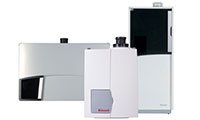
Performance Series Gas Boilers for Hydronic Heating
Performance Series Gas Boilers are hot-water heating systems designed for hydronic applications such as radiators, baseboards and radiant-floor heating. The category includes the BW9 Performance 90 and BWM Performance 95, giving homeowners a choice between a simpler single-stage boiler and a higher-efficiency modulating condensing boiler with a much broader capacity range.
For Toronto and GTA homes, the decision should be based on calculated heat loss, existing radiation, water-temperature requirements, venting, condensate drainage, available mechanical-room space and how much the heating load changes through the season. Selecting the highest AFUE rating without checking the hydronic system can add cost without delivering the expected efficiency improvement.
Performance 90 BW9 vs Performance 95 BWM
The two boilers differ significantly in efficiency, burner control, heat-exchanger construction and available heating capacity. The BWM is the stronger efficiency and modulation option, while the BW9 provides a simpler single-stage configuration for appropriate hydronic systems.
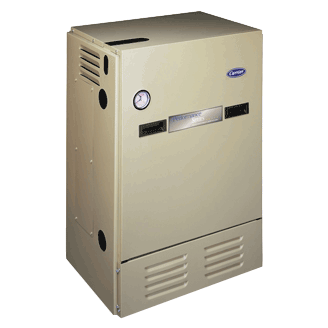
Performance 90 BW9 Gas Boiler
The BW9 is a 90% AFUE gas-fired hot-water boiler with a cast-aluminum heat exchanger, stainless steel burners, sealed combustion and a single-stage gas valve. Its rated heating output spans approximately 45,000 to 90,000 BTU per hour, making it most relevant to residential hydronic systems within that load range.
The single-stage burner makes the BW9 simpler than a modulating boiler, but it cannot reduce firing rate through mild Toronto weather in the same way as the BWM. That difference becomes important in homes with small zones or heating loads that spend much of the winter well below design conditions.
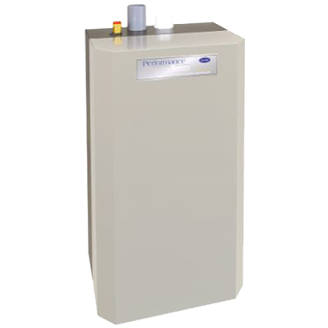
Performance 95 BWM Gas Boiler
The BWM reaches up to 95% AFUE and uses a stainless-steel heat exchanger with a modulating gas valve capable of approximately 5:1 turndown. Rated heating output extends from approximately 50,000 to 299,000 BTU per hour, giving the series a considerably broader capacity range than the BW9.
Modulation allows the boiler to reduce output as heating demand falls rather than repeatedly delivering full fire. The benefit is greatest when the boiler is properly sized and the connected hydronic system can operate at water temperatures that support efficient condensing performance.
Single-Stage vs Modulating Boiler Operation
Burner control has a direct effect on how closely boiler output can follow the home's changing heat requirement. Toronto heating loads vary considerably between a mild November afternoon and a cold January night, making part-load performance an important selection factor.
Boiler Sizing for Toronto Homes
A gas boiler should be sized from the home's design heat loss, not from the capacity of the old boiler or from square footage alone. Insulation, windows, air leakage, exterior exposure, building construction and Toronto winter design conditions determine how much heat the building actually requires.
Older boilers are frequently larger than the current load requires, particularly after windows, insulation or air sealing have been upgraded. Replacing an oversized boiler with another unit of the same input can reproduce short cycling and reduce the benefit of a higher-efficiency replacement.
Why Boiler Oversizing Matters
Boiler capacity needs enough margin to meet design-day heating demand, but unnecessary excess capacity can reduce operating quality. The consequence differs between the single-stage BW9 and modulating BWM, yet neither should be selected simply by moving to the next larger size.
Replacing an Old Boiler With the Same BTU Rating
An older Toronto home may have received insulation, new windows and air-sealing improvements since its original boiler was installed. Repeating the old capacity without a new heat-loss calculation can leave the replacement oversized, causing shorter cycles and poorer part-load operation.
AFUE and Actual Boiler Efficiency
AFUE provides a useful standardized comparison between the 90% BW9 and up-to-95% BWM, but it should not be treated as the complete measure of installed performance. Water temperature, boiler cycling, outdoor reset, piping configuration and system control all affect how efficiently heat is delivered through the season.
The difference is especially important with a condensing boiler. A high AFUE rating provides the greatest benefit when return-water temperatures allow the boiler to condense regularly rather than operating most of the season at elevated water temperatures.
Condensing Boiler Performance and Return-Water Temperature
The BWM gains efficiency by recovering heat from water vapour in the combustion gases. To maximize that process, the hydronic system should return sufficiently cool water to the boiler for meaningful periods of operation.
Radiant-floor systems are often well suited to lower-temperature operation. Older radiator or baseboard systems may also work effectively with a condensing boiler, but their required water temperature should be evaluated rather than assuming that every existing system will achieve the maximum rated efficiency.
BW9 vs BWM for Existing Radiators and Baseboards
The type and amount of installed radiation influence which boiler configuration makes sense. Oversized radiators or generous baseboard length can sometimes heat the home with lower water temperatures, while a marginal radiation system may require hotter water during severe cold.
Radiant Floor Heating
Lower water-temperature requirements can favour the BWM because they create stronger conditions for condensing operation.
Cast-Iron Radiators
Large radiator surface area can support lower water temperatures in some homes, but actual design output should be checked before selecting the boiler.
Hydronic Baseboards
Available baseboard length and required design-day output determine whether lower-temperature operation is practical.
Small Heating Zones
BWM modulation can better accommodate changing loads, but the minimum firing rate still needs to be compared with the smallest active zone.
Simpler Replacement
BW9 may suit an appropriate hydronic application where single-stage operation and its capacity range match the existing system.
Large Heating Load
BWM extends to substantially higher output capacities, making it the relevant option within this category when loads exceed the BW9 range.
Outdoor Reset and Toronto Weather
Outdoor-reset control adjusts boiler water temperature as outdoor conditions change. Instead of supplying design-day water temperature throughout the heating season, the system can use cooler water during milder weather and increase temperature as the outdoor temperature falls.
This is particularly useful with the BWM because lower return-water temperatures can increase condensing operation. It can also improve comfort by reducing unnecessary high-temperature cycling during Toronto's long shoulder seasons.
Performance Series Gas Boiler Installation
Installation should include heat-loss sizing, hydronic-system assessment, gas supply verification, venting, electrical requirements, circulator and piping design, expansion-tank review, air elimination, controls, safety devices and full commissioning. The BWM additionally requires proper condensate drainage because it is a condensing boiler.
Replacing a boiler is not simply a matter of reconnecting four pipes. Existing pumping arrangements, system pressure, old piping, zone valves, mixing controls and radiation temperatures can affect how the new boiler performs.
Primary and Secondary Piping Considerations
The BWM incorporates primary and secondary piping features that help separate boiler flow requirements from system flow. This can be valuable in zoned hydronic systems where individual loops operate at different flow rates.
Piping still needs to be evaluated as a complete system. Incorrect circulator placement or flow design can create insufficient boiler flow, poor heat distribution or unwanted interaction between zones even when the boiler itself is correctly sized.
Venting Requirements
Both Performance Series models require an approved combustion-air and venting arrangement. Vent material, equivalent length, termination location and clearances must match the selected boiler and installation conditions.
Changing from an older chimney-vented boiler to a direct-vent system can require substantial changes to the mechanical room and exterior termination. Venting feasibility should therefore be confirmed before assuming a particular boiler will be a direct replacement.
Condensate Drainage for the BWM
The BWM produces condensate during efficient operation, so a suitable drain route is part of the installation. The drain system must remain reliable throughout the heating season and should be accessible for service.
A mechanical room without a convenient drain can require additional condensate planning. Ignoring that requirement until installation day can add unexpected labour or restrict where the boiler can be positioned.
Mechanical-Room Space and Service Access
Physical boiler dimensions are only part of the space requirement. Piping, valves, circulators, venting, gas connections, electrical components and future service access all require room around the equipment.
A compact boiler can improve mechanical-room flexibility, but installing it into a location that makes the heat exchanger, burner, controls or piping difficult to reach can increase future service costs.
Performance Series Gas Boiler Replacement
A replacement project should begin by identifying the existing boiler input and output, venting, radiation type, zone configuration, design water temperature and actual building heat loss. Those details determine whether the BW9 or BWM is technically appropriate.
The original boiler model should not dictate the replacement capacity. Changes to the home and hydronic system may justify a different output, and replacing a conventional boiler with a modulating condensing system may require changes to piping, venting and condensate handling.
BW9 Replacement vs BWM Upgrade
Moving from a BW9-style single-stage boiler to the BWM can increase rated efficiency and add modulation, but the value depends on the existing hydronic system. A home capable of operating with lower water temperatures can take greater advantage of condensing technology.
If the radiation requires high temperatures throughout most of the heating season, the BWM can still modulate, but its seasonal efficiency benefit may be smaller than the headline AFUE difference suggests.
Legacy Equipment and Current Availability
The Performance Series category currently includes the BW9 and BWM. Product generations and available boiler models can change over time, so equipment availability should be confirmed before designing a new installation around a specific model.
For an existing BW9 or BWM replacement, model availability is only one factor. Venting, piping, controls, system temperatures and current equipment compatibility should be reassessed rather than assuming an identical replacement will remain the best option.
Performance Series Gas Boiler vs Standard Cast-Iron Boiler
The major decision is between higher-efficiency direct-vent equipment and a more conventional lower-efficiency cast-iron boiler design. A standard boiler can offer simpler operation in an appropriate existing hydronic system, while the Performance 90 and Performance 95 target higher efficiency.
Gas Boiler vs Furnace for an Existing Hydronic Home
A boiler heats water for radiators, baseboards or radiant floors, while a furnace heats air and requires a duct-distribution system. For a Toronto home that already has a functional hydronic network, replacing the boiler is usually less disruptive than converting the entire house to forced air.
A furnace becomes more relevant when usable ductwork already exists or when a major renovation includes a complete change in distribution. The equipment price alone does not capture the cost of converting radiation, piping and mechanical systems.
Gas Boiler vs Heat Pump
A gas boiler can integrate directly with an existing hot-water heating system, while most residential air-source heat pumps deliver heat through ductwork or ductless indoor units. The better replacement path depends heavily on the home's existing distribution system.
A hydronic home should not be evaluated from equipment efficiency alone. Converting to another heating technology can involve new air distribution, electrical capacity or hybrid-system design, while replacing the boiler can preserve existing radiators or radiant floors.
Performance Series Gas Boiler Installation Cost
Installed cost depends on boiler model and capacity, piping changes, venting, gas supply, circulators, controls, condensate requirements, electrical work, system cleaning and the condition of the existing mechanical room. A straightforward BW9 replacement can therefore have a very different scope from converting an older boiler to a BWM condensing installation.
Home size alone is not enough to estimate the project accurately. Two Toronto homes with similar floor area can have different zone counts, radiation types, venting conditions and mechanical-room layouts that materially change installation cost.
What Changes Boiler Replacement Cost?
The following factors should be identified before comparing boiler quotations. They affect both the equipment selection and the labour required to integrate the boiler correctly with the existing hydronic system.
- BW9 or BWM boiler selection
- Required design heating output
- Number and size of hydronic zones
- Radiators, baseboards or radiant-floor heating
- Required supply and return water temperatures
- Existing boiler piping configuration
- Circulator and zone-control requirements
- Gas-line capacity
- Combustion-air and venting changes
- Condensate drainage for a condensing boiler
- Expansion tank and air-separation requirements
- Electrical and control upgrades
- Mechanical-room access
- Removal of the existing boiler
- Condition and cleanliness of the existing hydronic system
Performance Series Gas Boiler Selection Checklist
The strongest choice between the BW9 and BWM comes from matching boiler operation to the building and hydronic system rather than comparing AFUE alone. Complete these checks before finalizing a new installation or replacement.
Choose the Right Performance Series Gas Boiler
- Calculate the home's design heat loss before selecting boiler capacity.
- Do not automatically replace the old boiler with the same BTU rating.
- Choose within the BW9 output range only when it matches the actual heating load.
- Consider BWM when higher efficiency and modulating operation provide practical value.
- Compare the BWM minimum firing rate with the smallest active heating zone.
- Determine the water temperature required by existing radiators, baseboards or radiant floors.
- Evaluate whether return-water temperatures can support regular condensing operation.
- Consider outdoor-reset control when variable water temperatures suit the hydronic system.
- Review existing circulators, zone valves and piping before replacement.
- Verify gas supply capacity for the selected boiler input.
- Confirm approved combustion-air and venting routes before installation.
- Plan condensate drainage when selecting the BWM.
- Allow sufficient mechanical-room space for piping and future service.
- Compare boiler replacement with system conversion only after accounting for distribution-system changes.
- Confirm current equipment availability before designing around a specific model.
- Compare complete installed cost rather than boiler price alone.
Choose a Performance Series Gas Boiler for Toronto and the GTA
The Performance Series Gas Boiler category offers two distinct hydronic heating approaches. The BW9 Performance 90 combines 90% AFUE with single-stage operation in a residential capacity range, while the BWM Performance 95 adds up to 95% AFUE, 5:1 modulation, condensing operation and substantially greater available heating output.
For Toronto and GTA homes, the better choice depends on actual heat loss, zone size, radiation type, required water temperature, venting, condensate drainage and mechanical-room conditions. Correct boiler sizing and hydronic-system integration are more important to long-term performance than selecting equipment solely from maximum AFUE.
FREE In-Home Estimate