


Performance Series Oil Boilers
Showing all 2 results

Performance Series Oil Boilers for Hydronic Heating
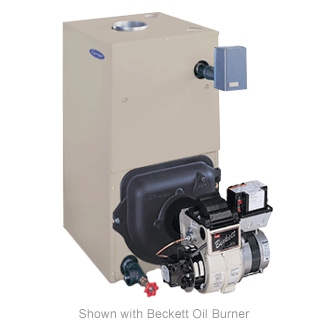
Performance Series Oil Boilers are oil-fired hot-water boilers designed for hydronic systems such as radiators, baseboards and radiant heating. The category includes the BW4 for space heating and the BW5 with an integrated tankless coil for domestic hot-water production, allowing the system to be selected around both heating load and hot-water requirements.
For Toronto and GTA properties that continue to use heating oil, the main decisions are boiler capacity, whether domestic hot water should come from the boiler, existing chimney and venting conditions, oil-tank infrastructure, hydronic-system temperature, installation cost and whether retaining oil remains preferable to converting to another heating source.
Performance 86 BW4 vs BW5 Oil Boilers
Both models use a cast-iron heat exchanger, electronic ignition and oil-fired hot-water operation with efficiency up to 86.2% AFUE. The key functional difference is that the BW5 includes a tankless domestic hot-water coil, while the BW4 is intended for space-heating water only.
Performance 86 BW4 Oil Boiler
The BW4 is designed to supply hot water to a hydronic heating system without an integrated domestic hot-water coil. It reaches up to 86.2% AFUE and uses a cast-iron heat exchanger with compatible oil-burner configurations.
The BW4 is usually the more logical choice when domestic hot water is already handled by a separate tank, indirect water heater, tankless system or another dedicated appliance. Adding boiler-based domestic-water capability provides little benefit when a separate water-heating strategy is already working effectively.
Performance 86 BW5 Oil Boiler
The BW5 adds a tankless coil that allows the boiler to produce domestic hot water as well as supplying the hydronic heating system. Available configurations provide approximately 2.9 to 4 gallons per minute of domestic water output under applicable operating conditions.
The convenience of one appliance handling both loads comes with a trade-off. Domestic hot-water demand can require the boiler to remain available outside the primary heating season, so households with significant summer hot-water use should compare this arrangement with a separate water heater or indirect tank before choosing the BW5.
BW4 or BW5: Which Oil Boiler Fits the Home?
The correct model depends largely on how domestic hot water is produced and whether changing that arrangement creates a practical benefit. The scenarios below identify where each configuration gains an advantage.
Separate Water Heater
BW4 is usually the simpler fit when domestic hot water already comes from a dedicated appliance that will remain in service.
Boiler Supplies Hot Water
BW5 is designed for properties where one oil boiler is expected to provide both hydronic heat and domestic hot water.
High Hot-Water Demand
Compare tankless-coil output with actual simultaneous shower, fixture and appliance demand before assuming the BW5 will meet peak household use.
Large Hydronic Load
Select the boiler section and firing configuration from calculated building heat loss rather than choosing the largest available boiler.
Existing Oil Infrastructure
Retaining oil can simplify replacement when the tank, fuel line, chimney and hydronic distribution remain serviceable.
Major Heating Renovation
A major boiler replacement is also an opportunity to compare oil with gas, electric heat pumps or hybrid alternatives before reinvesting in fuel infrastructure.
Oil Boiler Capacity and Heat-Loss Sizing
Available Performance 86 configurations cover a broad residential heating range, with rated heating outputs reaching from roughly 80,000 to more than 200,000 BTU per hour depending on boiler size and firing configuration. That range does not mean a larger boiler provides better comfort.
A Toronto home should be sized from design heat loss using insulation levels, windows, air leakage, exterior exposure and winter design temperature. Replacing an old boiler with the same BTU rating can repeat decades-old oversizing, particularly after energy-efficiency improvements have reduced the building load.
Why Oversizing an Oil Boiler Causes Problems
Traditional oil boilers generally have less ability to reduce output than modern modulating equipment. Correct sizing therefore has a direct effect on cycling behaviour and seasonal efficiency.
Replacing a 200,000 BTU Boiler Without Recalculating the Load
If insulation, windows or air sealing have reduced the home's heat loss, another boiler at the old capacity can deliver far more heat than the system needs. Frequent burner cycling can increase wear and reduce seasonal efficiency without improving comfort.
AFUE and Real-World Oil Boiler Efficiency
Performance Series Oil Boilers reach up to 86.2% AFUE, but actual fuel consumption also depends on boiler sizing, burner setup, water temperature, cycling, chimney performance, hydronic controls and annual maintenance. The highest published efficiency is therefore a useful comparison point, not a guarantee of identical field performance in every installation.
An older oversized boiler can sometimes use substantially more fuel than a correctly sized replacement even when the difference in rated AFUE appears modest. Equipment selection and commissioning need to be considered together.
Cast-Iron Boiler Performance
Both the BW4 and BW5 use sectional cast-iron heat exchangers, a conventional approach for oil-fired hydronic boilers. Cast iron provides substantial thermal mass and is well suited to traditional radiator and baseboard systems.
Thermal mass can also mean slower response compared with lower-mass modern equipment. That is not necessarily a disadvantage in a steady hydronic system, but it should be considered when homeowners expect rapid temperature recovery or highly variable zoning.
Performance Series Oil Boilers for Radiators and Baseboards
These boilers are designed for hot-water hydronic distribution, making them relevant to homes with cast-iron radiators, fin-tube baseboards and other water-based emitters. The existing radiation should still be evaluated before boiler replacement because its required water temperature affects system operation.
Installing a new boiler does not correct undersized radiation, poor balancing or blocked flow. If one room has always been cold, increasing boiler capacity can overheat the rest of the house without solving the actual distribution problem.
Oil Boilers and Radiant-Floor Heating
Radiant floors typically operate at lower water temperatures than conventional baseboards or radiators. An oil boiler can serve radiant heating, but the piping and controls may need to protect both the boiler and the low-temperature floor circuit.
Mixing controls, hydraulic separation or other system components may be required depending on the installation. Connecting a high-temperature boiler directly to a low-temperature floor loop without appropriate control can create uncomfortable floor temperatures and poor system operation.
BW5 Tankless Coil vs Separate Water Heater
The BW5 can produce domestic hot water through its internal tankless coil, while the BW4 leaves domestic water heating to another appliance. The best configuration depends on household hot-water demand and whether operating the boiler outside the heating season is acceptable.
Oil Burner Selection and Setup
Performance 86 boilers can be configured with suitable oil burners, including commonly used burner platforms. The burner must be matched and commissioned for the boiler section, firing rate, chimney draft and fuel conditions rather than selected independently.
Incorrect nozzle size, combustion adjustment or draft can increase soot formation and reduce efficiency. Proper burner setup is therefore a significant part of oil boiler installation and annual servicing.
Chimney and Venting Requirements
Oil-fired boilers require an approved flue path capable of safely carrying combustion products. Existing chimney size, liner condition, draft, height and termination should be inspected before a replacement boiler is selected.
A chimney that worked with an older, less efficient boiler is not automatically suitable for the replacement. Changes in flue-gas temperature and firing rate can affect draft and condensation conditions, making chimney assessment part of the installation rather than an optional afterthought.
Oil Tank and Fuel-Line Condition
Replacing the boiler while ignoring the oil-storage system can leave a major reliability issue untouched. Tank age and condition, fuel-line routing, filters, shutoff components and signs of corrosion or leakage should be evaluated as part of the project.
If the oil tank is approaching replacement age or requires substantial upgrades, the combined cost can change the economics of staying with oil. This is particularly important when comparing boiler replacement with conversion to another heating source.
Performance Series Oil Boiler Installation
Installation should include heat-loss sizing, hydronic-system inspection, boiler and burner matching, chimney and draft assessment, oil-supply review, electrical connections, circulator and control evaluation, expansion-tank assessment, safety devices and combustion commissioning.
A straightforward replacement can reuse some existing infrastructure when it remains appropriate. Older piping, circulators, chimney components or oil lines should not be retained solely to reduce installation cost if they compromise the new boiler's operation.
Hydronic Piping and Zone Controls
Boiler replacement should include a review of supply and return piping, circulators, zone valves, air elimination and expansion control. The boiler may be new while the rest of the hydronic system is several decades old.
Small zones deserve particular attention with a fixed-output oil boiler. If one small zone calls independently, its heat demand can be far below the boiler's firing rate, increasing short cycling unless the system design manages the mismatch appropriately.
Performance Series Oil Boiler Replacement
Replacement decisions should consider the condition of the complete oil-heating system rather than the boiler alone. Boiler age, burner reliability, heat-exchanger condition, chimney, oil tank, fuel lines, hydronic controls and domestic hot-water equipment can all influence whether a direct oil replacement is sensible.
If most of the supporting infrastructure remains serviceable, replacing an oil boiler can preserve an existing radiator or baseboard system with comparatively little disruption. If several major components also require replacement, alternatives deserve closer financial and technical comparison.
BW4 vs BW5 for Replacement
Replacing a BW4-type installation with another space-heating boiler is straightforward conceptually when a separate domestic-water system remains suitable. A BW5-style configuration requires consideration of both space-heating capacity and household hot-water demand.
A homeowner does not have to reproduce the original domestic-water arrangement. If an older tankless coil has provided inconsistent hot water or forces year-round boiler operation, replacement can be an opportunity to separate the two loads.
Oil Boiler vs Cold-Climate Heat Pump
A cold-climate heat pump can provide both heating and cooling and can use substantially less purchased energy to deliver a unit of heat than an oil boiler. The conversion decision is more complex in a hydronic home because most air-source heat pumps distribute heat through ductwork or ductless indoor units rather than existing hot-water radiators.
Oil Boiler vs Gas Boiler
A gas conversion can remove the need for an oil tank and fuel deliveries where natural gas service is available. It can also open access to modulating condensing boilers with higher rated efficiencies than traditional oil-fired cast-iron equipment.
Conversion cost includes more than the new boiler. Gas service, venting, piping, removal or decommissioning of oil equipment and modifications to the hydronic system can materially change the project budget.
Oil Boiler vs Electric Boiler
An electric boiler can preserve hydronic distribution without onsite combustion, chimney venting or an oil tank. Its installation can therefore be attractive in some existing radiator and radiant-floor homes.
The trade-off is electrical demand and operating economics. Large Toronto heating loads can require substantial electrical capacity, so panel and service limitations should be assessed before treating an electric boiler as a simple replacement.
Oil Boiler Installation Cost
Performance Series Oil Boiler installation cost depends on boiler size, BW4 or BW5 selection, burner configuration, chimney condition, oil tank and fuel lines, hydronic piping, domestic hot-water requirements, electrical work, controls and removal of existing equipment.
A direct replacement using suitable existing infrastructure can have a very different cost from a project requiring a new chimney liner, tank replacement, extensive piping changes or a revised domestic hot-water arrangement. Comparing boiler prices without the installation scope does not provide a reliable project comparison.
What Changes Oil Boiler Replacement Cost?
The following factors should be identified before comparing quotations. They determine whether the project is primarily an equipment replacement or a broader upgrade to the oil-heating and hydronic system.
- BW4 or BW5 boiler selection
- Calculated design heat loss
- Required boiler firing rate and output
- Domestic hot-water requirements
- Tankless-coil or separate water-heater strategy
- Existing radiator, baseboard or radiant-floor system
- Number and size of heating zones
- Circulator and control condition
- Chimney and liner condition
- Draft and venting modifications
- Oil-tank age and condition
- Fuel-line and filter requirements
- Electrical and control upgrades
- Existing boiler removal
- Hydronic-system cleaning or piping changes
When Staying With Oil Makes Sense
A direct oil-boiler replacement can remain practical when the home has a sound hydronic distribution system, a serviceable oil tank, suitable venting and no compelling reason to rebuild the heating infrastructure. It can preserve familiar radiator or baseboard comfort with limited changes to the home.
The decision becomes less straightforward when the tank, chimney and boiler all require significant investment. At that point, comparing total replacement cost with gas, electric or heat-pump alternatives provides a more useful long-term decision than comparing boiler equipment prices alone.
Performance Series Oil Boiler Selection Checklist
The best choice should account for the complete heating, domestic-water and fuel system. Use these checks before selecting a BW4 or BW5 installation or replacing an existing oil boiler.
Choose the Right Performance Series Oil Boiler
- Complete a heat-loss calculation before selecting boiler capacity.
- Do not automatically match the BTU rating of the existing boiler.
- Choose BW4 when space heating is required and domestic hot water is handled separately.
- Consider BW5 when boiler-generated domestic hot water is part of the system design.
- Compare BW5 tankless-coil output with actual household hot-water demand.
- Consider summertime boiler operation when choosing an integrated domestic hot-water coil.
- Check radiator, baseboard or radiant-floor requirements before replacing the boiler.
- Review the smallest heating zone for potential short-cycling issues.
- Inspect the chimney, liner and draft conditions before installation.
- Inspect the oil tank, fuel line, filter and shutoff components.
- Verify burner selection and firing rate for the chosen boiler configuration.
- Include proper combustion setup and commissioning in the installation scope.
- Review circulators, expansion control, air elimination and zone controls.
- Compare the cost of required oil-infrastructure upgrades with alternative heating systems.
- Consider a heat pump, gas boiler or electric option when major infrastructure changes are already required.
- Compare total installed cost rather than boiler price alone.
Choose a Performance Series Oil Boiler for Toronto and the GTA
Performance Series Oil Boilers provide two closely related options for homes retaining oil-fired hydronic heating. The BW4 focuses on space heating, while the BW5 adds domestic hot-water production through an integrated tankless coil. Both use cast-iron heat exchangers and reach up to 86.2% AFUE.
For Toronto and GTA properties, the stronger choice depends on heat-loss sizing, domestic hot-water demand, existing radiation, chimney condition, oil-storage infrastructure and the cost of alternative heating options. A well-matched replacement should solve the complete heating-system requirement rather than simply duplicate the old boiler.
FREE In-Home Estimate