


Q Premier Series
Showing the single result
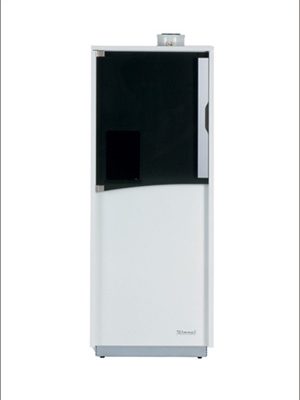
Q Premier Series Condensing Boilers for Heating and Hot Water
Q Premier Series boilers are floor-standing condensing gas systems that combine hydronic space heating with an integrated indirect domestic hot-water tank in one assembled unit. The category is designed for homes that need radiator, baseboard or radiant heating while also requiring higher stored hot-water capacity than a typical instantaneous combi configuration provides.
For Toronto and GTA homes, the main decisions are heating-load suitability, domestic hot-water demand, available mechanical-room space, hydronic compatibility, venting, gas supply, condensate drainage and replacement availability. The integrated design can simplify a boiler-and-tank installation, but it should still be selected from actual heating and hot-water loads rather than equipment capacity alone.
Q Premier Series Product in This Category
The category currently contains the QP130N, an all-in-one condensing system combining a 130,000 BTU boiler with a 24-gallon stainless-steel indirect domestic hot-water tank. Its integrated design is intended to provide high domestic hot-water output without requiring a conventional separate boiler and large indirect tank installation.
Boiler and Indirect Tank in One System
The defining feature of the Q Premier Series is its combination of a condensing boiler and charged indirect domestic hot-water tank within one engineered package. This differs from both a heat-only boiler with a separately installed tank and an instantaneous combi boiler.
The integrated approach can reduce mechanical-room complexity, but it also means the heating and domestic-water systems are closely tied to one appliance. Homeowners should compare space savings and installation simplicity against the flexibility of separate equipment.
Q Premier vs Separate Boiler and Indirect Tank
Both approaches can provide hydronic heating and stored domestic hot water. The main difference is whether the boiler, tank and associated components arrive as an integrated system or are selected and installed separately.
Q Premier vs Instantaneous Combi Boiler
An instantaneous combi boiler heats domestic water as it is used, while the Q Premier stores hot water in an integrated indirect tank and reheats that tank using boiler output. The two approaches respond differently to short periods of high hot-water demand.
Multiple Bathrooms
Stored hot water can help support periods when several fixtures operate close together instead of depending entirely on instantaneous boiler output.
Large Tub Filling
An indirect tank can provide a useful reserve for high-flow events that may challenge a smaller instantaneous combi system.
Limited Mechanical Space
The integrated tank is more compact than many traditional boiler-and-indirect arrangements but still requires floor space unlike a wall-mounted combi.
Very Low Heating Load
The 130,000 BTU maximum boiler input should still be checked against the building load so domestic-water requirements do not create excessive space-heating capacity.
High Peak Water Demand
Stored capacity and rapid recovery can make the integrated indirect approach attractive where several domestic-water loads occur in a short period.
Maximum Equipment Flexibility
A separate boiler and water heater may be preferable when each load needs to be sized or replaced independently.
Domestic Hot-Water Performance
The QP130N uses a 24-gallon stainless-steel indirect tank but can deliver substantially more hot water than the stored tank volume alone because the boiler reheats the tank during use. First-hour delivery can reach approximately 211 gallons under applicable rating conditions.
Peak performance is listed at about 5.6 gallons per minute for a limited period, with approximately 3.2 gallons per minute of continuous domestic-water flow at a 75°F temperature rise. Those figures should be evaluated against actual household demand rather than used as universal flow guarantees.
Toronto Winter Conditions and Hot-Water Demand
Domestic-water performance changes with incoming water temperature. Toronto winter inlet water can require a larger temperature rise than warmer seasonal water, increasing the energy needed to reach the desired outlet temperature.
The integrated tank helps buffer short-term demand, but households with multiple simultaneous showers, large tubs or other high-flow fixtures should still have peak domestic-water requirements calculated before replacement.
Choosing From Tank Size Alone
A 24-gallon tank may appear too small when compared only with a conventional storage tank. The Q Premier uses boiler recovery to produce far more first-hour hot water than its stored volume, so comparing tank capacities without recovery performance can lead to the wrong system choice.
Q Premier Series Boiler Efficiency
The QP130N operates at approximately 95.4% AFUE and uses condensing technology to capture additional heat from combustion gases. This places it in a different performance class from many older non-condensing floor-standing boilers.
Rated AFUE does not mean every hydronic installation will achieve identical seasonal efficiency. Return-water temperature, boiler cycling, outdoor reset settings, radiation design and commissioning influence how effectively condensing operation is used.
Condensing Performance and Return-Water Temperature
Condensing boilers gain their largest efficiency advantage when return water is cool enough to promote condensation within the heat exchanger. Lower-temperature heating systems generally create more favourable operating conditions.
An older Toronto radiator or baseboard system may still require higher water temperatures during the coldest weather. The boiler can operate under those conditions, but it may condense less during peak-load periods than it does in milder weather.
Q Premier Series for Radiant Floor Heating
Radiant-floor systems commonly operate at lower water temperatures, which can support efficient condensing operation. The Q Premier can therefore be suitable where the heating load and required system flow match the boiler.
The 130,000 BTU maximum input still needs to be justified by the total load. A small radiant system should not be paired with a larger boiler solely to gain the integrated domestic-water tank without evaluating part-load operation.
Q Premier Series for Radiators
Cast-iron radiators can work with a condensing boiler when the system is correctly designed. Generously sized radiators may provide sufficient heat at lower water temperatures during much of the Toronto heating season.
Automatically reproducing the previous boiler's high supply temperature can reduce opportunities for condensing operation. Radiation output and actual heat loss should guide the new heating curve.
Q Premier Series for Hydronic Baseboards
Fin-tube baseboards can also be used with the system, but their heat output falls as water temperature decreases. Available baseboard length therefore affects how low the boiler water temperature can be while still maintaining room comfort.
A room that has always struggled to maintain temperature may have a radiation or flow problem rather than insufficient boiler capacity. Increasing boiler size cannot correct inadequate baseboard length.
Outdoor Reset and Toronto Heating Loads
An outdoor reset sensor allows boiler water temperature to change with outdoor conditions. During mild weather, lower water temperatures can reduce unnecessary heat output and create more opportunities for condensing operation.
As Toronto temperatures fall, the control can increase supply temperature to maintain indoor comfort. The reset curve must still be configured for the actual radiation because excessively high settings reduce efficiency while settings that are too low can underheat the building.
Modulation and Boiler Sizing
The Q Premier uses modulating combustion so burner input can decrease as heating demand falls. This matters because a home's heating requirement is below its design maximum for most of the winter.
Modulation reduces cycling but cannot fully correct severe oversizing. QP130N has a minimum input of approximately 26,000 BTU, so the smallest active heating zone should be evaluated as carefully as the home's maximum design load.
Why Minimum Output Matters in Zoned Homes
A Toronto home can have a total heat loss that suits a 130,000 BTU boiler while individual zones require only a small fraction of that capacity. When just one low-load zone calls, minimum boiler output becomes the limiting factor.
A Small Zone Calls by Itself
If a small bathroom, basement or bedroom zone can absorb less heat than the boiler produces at minimum fire, water temperature can rise quickly and force the burner to cycle. Correct zoning and hydronic design are therefore essential even when maximum boiler capacity is properly sized.
Heat-Loss Sizing for QP130N
The 130,000 BTU maximum heating input should be compared with a current heat-loss calculation rather than the capacity of the boiler being replaced. Older systems were often sized with substantial excess capacity, and later insulation, window and air-sealing improvements may have reduced the building load.
Domestic hot-water demand should be calculated separately. A strong need for stored hot water does not automatically mean the home's space-heating load requires the full QP130N capacity.
Integrated Low-Loss Header and Hydronic Piping
The Q Premier platform incorporates a low-loss header and near-boiler components intended to simplify hydraulic separation between boiler circulation and the building heating circuit. This can reduce some of the field assembly required in a conventional boiler-and-tank installation.
The integrated header does not eliminate system-design requirements. Circulators, zone valves, system resistance and emitter flow still need to be matched to the home's hydronic distribution.
Integrated Expansion and Domestic-Water Components
The platform combines several components that would normally be selected and mounted separately, including domestic-water pumping, expansion equipment and connections for the integrated tank. Fewer separate components can simplify the mechanical-room layout.
The trade-off is replacement compatibility. When an integrated system reaches the end of its service life, converting to a different boiler platform may require more piping changes than replacing one component in a conventional separate system.
Q Premier Series Boiler Installation
Installation should include heat-loss verification, domestic hot-water sizing, hydronic flow assessment, gas-line sizing, venting, condensate drainage, electrical connections, water quality review, zone-control integration and combustion commissioning.
The Q Premier arrives as a more complete assembly than a separately sourced boiler-and-tank system, but existing mechanical-room conditions still determine project complexity. Replacement of an older boiler can require significant changes despite the integrated format.
Mechanical-Room Space
The Q Premier uses a floor-standing format that integrates the boiler and 24-gallon tank into one vertical assembly. It occupies less floor area than many traditional boiler-and-large-indirect-tank combinations.
It does not provide the same wall-space advantage as a wall-mounted combi boiler. Mechanical-room access, service clearance, equipment height and the path for removing existing equipment should all be checked before choosing the system.
Gas Supply Requirements
The natural-gas supply must support up to approximately 130,000 BTU of boiler input while also accounting for other gas appliances that can operate at the same time. Existing gas piping should therefore be calculated rather than assumed adequate.
A boiler replacement can require gas-line modifications even if both the old and new appliances use natural gas. Pipe length, diameter and total connected load determine available capacity.
Q Premier Series Venting
Condensing operation requires approved combustion-air and exhaust venting. The platform supports several venting configurations, but equivalent length, elbows, material, termination location and clearances still determine what is practical in a particular Toronto home.
Replacing a chimney-vented boiler generally requires a new vent path. Venting should be evaluated before the final equipment location and installation price are established.
Condensate Drainage
Condensing boilers produce water during normal operation, so the installation requires an appropriate condensate drain. The drain route should be considered along with gas piping, venting and hydronic connections when selecting the equipment location.
A mechanical room without practical drainage can require additional condensate-handling components. Planning the drain before installation can avoid unnecessary pumps and exposed piping.
Replacing a Traditional Boiler and Indirect Tank
The Q Premier configuration can be attractive when an existing boiler and indirect tank both need replacement because it consolidates the two functions into one assembled system. The potential advantage is strongest when the QP130N heating capacity and hot-water performance both suit the property.
If the existing indirect tank remains in good condition or the home needs a substantially different boiler capacity, replacing only the failed component may be more practical than converting to an integrated system.
Replacing an Existing Q Premier Boiler
The Q Premier platform is an established product generation, and QP130N is a legacy model. Exact new-equipment availability should therefore be confirmed before a replacement project is designed around the same model.
A current condensing boiler with a separate indirect tank or a modern combi system may provide a more practical replacement when the original Q Premier is no longer available. Heating load, hot-water demand and existing piping should determine the replacement architecture rather than the old model number alone.
Legacy QP130N vs Current Boiler Options
QP130N remains useful for understanding existing installations and the product represented in this category, but newer boiler platforms use different internal components, controls and piping arrangements. Similar efficiency or maximum BTU ratings do not make them direct replacements.
A replacement evaluation should determine which elements of the existing Q Premier installation can remain and which must change. Venting, gas piping, hydronic zones and domestic-water requirements can influence whether another integrated system, a combi boiler or separate boiler and tank provides the cleaner solution.
Q Premier Series vs Wall-Mounted Combi Boiler
A wall-mounted combi boiler usually requires less floor space and produces hot water instantaneously. Q Premier uses a floor-standing format with stored indirect hot water, allowing it to handle short bursts of high demand differently.
Q Premier Series vs Conventional Gas Boiler
QP130N provides condensing operation and modulation compared with many older non-condensing boilers. Its integrated domestic-water tank also replaces equipment that would normally be installed separately.
The trade-off is greater dependence on condensate drainage, approved venting and integrated components. A simple equipment-price comparison does not capture the installation differences between the two approaches.
Q Premier Series vs Cold-Climate Heat Pump
A Q Premier system provides gas-fired hydronic heat and domestic hot water, while a conventional air-source cold-climate heat pump provides electric space heating and cooling. Replacing one with the other can require major changes to how heat is distributed through the home.
Toronto homes with existing radiators or radiant floors can often retain that infrastructure with another boiler. A heat-pump conversion may offer heating and cooling but can require ducted or ductless indoor units, electrical upgrades and a separate domestic hot-water strategy.
Q Premier Series Installation Cost
Total installed cost depends on boiler replacement scope, gas-line condition, venting, condensate drainage, hydronic piping, zoning, electrical work, domestic-water connections and whether existing components can be reused. Current model availability can also change the scope if the original QP130N cannot be replaced directly.
Comparing only the price of an integrated appliance with the price of a boiler does not provide a fair comparison. A separate-boiler option must also account for the indirect tank and related piping when both heating and domestic hot water are being replaced.
What Affects Q Premier Replacement Cost?
The following factors determine whether the project can reuse much of the existing installation or requires conversion to a different boiler and domestic-water arrangement.
- Current building heat loss
- Existing QP130N condition and replacement availability
- Peak household domestic hot-water demand
- Radiator, baseboard or radiant-floor requirements
- Required boiler water temperatures
- Number and size of hydronic zones
- Existing gas-line capacity
- Combustion-air and exhaust vent configuration
- Condensate drainage
- Existing hydronic piping
- Circulator and zone-control requirements
- Water quality and system cleaning requirements
- Mechanical-room access and clearances
- Removal of the existing boiler and tank
- Conversion to a current boiler platform if direct replacement is unavailable
Q Premier Series Selection Checklist
The QP130N should match both the home's hydronic heating requirement and its domestic hot-water usage. Confirm the complete system before choosing this category for a replacement or evaluating an existing installation.
Evaluate a Q Premier Series Boiler
- Complete a current heat-loss calculation before accepting the 130,000 BTU capacity as appropriate.
- Do not select the system solely because the existing boiler has similar input.
- Calculate peak domestic hot-water demand separately from the space-heating load.
- Compare stored indirect hot water with an instantaneous combi configuration.
- Consider winter Toronto inlet-water conditions when evaluating domestic-water performance.
- Compare the approximately 26,000 BTU minimum input with the smallest heating zone.
- Determine required water temperatures for radiators, baseboards or radiant floors.
- Configure outdoor reset around the actual radiation system.
- Review circulators, zoning and system flow before installation.
- Inspect existing hydronic water quality during replacement planning.
- Verify gas-line capacity for the boiler and other connected appliances.
- Confirm vent routing and exterior termination locations.
- Plan condensate drainage before finalizing equipment placement.
- Check mechanical-room access and required service space.
- Verify current QP130N availability before planning a direct replacement.
- Compare current combi and separate boiler-and-indirect options when replacing a legacy Q Premier system.
- Compare complete installed systems rather than equipment prices alone.
Choosing a Q Premier Series Boiler for Toronto and the GTA
The Q Premier Series combines condensing hydronic heating and stored domestic hot water in one floor-standing system. The QP130N represented in this category provides approximately 130,000 BTU of maximum heating input, a 24-gallon stainless-steel indirect tank and high first-hour domestic hot-water recovery.
For Toronto and GTA homes, the strongest fit is a property where both the heating load and hot-water usage suit the integrated design. Heat-loss sizing, minimum firing capacity, peak water demand, radiation temperatures, gas supply and replacement availability should all be checked before choosing this platform or replacing an existing Q Premier installation.
FREE In-Home Estimate