

Performance Commercial Series
Showing all 2 results
-
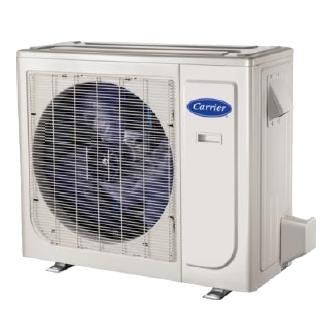
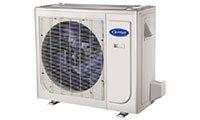
Carrier Performance Ductless System Commercial Heat Pump 38MBQ
-
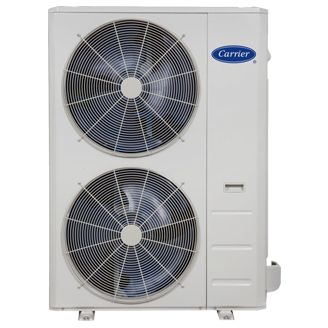
Carrier Performance Ductless System Commercial Heat Pump 38MBR
Performance Commercial Series Ductless Heat Pumps
Performance Commercial Series ductless systems are inverter-driven single-zone heat pumps designed for light-commercial spaces that need dedicated heating and cooling without a conventional central duct system. The category includes the 38MBQ and 38MBR outdoor heat pumps, both intended for larger commercial zones and compatible ducted indoor-unit applications.
For Toronto and GTA businesses, the main selection factors are required capacity, low-temperature heating performance, efficiency, duct design, available static pressure, refrigerant-line routing, electrical service, winter outdoor-unit placement, replacement compatibility, and current equipment availability.
38MBQ vs 38MBR Commercial Heat Pumps
The category contains two closely related commercial heat pumps, but they should not be treated as identical. The 38MBR provides slightly higher maximum cooling efficiency and a broader low-temperature heating operating range, while the 38MBQ remains a capable established commercial platform.
38MBQ Performance Commercial Heat Pump
The 38MBQ is an inverter-driven commercial heat pump designed primarily for larger ducted single-zone applications. It can reach up to 16.5 SEER cooling efficiency and 10.5 HSPF heating efficiency, with capacities around 3 and 4 tons.
Its strongest use case is a commercial space that needs dedicated heating and cooling without connecting to a larger central system. The trade-off is that its low-temperature heating operating range is more limited than the 38MBR, which matters when the system is expected to provide significant winter heat in Toronto.
38MBR Performance Commercial Heat Pump
The 38MBR expands the commercial platform with capacities reaching approximately 4.8 tons, maximum cooling efficiency up to 17.4 SEER, and heating efficiency up to 10.5 HSPF. It uses an inverter compressor to adjust output as commercial heating and cooling demand changes.
Its heating operating range extends to approximately -30°C, making it the stronger choice between these two models when very low outdoor-temperature operation is important. That does not mean full rated capacity remains available at the lowest operating temperature, so commercial heat-loss calculations remain essential.
Commercial Efficiency vs Actual Building Load
The difference between 16.5 and 17.4 SEER can matter in a business with long cooling hours, but efficiency alone should not determine the system. A correctly sized 38MBQ can provide better real-world performance than an oversized 38MBR selected only because its maximum efficiency rating is higher.
Commercial loads can change substantially throughout the day as occupancy, lighting, computers, kitchen equipment, solar gain, door traffic, and ventilation change. Inverter operation helps respond to those variations, but it cannot correct poor system sizing.
Choosing Between 38MBQ and 38MBR
The better model depends on how the commercial space operates rather than which model has the larger specification numbers. These factors have the greatest impact on system selection.
Cooling Efficiency
Choose 38MBR when the higher maximum SEER rating has value in a commercial space with long annual cooling hours.
Cold-Weather Heating
38MBR has the stronger published low-temperature operating range and should receive closer consideration when winter heat-pump operation is important.
Higher Capacity
38MBR extends into a larger capacity range, which can suit commercial zones whose calculated load exceeds the available 38MBQ sizes.
Existing 38MBQ System
For replacement projects, existing ductwork, refrigerant piping, electrical service, and indoor equipment should be assessed before changing platforms.
Long Refrigerant Run
Both platforms permit substantial piping distances, but shorter practical routes can reduce installation cost and future service complexity.
Current Equipment Availability
Both are established product platforms, so availability and suitable current replacement options should be confirmed before finalizing a new commercial project.
Ducted Commercial Applications
These heat pumps are particularly relevant to concealed ducted installations. The 38MBQ was designed to work with the 40MBD ducted indoor unit, while the 38MBR is commonly paired with the higher-static 40MBDQ ducted indoor unit.
A ducted indoor unit can serve a commercial area without placing a visible wall-mounted fan coil in the occupied space. The trade-off is greater design complexity because supply ducts, return air, external static pressure, access, condensate drainage, and airflow balancing directly affect system performance.
40MBD vs 40MBDQ Ducted Indoor Units
The indoor fan coil is an important part of system selection because the outdoor heat pump cannot deliver its rated performance if the duct system creates more resistance than the indoor unit can handle. The 40MBDQ offers greater high-static capability for more demanding duct layouts.
Commercial System Sizing
Performance Commercial Series sizing should be calculated from the actual zone load rather than floor area alone. Commercial spaces can have high internal heat gains from occupants, lighting, computers, refrigeration, cooking equipment, machinery, exterior glazing, and frequent door operation.
The heating load can also differ significantly from the cooling load. A storefront with large glazing may require substantial winter heat even when its summer load appears moderate, making both seasonal design conditions important when choosing between 38MBQ and 38MBR capacities.
Selecting Capacity From Square Footage Alone
Two commercial spaces with the same floor area can have completely different HVAC loads because one may contain large windows, equipment, high occupancy, or frequent exterior-door traffic. Selecting the same heat-pump capacity for both can lead to inadequate peak performance or unnecessary oversizing.
Why Oversizing Still Matters With an Inverter Heat Pump
Inverter compressors can reduce output as the load falls, which gives both commercial models better part-load flexibility than fixed-output equipment. However, every inverter system still has a minimum operating capacity.
If the heat pump is substantially oversized, the normal commercial load can fall below its useful modulation range. Correct sizing allows the equipment to spend more operating time adjusting gradually to the building rather than repeatedly satisfying the thermostat with excess capacity.
Performance Commercial Series for Toronto Winters
Both commercial models include a built-in basepan heater, an important feature for heat-pump operation during freezing weather. The 38MBQ operates in heating mode to approximately -20°C, while the 38MBR extends its operating range to approximately -30°C.
Operating temperature is only one winter performance metric. When the heat pump will serve as primary commercial heating, available capacity at design conditions should be compared with the calculated building heat loss and any backup-heating strategy.
Outdoor Unit Placement for Toronto and the GTA
A commercial heat pump needs enough elevation and clearance to remain unobstructed during snow and ice conditions. Basepan heating helps control freezing around the unit, but it cannot compensate for poor placement where snow blocks the coil or defrost water repeatedly freezes beneath the equipment.
Commercial installations should also consider roof runoff, snow storage, pedestrian areas, loading zones, service access, property boundaries, and airflow recirculation. A convenient summer location can become problematic once winter operating conditions are considered.
Long Refrigerant-Line Applications
Both systems allow piping lengths up to approximately 213 feet, providing flexibility in commercial buildings where the condenser cannot be located close to the indoor fan coil. This can be useful in multi-storey buildings, rear commercial units, rooftops, and properties with restricted exterior equipment locations.
Maximum line length should not become the design target. Longer runs can increase refrigerant requirements, installation labour, pipe support, insulation requirements, coordination with building structure, and future maintenance complexity.
Performance Commercial Series vs Residential Ductless
The 38MBQ and 38MBR are aimed at larger single-zone commercial applications, with capacities and ducted configurations that go beyond many typical residential mini-split installations. Choosing commercial equipment simply because it is larger is not appropriate when a smaller residential system can handle the calculated load.
Commercial equipment becomes more relevant where the zone needs approximately 3 tons or more, requires concealed duct distribution, has longer refrigerant runs, or operates under commercial load patterns. Smaller offices and individual rooms may be better served by a residential-size single-zone system.
Single-Zone Commercial vs Multi-Zone Systems
The Performance Commercial Series is fundamentally designed around dedicated single-zone heating and cooling. That provides one commercial area with its own outdoor capacity rather than sharing compressor output across several unrelated spaces.
Performance Commercial Series vs Rooftop HVAC
A Performance Commercial ductless heat pump can be a practical alternative when one commercial zone needs independent heating and cooling without modifying a building-wide rooftop system. It can also work well for additions, renovated tenant spaces, isolated offices, and areas where new full-size duct distribution would be disruptive.
A rooftop unit is generally more appropriate when a large commercial floor area already relies on central ducts and requires coordinated heating, cooling, ventilation, and outside-air management. Installing multiple single-zone heat pumps across a building can add complexity if the underlying application is better suited to central equipment.
Commercial Ventilation Requirements
The 38MBQ and 38MBR provide space heating and cooling, but commercial HVAC design may also require dedicated outdoor ventilation. A ducted heat pump should not automatically be treated as the complete ventilation solution for an occupied business.
Occupancy level, building use, exhaust requirements, outdoor-air quantity, and applicable ventilation standards can add loads that must be considered when sizing the system. Ignoring ventilation air can result in an HVAC system that appears correctly sized for the room but struggles once outside-air loads are introduced.
Performance Commercial Series Installation
Commercial installation should address heat-loss and heat-gain calculations, duct airflow, external static pressure, refrigerant piping, electrical supply, condensate drainage, outdoor mounting, controls, pressure testing, evacuation, refrigerant setup, and commissioning.
The system's high allowable piping length can simplify equipment-location decisions, but installation quality still matters. Incorrect duct sizing, excessive static pressure, refrigerant charging errors, restricted outdoor airflow, or inadequate condensate drainage can prevent the system from delivering its intended efficiency and capacity.
Commercial Electrical Requirements
Both Performance Commercial heat pumps use 208 or 230-volt electrical service. Required circuit capacity varies by model and size, so the commercial electrical supply should be checked against the exact equipment before installation.
Existing commercial panels may have adequate voltage but insufficient spare capacity. Electrical upgrades, disconnect requirements, conductor runs, roof penetrations, and equipment-location changes can materially affect the final installed cost.
Replacing a 38MBQ or 38MBR System
A commercial heat-pump replacement should start with the complete existing system rather than the failed outdoor unit alone. Indoor fan coil compatibility, refrigerant type, piping dimensions, electrical service, controls, ductwork, condensate drainage, and required airflow should all be reviewed.
Replacing an older 38MBQ with another nominally similar commercial heat pump does not automatically mean every existing component can remain. A newer system may have different approved pairings, controls, or refrigerant requirements even when capacity appears similar.
Legacy Equipment and Current Availability
The 38MBQ and 38MBR are established commercial ductless platforms, and availability can vary as product lines evolve. This matters more for a new installation than for a repair because a new commercial system should be selected with future parts availability and replacement compatibility in mind.
For an existing installation, keeping the same equipment family may simplify some replacement conditions. For a new project, current-generation alternatives should also be considered before committing to a legacy platform solely because the model remains listed in the category.
Replacing an Outdoor Unit Without Checking the Indoor System
A replacement condenser with similar tonnage may still be incompatible with the existing fan coil, controls, refrigerant, or electrical configuration. Selecting the outdoor unit before verifying the complete matched system can lead to additional replacement work or prevent proper operation.
Performance Commercial Series Installation Cost
Commercial installation cost depends on capacity, indoor-unit requirements, duct modifications, refrigerant-line length, electrical work, condensate drainage, outdoor mounting, roof or mechanical access, controls, removal of existing equipment, and commissioning requirements.
A straightforward replacement using compatible infrastructure can cost materially less than a new installation requiring long piping, electrical upgrades, duct fabrication, structural supports, or difficult roof access. Equipment price alone is therefore a poor way to compare commercial project costs.
What Affects Commercial Installation Cost?
The factors below should be identified before comparing quotations. They explain why two projects using the same nominal heat-pump capacity can have very different installed costs.
- 38MBQ or 38MBR system selection
- Three-ton, four-ton, or larger 38MBR capacity requirement
- Commercial heating and cooling load
- 40MBD or 40MBDQ ducted indoor-unit requirements
- Required external static pressure
- New or modified supply and return ductwork
- Refrigerant-line length and routing
- Commercial electrical upgrades
- Condensate drainage requirements
- Outdoor-unit mounting and winter elevation
- Roof, mechanical-room, or restricted-site access
- Existing equipment removal
- Control or thermostat changes
- Replacement of incompatible refrigerant piping
- Current availability of matched equipment
Performance Commercial Series Selection Checklist
The final system should be selected from the building load and duct requirements rather than from tonnage or efficiency alone. Use these checks before choosing between the two commercial heat-pump platforms.
Choose the Right Performance Commercial Heat Pump
- Calculate the actual commercial heating and cooling load before selecting capacity.
- Choose a single-zone system only when one primary commercial area needs dedicated control.
- Compare 38MBQ and 38MBR efficiency rather than assuming both perform identically.
- Consider 38MBR when lower-temperature winter operation is a major requirement.
- Check available heating capacity at Toronto winter design conditions.
- Use the 38MBR higher-capacity option only when the calculated load requires it.
- Confirm the correct 40MBD or 40MBDQ indoor-unit pairing.
- Calculate duct airflow and external static pressure before selecting the indoor fan coil.
- Confirm that return-air and supply-duct dimensions can support the required airflow.
- Plan refrigerant piping before selecting the outdoor-unit location.
- Provide sufficient clearance for Toronto snow, ice, airflow, and defrost drainage.
- Verify 208 or 230-volt electrical capacity before installation.
- Account for commercial ventilation loads separately from space-conditioning requirements.
- Inspect existing refrigerant piping, controls, ductwork, and electrical service during replacement.
- Confirm current equipment availability and suitable successor models before a new installation.
- Compare total installed project cost rather than equipment price alone.
Choose the Right Performance Commercial Series System
The Performance Commercial Series offers two closely related single-zone heat pumps for larger commercial applications. The 38MBQ provides up to 16.5 SEER and 10.5 HSPF, while the 38MBR increases maximum cooling efficiency to 17.4 SEER, extends available capacity, and provides a broader low-temperature heating operating range.
For Toronto and GTA businesses, the better choice depends on commercial load, winter heating requirements, duct static pressure, indoor-unit compatibility, refrigerant-line routing, electrical service, equipment availability, and replacement conditions. Correct system design and installation will have a greater effect on long-term commercial comfort than selecting the model with the highest specification alone.
FREE In-Home Estimate