
Toshiba Residential Series
Showing all 5 results
-
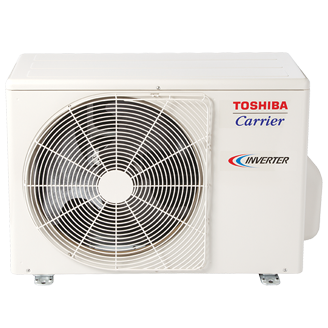
Carrier Toshiba Ductless Air Conditioner RASEA
-
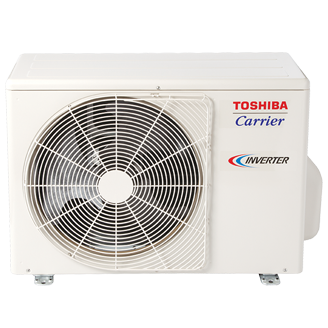
Carrier Toshiba Ductless Heat Pump RASEV
-
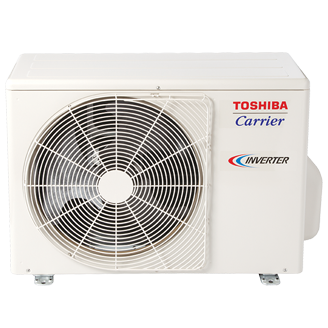
Carrier Toshiba Ductless Heat pump with Basepan Heater RASE2
-
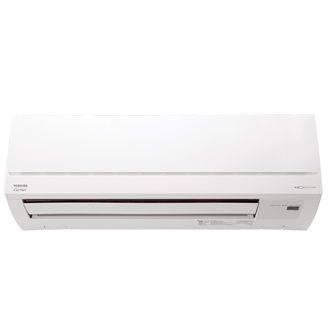
Carrier Toshiba Ductless High Wall Indoor Unit RASEC
-
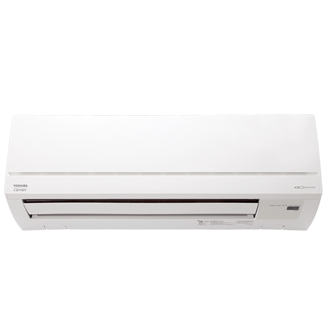
Carrier Toshiba Ductless High Wall Indoor Unit RASEK
Toshiba Residential Series Ductless Systems
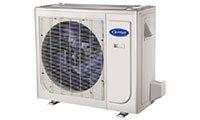
Toshiba Residential Series ductless systems are high-wall mini-split solutions designed for targeted residential heating and cooling without conventional ductwork. The series includes cooling-only and heat-pump configurations, with inverter-driven operation, high seasonal efficiency, quiet indoor performance, and options intended for colder outdoor conditions.
For Toronto and GTA homes, the key decision is whether the system will provide cooling only, supplemental heating and cooling, or more substantial winter heating. Model selection should also account for room load, outdoor temperature, indoor-unit placement, electrical service, refrigerant-line routing, and whether additional protection against sustained freezing conditions is appropriate.
Compare Toshiba Residential Series Configurations
The series is built around high-wall indoor comfort with several outdoor-unit configurations. Choosing between them should start with how the room will be used throughout the year rather than selecting by efficiency rating alone.
Cooling-Only vs Heat-Pump Models
The most important system-selection decision is whether the room needs cooling only or year-round temperature control. Choosing a heat pump solely because it provides an additional operating mode may add cost without much benefit if an existing heating system already serves the space efficiently.
Cooling-Only Requirement
A cooling-only model can make sense for a persistently warm bedroom, sunroom, home office, or addition where reliable heating is already available from another system.
Heating and Cooling
A heat-pump configuration provides greater seasonal flexibility when the room needs independent comfort during both Toronto summers and the heating season.
Cold-Weather Operation
If the system will operate regularly during freezing weather, outdoor-unit configuration becomes more important than it would for a system used mainly for cooling.
Existing Heating System
Homes with boilers, furnaces, or electric heat may use the ductless system as supplemental heating rather than expecting it to carry the entire winter load.
Room Heating Load
Heat-pump capacity should be compared with the room's actual cold-weather heat loss. Nominal cooling capacity alone does not confirm winter suitability.
Installation Cost
Equipment choice should reflect how the system will actually be used. Paying for additional heating capability has the most value when that capability will meaningfully reduce reliance on another heat source.
RASEA Cooling-Only Ductless Air Conditioner
The RASEA configuration is designed for high-efficiency cooling rather than heat-pump operation. With inverter technology and cooling efficiency reaching up to 23 SEER, it is most relevant where summer comfort is the primary problem and the room already has an acceptable source of heat.
This can be a practical choice for converted spaces, upper-floor rooms, additions, sunrooms, or older homes where installing or extending ductwork would require significant construction. The trade-off is straightforward: the system does not replace the room's winter heating source.
RASEV Ductless Heat Pump
The RASEV configuration adds heat-pump operation while retaining cooling efficiency of up to 23 SEER and heating efficiency of up to 10 HSPF. This makes it more versatile than the cooling-only option for spaces that need independent comfort throughout more of the year.
The system can provide heating at outdoor temperatures below freezing, but that does not mean every room or home should be sized from the published operating limit. Available heating capacity, room heat loss, and the role of the existing heating system should determine whether the heat pump is used as supplemental or primary heat.
RASE2 Heat Pump With Basepan Heater
The RASE2 configuration adds a heated outdoor basepan intended to help reduce ice accumulation during sustained freezing conditions. That feature has greater practical value in Toronto than it would in a climate where the system rarely operates below freezing.
The basepan heater does not eliminate the need for correct outdoor-unit placement. Snow accumulation, roof runoff, drainage, freezing condensate, and service clearance still have to be considered during installation.
Selecting the Standard Heat Pump for Heavy Winter Use
If the outdoor unit will operate frequently through sustained freezing conditions, ice management becomes more important. Choosing a configuration without considering winter exposure can increase the risk of ice accumulation around the outdoor unit and compromise reliable operation.
Standard Heat Pump vs Basepan Heater Model
Both heat-pump configurations provide heating and cooling, so the decision is not simply about efficiency. The expected amount of winter operation and the installation environment should guide whether the additional basepan protection is worthwhile.
Heating Performance in Toronto Winters
Toshiba Residential Series heat-pump configurations can continue operating at outdoor temperatures below freezing, with heating operation extending to approximately -20°C under specified conditions. This provides useful cold-weather capability, but an operating limit should not be confused with full heating capacity at that temperature.
As outdoor temperature falls, the building loses heat more quickly and heat-pump performance changes. A system expected to heat a Toronto room through winter should therefore be selected from the room's design heat loss and low-temperature equipment capacity rather than summer BTU requirements.
Cooling Performance During Toronto Summers
Cooling efficiency reaches up to 23 SEER on qualifying Toshiba Residential Series configurations. Inverter compressor operation allows the system to adjust output as room demand changes instead of relying only on full-capacity operation.
The practical benefit is strongest when the system is properly sized. Oversizing can reduce operating time and make the additional capacity unnecessary, while an undersized unit can run continuously and still struggle during peak summer conditions.
Why Inverter Operation Matters
Inverter technology allows compressor output to change as the room approaches or moves away from its temperature setpoint. This is particularly useful for single-zone comfort because the heating or cooling requirement of one room changes substantially throughout the day.
A variable-capacity system can run at reduced output during lighter loads, helping maintain steadier temperatures and quieter operation. However, even an inverter system has a minimum operating range, so choosing excessive capacity can still create performance compromises.
Toshiba Residential Series Sizing
System capacity should be selected from the heating and cooling load of the individual space. Room square footage can provide an initial indication, but it is not sufficient for final ductless sizing.
Window area, sun exposure, insulation, ceiling height, exterior wall area, occupancy, appliances, air leakage, room location, and intended winter use can all change the required capacity. The same nominal room size can require different equipment in two Toronto homes.
Choosing a Bigger System for Faster Cooling
An oversized ductless unit may bring the room to setpoint quickly but spend less time operating at stable part load. The result can be unnecessary cycling and less consistent comfort. Correct capacity is generally more valuable than maximum available capacity.
RASEK High-Wall Indoor Unit
The high-wall indoor unit provides the conditioned-air side of the Toshiba Residential Series system. Its performance depends on the outdoor-unit pairing, so cooling and heating efficiency should be evaluated as a complete matched system rather than assigning the outdoor unit's rating to every possible combination.
Five fan speeds, automatic louvre movement, cooling, heating, dry, fan, and automatic operating modes provide flexibility for different room conditions. The indoor unit can operate at low sound levels, making placement in bedrooms, offices, and living spaces practical when airflow and mounting requirements are also satisfied.
Indoor Unit Placement Affects Comfort
High-wall equipment should be positioned where supply air can circulate through the intended zone. A convenient wall location is not automatically a good HVAC location if furniture, partitions, beams, tall cabinets, or room geometry obstruct airflow.
Placement must also allow practical refrigerant-line and condensate routing. Moving the indoor head merely for visual symmetry can increase installation complexity or create a less reliable drain arrangement.
Best Applications for the Toshiba Residential Series
The series is primarily suited to individual residential zones where high-wall ductless equipment provides a clear advantage over extending central ductwork. The application should have a defined heating or cooling need that can be served effectively from a single indoor location.
Older Homes Without Ductwork
A ductless system can add heating and cooling without constructing a traditional duct network through finished walls and ceilings.
Home Additions
A dedicated system can condition an addition independently instead of increasing the load on existing central equipment that was not sized for the new space.
Sunrooms
High solar gain can make sunrooms difficult for a central system to control. Dedicated ductless capacity allows the space to respond independently.
Hot Upper-Floor Rooms
A single-zone system can address a persistent warm room without lowering the central thermostat enough to overcool the rest of the house.
Home Offices
Independent temperature control lets an occupied office operate differently from unused areas of the home during the workday.
Converted Spaces
Garages, lofts, and renovated rooms can gain dedicated comfort without relying on an existing duct system that may not extend to the new space.
Toshiba Residential Series vs Central HVAC
The series is strongest when a single zone needs independent comfort or when ductwork is unavailable. If a home already has effective ducts serving every room, replacing or upgrading the central system may provide a simpler whole-home solution.
Toshiba Residential Series vs Other Ductless Options
The Toshiba Residential Series is positioned around high-efficiency, single-zone, high-wall comfort. Other ductless product families may offer different indoor-unit styles, multi-zone configurations, higher efficiency levels, or different cold-climate capabilities.
This makes the series a stronger fit when a homeowner specifically wants a premium high-wall solution for one residential zone. A broader multi-zone product family may be more appropriate when several rooms need independent indoor units connected to a common outdoor system.
Single-Zone Design and Its Trade-Off
Dedicated single-zone equipment gives the indoor unit and outdoor unit a direct relationship. This can simplify capacity matching and provides independent operation for the room being conditioned.
The trade-off appears when several rooms need ductless systems. Installing multiple dedicated systems means multiple outdoor units, while a multi-zone alternative may consolidate several indoor units onto one condenser. Exterior space, redundancy, individual-zone performance, and installation cost should determine which approach is better.
Quiet Operation
Indoor sound can be an important selection factor because a high-wall unit operates directly inside the occupied room. Toshiba Residential Series indoor equipment is designed for low sound operation, with sound levels reaching approximately the upper-20-decibel range under appropriate operating conditions.
The quietest published setting should not be treated as the sound level under every operating condition. Fan speed and heating or cooling demand can increase sound as the system works harder.
Dehumidification and Summer Comfort
Air conditioning does more than lower room temperature. Moisture removal can materially affect comfort during humid Toronto summer weather, particularly in bedrooms, additions, and spaces with high latent loads.
Variable-capacity operation can support longer lower-output cycles than an oversized fixed-output system. Correct sizing remains critical because unnecessarily large equipment may satisfy sensible cooling demand too quickly.
Ductless Installation Requirements
Toshiba Residential Series installation requires a matched indoor and outdoor unit, refrigerant piping, communication wiring, condensate drainage, a dedicated electrical circuit, and an appropriate outdoor mounting location. Installation should be planned as a complete system rather than treating the indoor unit as a standalone appliance.
System performance depends on correct refrigerant practices, pressure testing, evacuation, electrical setup, drainage, mounting, and commissioning. Installation shortcuts can undermine the efficiency and comfort benefits that influenced the equipment choice.
Refrigerant Line Length and Routing
Supported piping lengths can reach approximately 66 feet on applicable configurations, providing flexibility when the indoor and outdoor units cannot be placed directly opposite one another. Longer routing should still be avoided when it creates unnecessary installation complexity.
Line-set length, vertical separation, bends, exterior appearance, service access, and manufacturer limits should all be reviewed before finalizing the location of either unit.
Outdoor Unit Placement for GTA Winters
An outdoor heat-pump unit needs unrestricted airflow and protection from conditions that could interfere with drainage or defrost operation. This becomes especially important when the system is expected to operate during Toronto winters.
The condenser should not be placed where snow can bury the coil or where roof runoff repeatedly freezes around the equipment. Appropriate elevation and clearances can be more important than choosing the shortest possible refrigerant route.
Installing the Outdoor Unit Too Close to Ground Level
A heat pump positioned where snow accumulates around the coil can experience restricted airflow during the period when heating is needed most. Proper elevation and winter-aware placement should be planned before installation.
Electrical Requirements
Toshiba Residential Series systems operate on 208 or 230-volt electrical supply in applicable configurations. The selected unit requires an appropriately sized dedicated circuit and outdoor disconnect.
Existing panel capacity should be verified before equipment is ordered. Electrical upgrades can materially affect installation cost, especially in older Toronto homes where spare panel capacity may be limited.
Toshiba Residential Series Replacement
Replacing an existing ductless system should include more than selecting a new indoor unit with similar capacity. Refrigerant line dimensions, line condition, electrical requirements, communication wiring, condensate drainage, outdoor mounting, and system compatibility should all be checked.
Existing piping should not automatically be reused simply because it reaches the correct locations. A replacement model may have different refrigerant, piping, or installation requirements from the equipment being removed.
When Repair May Still Make Sense
Replacement is not always necessary when an existing Toshiba residential ductless system develops a problem. A serviceable fan component, sensor, drain issue, control problem, or minor repair may justify keeping the system in operation when overall condition and performance remain good.
Replacement becomes more compelling when major component failures, recurring problems, refrigerant-system repairs, declining performance, or equipment age make continued repair less economical. The availability and compatibility of replacement components should also be considered.
Toshiba Residential Series Installation Cost
Installed cost depends on system capacity, cooling-only versus heat-pump configuration, basepan-heater selection, refrigerant-line length, electrical work, outdoor mounting, indoor-unit location, condensate routing, and replacement requirements.
A straightforward installation with indoor and outdoor units positioned close together generally requires less labour than a project involving long line runs, finished-wall routing, electrical upgrades, condensate pumping, or difficult outdoor access.
Price comparisons should therefore use the complete installed system rather than equipment cost alone.
What Can Increase Installation Cost?
Several site-specific conditions can change the scope of a Toshiba Residential Series installation. Identifying them during the initial assessment prevents a low equipment-only price from becoming an inaccurate measure of the final project.
- Long refrigerant-line runs
- Complex interior or exterior routing
- Electrical panel or circuit upgrades
- Condensate pumps where gravity drainage is unavailable
- Elevated outdoor mounting for winter conditions
- Difficult access to the installation area
- Removal of existing ductless equipment
- Repair or replacement of existing mounting surfaces
- Changes required when existing piping cannot be reused
Choosing Between RASEA, RASEV and RASE2
The three outdoor configurations solve different comfort priorities. The decision becomes much easier once heating requirements and winter operating expectations are established.
Toshiba Residential Series Selection Checklist
- Choose RASEA when efficient ductless cooling is required but heat-pump heating is unnecessary.
- Choose a heat-pump configuration when the room needs both heating and cooling.
- Consider RASE2 when regular operation during sustained freezing weather makes basepan ice protection valuable.
- Calculate the room's cooling load before selecting nominal BTU capacity.
- Calculate winter heat loss if the system will provide significant heating.
- Review low-temperature performance rather than relying only on seasonal efficiency ratings.
- Confirm that the high-wall indoor location can distribute air effectively across the room.
- Plan refrigerant piping and condensate drainage before finalizing indoor-unit placement.
- Verify electrical panel capacity and dedicated circuit requirements.
- Position the outdoor unit for airflow, drainage, snow clearance, and future service access.
- Compare the series with multi-zone alternatives when more than one room needs independent ductless comfort.
- Include pressure testing, evacuation, start-up, and complete system commissioning in the installation scope.
Select the Right Toshiba Residential System for Your Home
Toshiba Residential Series ductless equipment is best suited to homeowners who need efficient, quiet high-wall comfort for an individual room or residential zone. Cooling-only, standard heat-pump, and basepan-equipped heat-pump configurations allow the system to be matched more closely to how the space will actually be used.
For Toronto and GTA installations, the strongest choice comes from matching equipment capacity to the room load, considering low-temperature heating requirements, selecting the appropriate outdoor configuration, and planning the indoor unit, refrigerant piping, drainage, electrical supply, and winter outdoor-unit location together.
FREE In-Home Estimate