


Infinity Series
Showing all 2 results
-
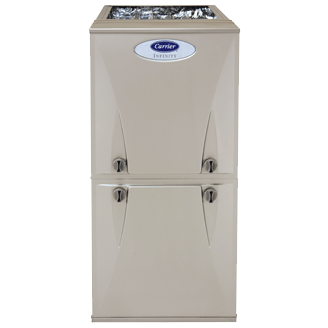
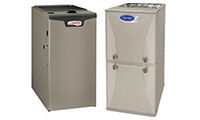
Carrier Infinity® 96 Gas Furnace 59TN6
-
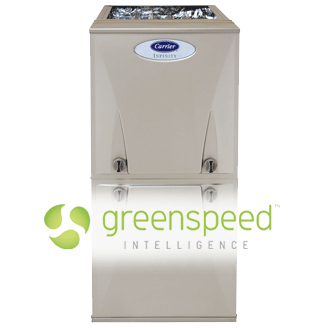
Carrier Infinity® 98 Gas Furnace With Greenspeed™ Intelligence 59MN7
Infinity Series Furnaces for Toronto and GTA Homes
Infinity Series furnaces are premium gas heating systems designed for homeowners who want high efficiency, quieter operation, more precise temperature control, and advanced communication between compatible HVAC components. The category includes modulating and two-stage models, making it suitable for furnace replacement projects where winter comfort and long-term system performance are priorities.
Which Infinity Series Furnace Configuration Fits Your Home?
The main decision is whether the home will benefit most from modulating heating or a two-stage furnace. Both configurations provide variable-speed airflow, but they differ in how precisely they adjust heating output and how much they cost to purchase and install.
Modulating Heating
A modulating furnace can make small output adjustments as heating demand changes. This supports longer cycles and tighter temperature control, but the premium is most valuable in homes with compatible controls and well-designed ductwork.
Two-Stage Heating
A two-stage furnace uses lower output during moderate weather and higher output when more heat is required. It can provide strong comfort at a lower cost than a modulating model, although output control is less precise.
Communicating System Control
Compatible controls allow the furnace and connected HVAC equipment to coordinate heating, cooling, airflow, and humidity management. Mixing incompatible components can limit the features that justify selecting this category.
Infinity Series Furnace Models and Performance
Infinity Series furnace selection commonly comes down to premium modulating performance or high-efficiency two-stage operation. The best choice depends on comfort expectations, installation budget, duct conditions, and whether the furnace will be part of a fully matched system.
Efficiency and Heating Performance
Infinity Series gas furnaces can provide efficiency ratings of up to 98.5 percent AFUE, depending on the selected model. Higher efficiency can reduce wasted fuel compared with older furnaces, but the actual benefit depends on winter usage, equipment sizing, duct performance, and installation quality.
A modulating model can operate at lower output for extended periods instead of repeatedly cycling at full capacity. A two-stage model provides a simpler performance step between low and high heat, which may offer a better cost-to-comfort balance for some homes.
Temperature Control and Quiet Operation
Longer heating cycles at reduced output can distribute warmth more evenly and reduce the abrupt sound changes associated with basic furnaces. Variable-speed airflow also allows the blower to respond more closely to system demand instead of operating at one fixed speed.
These advantages can be reduced by oversized equipment, restrictive filters, undersized return ducts, or poor room balancing. Premium furnace technology should not be expected to correct major airflow problems without supporting duct improvements.
Installation Factors That Determine Performance
Infinity Series furnace installation should begin with a heating-load calculation and a review of the complete central HVAC system. Furnace capacity, supply and return airflow, gas service, venting, condensate drainage, electrical requirements, filtration, thermostat compatibility, and connected cooling equipment all affect the final result.
Replacing an existing furnace with the same capacity can repeat an old sizing error. Insulation, windows, air sealing, renovations, and changes to the conditioned space should be considered before selecting the replacement furnace.
The Premium Furnace Without System Matching
Installing an Infinity Series furnace with incompatible controls, restrictive ductwork, or incorrectly matched cooling equipment can disable advanced features and reduce comfort. The homeowner may pay for premium capability without receiving the expected performance.
Modulating vs Two-Stage Furnace Selection
A modulating furnace is most suitable when tight temperature control, low operating sound, and advanced system integration are important. It can adjust output more gradually, but the higher purchase cost may not be justified in a smaller home with simple comfort requirements.
A two-stage Infinity furnace can provide much of the comfort benefit through extended low-stage operation while keeping the project below the cost of the top modulating configuration. The correct choice should reflect the home’s heating load and the homeowner’s priorities rather than selecting the highest specification automatically.
Ductwork and Airflow Requirements
Variable-speed blowers can respond to changing airflow demand, but they cannot eliminate the effects of undersized returns, restrictive supply ducts, blocked registers, or poorly designed branches. Excessive static pressure can create noise, reduce airflow, and increase stress on system components.
Homes with uneven temperatures, loud vents, weak airflow, or frequent filter issues should have the duct system evaluated before furnace installation. Addressing airflow restrictions can provide a larger comfort improvement than upgrading the furnace alone.
Infinity Series Furnace Replacement
Replacement may be appropriate when the existing furnace has recurring failures, a deteriorating heat exchanger, high fuel use, unreliable operation, or difficulty maintaining consistent temperatures. An Infinity Series furnace is most appropriate when the homeowner intends to improve system performance rather than complete only a basic equipment swap.
If the current furnace remains dependable and comfort problems are limited, a less advanced furnace may provide better value. Comparing modulating, two-stage, and standard options helps avoid paying for features that the home or connected HVAC system cannot use.
Infinity Series Furnace Cost Factors
The installed cost depends on furnace model, heating capacity, venting changes, gas-line requirements, condensate routing, electrical work, communicating controls, filtration, duct modifications, installation access, and compatibility with existing cooling equipment.
A premium furnace proposal should clearly identify the matched components and commissioning work included. A lower quote may omit the control, airflow, drainage, or equipment changes required to activate the system’s intended comfort features.
Compatibility with Air Conditioners and Heat Pumps
An Infinity Series furnace can be paired with compatible central air conditioning or heat pump equipment to create a communicating HVAC system. Matching the furnace, indoor coil, outdoor unit, and control can improve airflow coordination, cooling operation, and humidity management.
When used with a heat pump, the furnace can provide backup or alternate gas heating in a hybrid system. The changeover strategy must account for outdoor temperature, energy cost, equipment capacity, and household comfort preferences.
How to Choose the Right Infinity Series Furnace
The final selection should reflect the home’s heating load, duct system, comfort expectations, connected HVAC equipment, and long-term ownership plans. Use this checklist before approving a model and installation scope.
Infinity Series Furnace Selection Checklist
- Complete a heating-load calculation instead of matching the existing furnace capacity automatically.
- Choose between modulating and two-stage heating based on comfort priorities and project budget.
- Review supply ducts, return-air capacity, static pressure, filtration, and room airflow balance.
- Confirm compatibility between the furnace, system control, air conditioner, heat pump, and indoor coil.
- Verify gas supply, venting, condensate drainage, electrical needs, and installation clearances.
- Compare total installed cost, efficiency, sound, control capability, warranty, and long-term value.
Local Suitability for Toronto and the GTA
Infinity Series furnaces can be well suited to Toronto and GTA homes with long winter heating periods, uneven temperatures, airflow concerns, or plans for a premium matched HVAC system. They are particularly relevant for larger detached homes, multi-level properties, renovated houses, and households that prioritize consistent comfort.
The main limitation is that advanced performance requires correct system design. If sizing, controls, ductwork, or connected equipment are not properly matched, the furnace may not deliver the comfort and efficiency improvements expected from a premium installation.
Plan Your Infinity Series Furnace Installation
An Infinity Series furnace can provide efficient, quiet, and precise winter heating when its capacity, controls, airflow, venting, and connected HVAC equipment are properly matched. Before purchasing, review furnace replacement needs, model differences, duct conditions, installation scope, and long-term system goals with a qualified furnace installation team.
FREE In-Home Estimate