


Commercial
Showing all 6 results
-
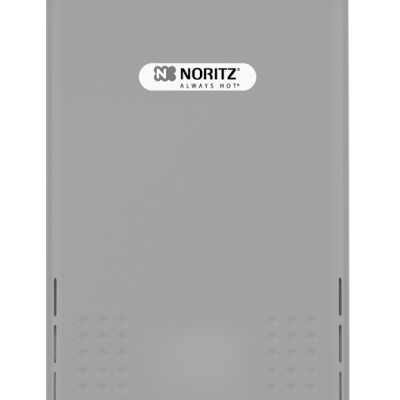
Noritz NC1991-DVC-LP Tankless Water Heaters
-
Noritz NC1991-DVC-NG Tankless Water Heaters
-
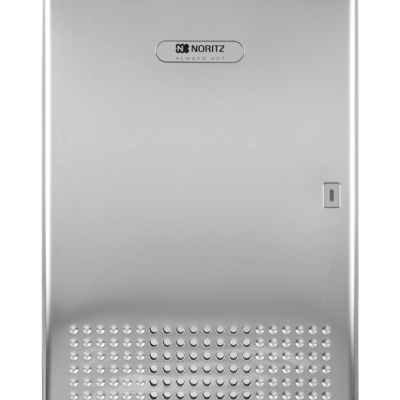
Noritz NC380-SV-ASME-LP Tankless Water Heater
-
Noritz NC380-SV-ASME-NG Tankless Water Heater
-
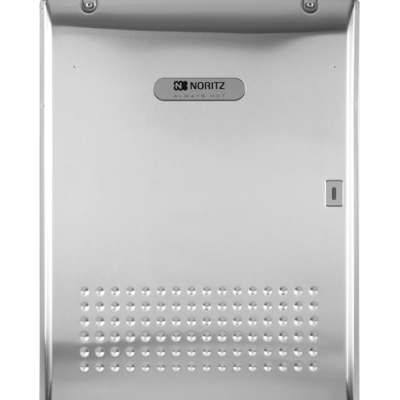
Noritz NCC1991-DV-LP Tankless Water Heaters
-
Noritz NCC1991-DV-NG Tankless Water Heaters
Commercial Tankless Water Heaters for High-Demand Applications
Commercial tankless water heaters are gas-fired systems designed to produce hot water on demand for businesses, institutions and multi-unit properties with higher duty cycles and more demanding usage patterns than typical residential applications. This category includes condensing and non-condensing models, single-unit systems and scalable multi-unit configurations, so selection depends on peak flow, temperature rise, redundancy, efficiency and installation infrastructure.
For Toronto and GTA commercial properties, the correct system should be sized around the busiest hot-water period rather than average daily consumption. Cold incoming water, simultaneous demand and the required delivery temperature can materially change how much usable flow a system provides.
Commercial Models in This Category
The category includes NC1991, NCC1991 and NC380-SV-ASME configurations in natural gas and propane versions. These models serve different priorities, ranging from high-efficiency condensing installations to higher-output non-condensing applications.
How to Choose a Commercial Tankless Water Heater
Commercial sizing requires more than selecting the model with the highest BTU or GPM rating. Peak demand, delivery temperature, redundancy requirements and mechanical-room infrastructure should be evaluated together because each factor can change the preferred system architecture.
Peak Hot-Water Flow
Calculate which fixtures and equipment can operate simultaneously during the busiest period. Peak flow determines required capacity more accurately than total daily consumption.
Temperature Rise
Higher required outlet temperatures and colder Toronto inlet water reduce available flow. Published maximum GPM should not be treated as year-round capacity.
Single vs Multi-Unit
A single unit can suit smaller commercial loads, while larger facilities may benefit from multiple staged units for additional capacity and redundancy.
Condensing vs Non-Condensing
Condensing equipment provides higher efficiency but requires condensate management, while non-condensing equipment uses a different venting strategy and operates at lower efficiency.
Operating Continuity
Businesses that cannot tolerate a complete hot-water shutdown should consider multi-unit redundancy instead of relying entirely on one high-capacity heater.
Mechanical Infrastructure
Gas supply, venting, water piping, electrical service, condensate drainage and available space can determine whether a proposed system is practical.
Commercial Hot-Water Demand Is About Timing
Two businesses can use the same number of gallons per day and require completely different water-heating systems. A restaurant that concentrates demand around meal periods creates a different load from a facility where consumption is spread throughout the day.
System selection should identify the busiest interval, how long that peak lasts and whether another high-demand period follows shortly afterward. Average consumption can hide the short periods that actually determine required capacity.
Maximum GPM vs Real Commercial Flow
Maximum GPM is measured at a particular temperature rise. When incoming water is colder or the required delivery temperature is higher, each gallon requires more heating energy and available flow decreases.
This distinction is important for Toronto commercial installations. A system selected from maximum GPM alone may appear adequate on paper while falling short during winter operation or high-temperature applications.
Toronto Winter Temperature Rise
Commercial tankless performance changes as incoming-water temperature changes. Colder winter water creates a larger temperature rise between the municipal supply and the required hot-water delivery temperature.
A food-service facility, for example, may also have different temperature requirements from a commercial washroom or multi-unit residential building. Capacity calculations should therefore use the actual application temperature rather than one generic GPM figure.
Avoid Sizing From Maximum Flow Alone
A tankless water heater can continue producing hot water while demand stays within its heating capacity, but it cannot maintain unlimited flow at every temperature rise. Commercial loads make this limitation particularly important because several fixtures or processes can operate at once.
The System Meets the Maximum GPM Number but Not the Winter Load
A commercial system is selected by adding fixture flow and comparing the result with a published maximum GPM rating. During cold Toronto weather, the greater temperature rise reduces actual heated flow and the system cannot maintain the required supply during the busiest operating period.
NCC1991 Condensing Commercial Tankless Water Heaters
The NCC1991 family uses a condensing commercial design with maximum input of approximately 199,900 BTU/h and maximum flow up to approximately 11.1 GPM under favourable temperature-rise conditions. Its higher efficiency makes it relevant where annual hot-water consumption is substantial and the installation can accommodate condensing requirements.
For larger loads, one NCC1991 should not be expected to exceed its heating capacity simply because the application is commercial. Multi-unit design becomes important when calculated peak demand exceeds the output of one heater.
Condensing vs Non-Condensing Commercial Tankless
Condensing and non-condensing commercial water heaters can both provide on-demand hot water, but they differ significantly in efficiency and installation requirements. The better choice depends on operating demand and the building infrastructure available for the project.
NC380-SV-ASME for Higher Single-Unit Output
The NC380-SV-ASME operates from approximately 22,500 to 380,000 BTU/h and can deliver up to 13.2 GPM when temperature-rise conditions permit. At an 80°F rise, flow is approximately 7.8 GPM, showing why temperature rise must be considered alongside its high maximum-flow rating.
This model provides considerably more maximum heating input than a roughly 200,000 BTU/h commercial unit, but it is non-condensing. The trade-off is higher single-unit capacity against lower thermal efficiency and different venting requirements.
NC380-SV-ASME Temperature Capability
The NC380-SV-ASME supports commercial outlet-temperature settings extending up to 180°F with the appropriate control configuration. This makes it relevant to applications that need temperatures beyond typical residential domestic-hot-water settings.
Higher delivery temperatures increase required temperature rise and reduce available flow. A high-temperature commercial application should therefore be sized using the intended operating temperature rather than the unit's maximum 13.2 GPM figure.
Single Commercial Unit vs Multi-Unit System
A single high-output heater can simplify piping and controls for loads that fit comfortably within one unit's capacity. Multiple units become more attractive when the building requires more flow, staged operation or the ability to maintain some hot-water production while one heater is unavailable.
The decision should not be reduced to total BTU capacity. A 380,000 BTU/h single heater and multiple smaller heaters can have similar aggregate capacity while providing very different redundancy and turndown characteristics.
Why Redundancy Matters in Commercial Water Heating
For a home, a water-heater shutdown is inconvenient. For a restaurant, hotel, healthcare operation, multi-unit residential property or other hot-water-dependent facility, the same failure can interrupt normal operations.
A multi-unit tankless design can preserve partial capacity while one heater is isolated for maintenance. One larger heater may require fewer components but creates greater dependence on that single appliance.
One Large Heater vs Multiple Smaller Units
Commercial system design often requires choosing between concentrating capacity in one high-output appliance and distributing capacity across multiple units. The following differences can affect both day-to-day operation and future service.
Commercial Multi-System Capacity
Commercial tankless systems can link multiple compatible units so they operate as one coordinated water-heating plant. This allows capacity to scale far beyond what a single wall-mounted heater can provide.
Multi-unit capability should not be interpreted as permission to add heaters without engineering the system. Gas supply, water piping, pressure loss, venting, controls and recirculation all need to support the total installation.
Staging and Load Sharing
In a properly controlled multi-unit system, heaters can be staged as demand rises rather than operating every unit continuously. This allows the system to respond to both low-demand and peak-demand periods.
Staging also helps distribute operating hours among units. Without appropriate controls and hydraulic design, simply connecting several heaters does not guarantee balanced operation.
Common Venting for Condensing Multi-Unit Systems
Compatible commercial condensing systems can support common-vent arrangements for multiple units. This can reduce the number of separate building penetrations required in a larger mechanical-room installation.
Common venting still requires a system designed for the number of connected units, total input, vent length and termination conditions. It should be treated as part of the system design rather than an installation shortcut.
Commercial Rack and Manifold Systems
Rack and manifold configurations organize multiple commercial tankless heaters into a coordinated assembly. They can be useful where the project needs scalable capacity but mechanical-room layout, piping consistency and installation time also matter.
A rack system is not automatically necessary for every multi-unit project. Smaller installations may be effectively wall mounted, while larger or more complex systems can benefit from prefabricated floor-standing or wall-mounted assemblies.
Commercial Tankless vs Commercial Storage Water Heaters
Commercial storage systems maintain a reserve of heated water, while tankless systems rely more heavily on real-time burner capacity. This creates different sizing priorities even when both systems are designed to serve the same building.
Storage can absorb a large short-duration peak without requiring the burner system to match the entire instantaneous draw. Tankless systems can reduce stored-water volume but must have enough active heating capacity to support the required flow as it occurs.
Commercial Tankless vs Hybrid Tank and Tankless Systems
A hybrid commercial system combines stored hot water with tankless heating capacity. This can be useful where a facility has sharp demand spikes that benefit from storage but still needs strong recovery.
Pure tankless systems can provide modularity and reduce dependence on stored volume, while hybrid systems use storage as a demand buffer. The better configuration depends on whether the load is sustained, highly concentrated or variable throughout the operating day.
Commercial Tankless Replacement
Replacing an existing commercial water heater should begin with the current load rather than the nameplate capacity of the old equipment. Business operations, fixture counts and usage patterns may have changed since the original system was installed.
A replacement is also an opportunity to reconsider system architecture. An old single heater can potentially be replaced with a multi-unit system when redundancy is important, while an oversized existing installation may not need to be duplicated.
Replacing a Commercial Storage Tank
Converting from commercial storage to tankless changes how system capacity is calculated. Storage gallons and recovery rate need to be translated into an actual demand profile rather than matched directly to a tankless GPM number.
The conversion can also change gas input, venting, water piping, electrical requirements and recirculation design. Removing a large tank can free valuable floor space, but the complete infrastructure should be reviewed before selecting equipment.
Commercial Gas Supply Requirements
Commercial tankless equipment creates substantial gas demand, especially when several units operate simultaneously. A single NC380-SV-ASME can reach 380,000 BTU/h, while a multi-unit installation can create a much larger connected load.
Gas-system design should account for total input, supply pressure, developed piping length and other gas-fired equipment in the building. Existing pipe size alone is not enough to confirm that the installation can support the proposed system.
Commercial Venting Requirements
Venting requirements differ between condensing and non-condensing equipment. The NC380-SV-ASME uses high-temperature Category III stainless-steel venting for indoor installations, while condensing commercial equipment uses vent systems suitable for lower-temperature condensing exhaust.
This difference can materially affect a retrofit. Existing venting may favour one equipment approach, but efficiency, capacity and long-term operating requirements should still be evaluated before making the final selection.
Condensate Management for Condensing Systems
Commercial condensing water heaters generate condensate during normal operation. Multi-unit systems can produce more condensate than a single residential appliance, so drainage should be designed for the complete installation.
A mechanical room without a practical drain route can require additional installation work. Condensate planning should therefore happen before final equipment placement and vent routing are approved.
Commercial Recirculation
Many commercial buildings use domestic hot-water recirculation to maintain acceptable delivery times throughout long piping networks. Recirculation requirements should be calculated separately from the water heater's peak heating capacity.
An incorrectly designed loop can waste energy, create excessive return temperatures or produce poor delivery even when the heaters themselves have sufficient capacity. Distribution design is therefore part of overall commercial water-heating performance.
Water Pressure and Pressure Loss
Tankless heat exchangers create resistance as water passes through them. In commercial systems with high flow rates, pressure loss can become an important design factor alongside BTU capacity.
A system that has enough theoretical heating capacity can still perform poorly if pumps and piping cannot maintain the required flow through the heaters and distribution network. Hydraulic design becomes increasingly important as systems grow larger.
Indoor vs Outdoor Commercial Installation
Commercial tankless systems can offer indoor and approved outdoor installation options depending on the model. Indoor installations provide greater protection from Toronto winter conditions but require suitable venting and mechanical-room space.
Outdoor placement can free indoor space and change venting requirements, but exposed piping and freeze protection become much more important in the GTA climate. Outdoor installation should be selected from approved cold-weather conditions rather than mechanical-room convenience alone.
Commercial Tankless Water Heater Cost
Total project cost depends on required capacity and system architecture. A single-unit replacement can have a very different installed scope from a multi-unit rack with new gas piping, common venting, recirculation controls and upgraded distribution piping.
Efficiency also affects the financial comparison over time. A lower initial installation cost does not automatically mean lower lifecycle cost for a high-use facility, while a more efficient system may not justify extensive infrastructure changes in every retrofit.
Water Quality and Commercial Maintenance
Commercial duty cycles can expose heat exchangers to significantly more water than a typical residential installation. Water quality, mineral accumulation and maintenance access therefore influence long-term system performance.
Multi-unit systems should be installed so individual heaters can be isolated and serviced without unnecessarily shutting down the entire plant. Designing for maintenance is particularly valuable when continuous hot-water availability is operationally important.
When Commercial Tankless Is a Good Fit
Commercial tankless water heating is well suited to applications that need scalable on-demand capacity, compact equipment and the ability to use multiple units for staged operation and redundancy. Restaurants, hospitality properties, multi-unit buildings and other facilities with substantial hot-water loads can benefit when the system is matched to the actual demand profile.
A storage or hybrid system may be more appropriate when extremely large short-duration draws make stored volume valuable. The right choice depends on peak flow, duration, temperature, available infrastructure and the consequences of losing hot-water service.
Commercial Tankless Selection Checklist
Commercial system selection should begin with the building's actual hot-water profile and end with verification that the mechanical infrastructure can support the proposed design. This prevents maximum GPM or total BTU input from becoming the only sizing criteria.
Plan a Commercial Tankless Installation
- Calculate peak simultaneous hot-water flow during the busiest operating period.
- Determine the required delivery temperature for each major application.
- Use realistic Toronto winter inlet-water temperature when calculating temperature rise.
- Compare usable flow at the required temperature rise rather than maximum GPM alone.
- Determine whether one heater can satisfy the calculated load.
- Evaluate multi-unit staging when demand exceeds one unit's practical capacity.
- Decide how much redundancy the operation requires during maintenance or equipment failure.
- Compare condensing efficiency with non-condensing venting and installation requirements.
- Verify total gas capacity for all water heaters and other connected appliances.
- Plan venting for the selected equipment type and number of units.
- Confirm condensate drainage for condensing systems.
- Evaluate common venting where compatible multi-unit equipment is used.
- Design recirculation around the building's distribution network and operating schedule.
- Account for pressure loss through heaters, piping and fittings.
- Provide isolation and service access for individual units in multi-system installations.
- Review water quality and planned maintenance requirements.
- Compare tankless, storage and hybrid configurations when the facility has large demand spikes.
- Compare complete installed and operating costs rather than equipment price alone.
Choosing Commercial Tankless Water Heating in Toronto and the GTA
This commercial category ranges from approximately 199,900 BTU/h tankless systems to the 380,000 BTU/h NC380-SV-ASME, with both condensing and non-condensing configurations available. Larger applications can use multiple compatible units when one heater cannot provide the required capacity or operational redundancy.
For Toronto and GTA commercial installations, selection should account for peak flow, winter temperature rise, required outlet temperature, redundancy, gas capacity, venting, condensate, recirculation and hydraulic design. Evaluating these factors together produces a more reliable system than selecting equipment from maximum BTU or GPM alone.
FREE In-Home Estimate