


Demand Duo R-Series
Showing all 4 results
-
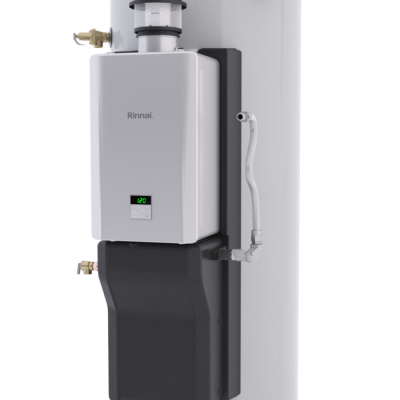
Rinnai Demand Duo R-Series CHS199100RECiN Tankless Water Heaters
-
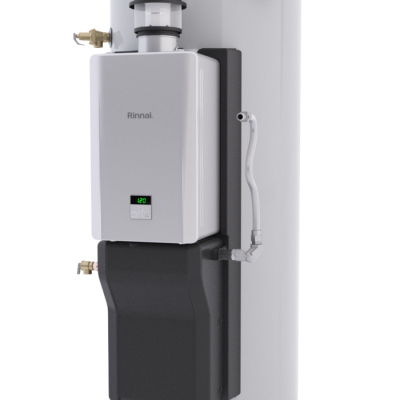
Rinnai Demand Duo R-Series CHS199100RECiP Tankless Water Heaters
-
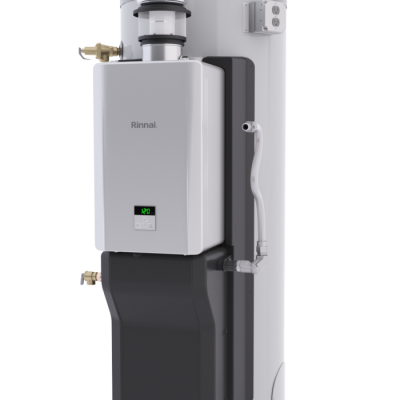
Rinnai Demand Duo R-Series CHS19980RECiN Tankless Water Heaters
-
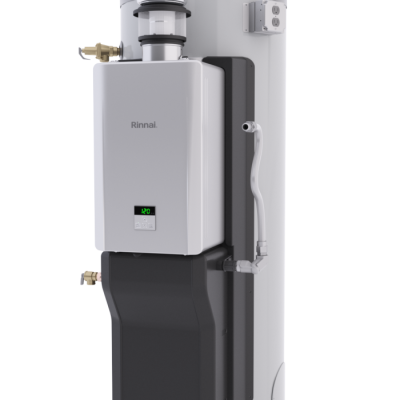
Rinnai Demand Duo R-Series CHS19980RECiP Tankless Water Heaters
Demand Duo R-Series Commercial Hybrid Water Heaters
Demand Duo R-Series systems are indoor commercial hybrid water heaters that combine a storage tank with an integrated tankless heating engine and recovery pump. They are designed for applications that need stored hot-water capacity for peak demand while retaining tankless-driven recovery, making them especially relevant for replacing traditional commercial atmospheric tank water heaters.
The main selection decisions are tank capacity, peak and first-hour hot-water demand, recovery requirements, available mechanical-room space and compatibility with the building's existing venting and gas infrastructure.
80-Gallon vs 100-Gallon Demand Duo R-Series
The current R-Series provides two storage sizes around a 199,000 BTU/h heating platform. Choosing between them should reflect the building's demand pattern rather than simply selecting the larger tank.
Both capacities are available in natural gas and propane configurations. Because maximum burner input is the same, moving from the 80-gallon to the 100-gallon model primarily changes available storage and physical size rather than increasing maximum burner capacity.
How the Hybrid System Changes Water Heater Selection
A traditional commercial tank heats water directly within the storage vessel. The R-Series uses its tankless engine to heat water and circulates that heated water through the storage tank, combining stored capacity with active recovery.
This distinction matters when comparing replacements. Tank volume alone does not describe hybrid performance, and burner input alone does not describe peak delivery; storage, recovery and the facility's demand profile need to be considered together.
Key Factors When Sizing Demand Duo R-Series
Commercial water-heater sizing should follow the facility's actual hot-water load. Peak demand, duration and recovery between high-use periods can change whether the 80-gallon or 100-gallon configuration is the better fit.
Peak Hot-Water Demand
Determine how much hot water the facility can require during its busiest period. Average daily consumption can hide short demand peaks that determine the required system size.
Storage Requirement
The 80-gallon and 100-gallon configurations provide different stored reserves. More storage can support larger short-duration loads but requires additional mechanical-room space.
Recovery Demand
Facilities with repeated peak periods need enough recovery between events. A tank that handles one peak may still be unsuitable if it cannot recover before the next one.
Existing Vent System
R-Series systems are designed around 6-inch Category I B-Vent, making existing vent configuration an important factor when evaluating a commercial tank replacement.
Mechanical-Room Space
The 100-gallon configuration requires more physical space than the 80-gallon model. Access for installation and future service matters as much as whether the unit technically fits.
Gas Capacity
A 199,000 BTU/h system requires adequate gas supply. Existing piping should be checked before treating the project as a direct commercial tank replacement.
Commercial Peak Demand and First-Hour Performance
Commercial hot-water loads are often concentrated into relatively short periods. Restaurants, hospitality properties, fitness facilities and other high-demand applications can experience usage patterns that are very different from their daily average.
This makes first-hour delivery and recovery more useful than storage capacity alone. A larger tank provides additional stored hot water, while the integrated heating and circulation system replenishes that storage as demand continues.
Why Tank Capacity Alone Can Lead to the Wrong Choice
Replacing a commercial water heater by matching only the old tank's gallon rating ignores differences in recovery and system design. A hybrid system should be sized from the actual hot-water load rather than through a gallon-for-gallon comparison.
The Replacement Tank Matches the Old Capacity but Not the Load
A replacement is selected only because its storage volume resembles the existing commercial tank. The facility's peak demand and recovery interval are not evaluated, resulting in a system that may not recover quickly enough between high-use periods or may provide unnecessary storage for the actual load.
80-Gallon Demand Duo R-Series
The 80-gallon configuration combines an 80-gallon commercial storage tank with a 199,000 BTU/h heating platform. Its smaller physical size can make it easier to position in mechanical rooms where access and available floor area are constrained.
It is the stronger candidate when calculated peak storage and recovery requirements fit its capability. Choosing the 100-gallon model solely for additional capacity can consume more space without solving a performance requirement that does not exist.
100-Gallon Demand Duo R-Series
The 100-gallon configuration retains the 199,000 BTU/h maximum input while increasing stored capacity. The additional volume can provide more buffer during periods when hot-water draw temporarily exceeds the rate at which the system can replenish storage.
The trade-off is a larger cabinet and greater installation footprint. Mechanical-room dimensions, doorways, access routes and future service clearance should be checked before choosing the larger tank.
Demand Duo R-Series vs Traditional Commercial Tank
The R-Series is particularly relevant when replacing an atmospheric commercial tank because it combines tank storage with a separate tankless heating engine. This changes how heat is transferred to the stored water and how serviceable components are arranged.
Demand Duo R-Series vs Condensing Hybrid Systems
The R-Series uses non-condensing technology with approximately 80% thermal efficiency, while condensing commercial hybrid systems can achieve higher thermal efficiency. The R-Series trade-off is its ability to work with Category I B-Vent arrangements commonly associated with traditional atmospheric commercial water heaters.
A condensing alternative may reduce fuel consumption but can require a different venting and condensate strategy. For replacement projects, the correct comparison should include both operating efficiency and the infrastructure changes required to install the new system.
When Existing B-Vent Matters
One of the defining installation characteristics of the R-Series is compatibility with 6-inch Category I B-Vent. In buildings already equipped with a suitable vertical vent system, this can reduce the amount of vent reconstruction required compared with changing to equipment that uses a different venting method.
Existing venting should still be inspected and verified for the proposed installation. The presence of a 6-inch vent does not by itself establish that the entire vent system, termination and installation configuration are suitable.
Vertical Venting Requirements
The R-Series is intended for vertical venting to the exterior rather than sidewall horizontal termination. This makes the existing vent route an important part of system selection, particularly in retrofit projects where changing the building's vent path would be difficult.
A property with no suitable vertical vent path may be better served by a different commercial water-heating configuration. Selecting the equipment before evaluating vent feasibility can turn an apparently straightforward replacement into a more complex project.
Demand Duo R-Series Installation in Toronto and the GTA
Canadian installations need to account for applicable gas, electrical, plumbing and venting requirements as well as the manufacturer's installation specifications. The R-Series is an indoor commercial system, so mechanical-room conditions and service access should be reviewed before equipment selection.
For Toronto and GTA retrofit projects, existing commercial tank infrastructure can influence the final choice significantly. Vent route, gas-line capacity, water connections, electrical supply, floor drainage and equipment access should be evaluated together rather than independently.
Gas Supply for a 199,000 BTU/h Commercial Water Heater
The R-Series can operate up to 199,000 BTU/h. Gas piping therefore needs enough capacity for the water heater while also supporting other gas appliances connected to the building's distribution system.
An existing atmospheric tank may have a different input rating, so the existing gas connection should not automatically be assumed adequate. Pipe size, developed length, supply pressure and connected appliance load can all affect whether modifications are required.
Natural Gas vs Propane Configurations
The 80-gallon and 100-gallon systems are available in natural gas and propane configurations. Fuel choice should follow the building's available supply and installation requirements rather than being treated as a capacity upgrade.
Both fuels can serve the same basic commercial hot-water application, but gas-system design must be appropriate for the selected configuration. Confirming fuel and gas capacity early prevents equipment-selection problems later in the project.
Commercial Recirculation and Recovery
The R-Series incorporates circulation as part of its hybrid heating process, moving water between the storage tank and tankless heating engine for recovery. This internal recovery function is different from a building's domestic hot-water recirculation loop.
Facilities with long distribution piping may still need a properly designed building recirculation strategy to maintain acceptable hot-water delivery times. System sizing should therefore distinguish between tank recovery requirements and distribution-loop requirements.
Replacing an Existing Commercial Tank Water Heater
The R-Series is particularly suited to replacement projects where an older atmospheric commercial tank has reached the end of its useful service life. Its storage format and B-Vent approach can align more closely with existing tank installations than a complete conversion to another water-heating architecture.
That does not make every project a direct swap. Tank dimensions, vent condition, gas capacity, water connections, electrical requirements and equipment access should be confirmed before the replacement model is ordered.
Emergency Replacement vs Planned Replacement
An emergency failure places more emphasis on installation compatibility and restoring hot water quickly, while a planned replacement provides more opportunity to compare efficiency, capacity and alternative system designs. The R-Series can be attractive where existing atmospheric-tank infrastructure can be retained appropriately.
For a planned project, operating costs and future demand should receive more weight. A building expecting increased hot-water use may need a different capacity strategy than simply reproducing the existing installation.
Replacing One Tank in a Multi-Tank System
Commercial properties sometimes use multiple storage water heaters to meet peak demand or provide redundancy. An R-Series unit can be considered within a multi-tank installation, including situations where the other tank equipment is not identical.
The overall system still needs to be evaluated hydraulically and for total capacity. Replacing one failed tank without checking how the remaining equipment shares the load can create uneven performance or leave the system short of the required recovery capacity.
Commercial Water Heater Redundancy
A single Demand Duo R-Series combines one tankless heating engine with one storage tank. For facilities where uninterrupted hot water is operationally critical, system-level redundancy should be considered separately from the capacity of one appliance.
A larger single tank does not automatically provide redundancy. If loss of one heating source would shut down critical operations, the project may require multiple appliances or another configuration designed around continued operation during equipment service.
Water Quality and Maintenance Planning
The tankless heating component introduces maintenance considerations that differ from a conventional atmospheric tank. Water quality and mineral accumulation can affect heat-transfer performance, making planned inspection and service important in high-use commercial applications.
Mechanical-room layout should provide enough access to service the heating engine, pump, controls and tank. Installing equipment too tightly against surrounding systems may save space initially but make future maintenance more difficult and expensive.
Demand Duo R-Series Installation Cost
Installed cost depends on more than the equipment itself. Tank size, gas-line changes, B-Vent condition, water-piping modifications, electrical work, removal of the existing tank, access constraints and any required system reconfiguration can change project cost.
A replacement that can appropriately use existing infrastructure may have a different installation scope from a project requiring new venting or significant utility upgrades. Comparing complete installed systems provides a more useful cost picture than comparing equipment prices alone.
When the Demand Duo R-Series Is a Good Fit
The R-Series is most relevant for commercial facilities that need meaningful stored hot-water capacity, active recovery and an indoor replacement configuration compatible with appropriate Category I B-Vent. It can be particularly practical when replacing traditional atmospheric commercial tanks without changing to a completely different water-heating architecture.
A condensing hybrid, tankless rack or other commercial configuration may be more appropriate when higher thermal efficiency, greater redundancy, different venting or substantially higher hot-water capacity is the priority. The building's load profile and existing infrastructure should determine which approach fits.
Demand Duo R-Series Selection Checklist
Before choosing the 80-gallon or 100-gallon R-Series configuration, evaluate both hot-water performance and the existing mechanical-room infrastructure. These checks help identify whether the project is a straightforward replacement or requires additional system changes.
Plan the Commercial Water Heater Replacement
- Calculate the facility's peak hot-water demand rather than relying only on average daily consumption.
- Identify how long peak demand lasts and how quickly the system must recover afterward.
- Compare the 80-gallon and 100-gallon storage configurations against the actual demand profile.
- Confirm that 199,000 BTU/h input is appropriate for the required recovery load.
- Choose the correct natural gas or propane configuration.
- Verify that the proposed installation is an approved indoor commercial application.
- Inspect the existing 6-inch Category I B-Vent and confirm the complete vent arrangement is suitable.
- Confirm that a compliant vertical vent path is available.
- Check gas-piping capacity for the water heater and other connected appliances.
- Verify water connection requirements and the existing piping arrangement.
- Confirm electrical requirements and available power at the installation location.
- Measure the mechanical room, doorways and equipment path before selecting tank size.
- Allow practical access for pump, controls, tankless components and future maintenance.
- Evaluate building recirculation separately from the appliance's internal recovery circulation.
- Consider redundancy if loss of hot water would interrupt critical business operations.
- Compare total installed cost and infrastructure changes rather than equipment price alone.
Choosing Demand Duo R-Series in Toronto and the GTA
Choosing between the 80-gallon and 100-gallon R-Series starts with the commercial hot-water load. Both configurations use a 199,000 BTU/h heating platform, so the additional tank capacity should solve a real peak-demand requirement rather than simply serve as extra capacity without a defined need.
For Toronto and GTA commercial replacements, existing B-Vent, gas capacity, mechanical-room dimensions, recovery requirements and peak usage should be reviewed before final equipment selection. This is especially important when replacing an older atmospheric tank and deciding whether existing infrastructure can be retained or needs modification.
FREE In-Home Estimate