


NPE-A series
Showing all 3 results
-
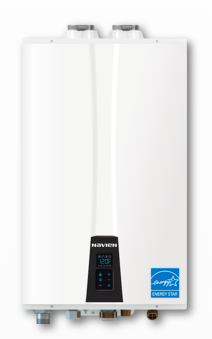
Navien NPE-180A Condensing Tankless Water Heater
-
Navien NPE-210A Condensing Tankless Water Heater
-
Navien NPE-240A Condensing Tankless Water Heater
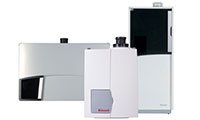
NPE-A Series Condensing Tankless Water Heaters
NPE-A Series tankless water heaters are legacy high-efficiency condensing gas systems that combine on-demand water heating with a built-in recirculation pump and a small internal buffer tank. The series includes three output levels, making hot-water demand, winter temperature rise and recirculation requirements the main factors when choosing an existing unit, planning a replacement or evaluating an older installation.
The NPE-A Series has been discontinued and replaced by a newer generation. For Toronto and GTA homeowners with an existing NPE-A unit, the decision is therefore often whether to maintain the current system or replace it with current equipment rather than purchase another original-generation model.
NPE-180A vs NPE-210A vs NPE-240A
The three models share the same condensing platform and ComfortFlow recirculation concept but provide different maximum heating capacities. The correct comparison is the flow available at the required temperature rise, not simply the model number or maximum BTU input.
How to Choose the Right NPE-A Capacity
Tankless sizing depends on how many fixtures operate at the same time and how much the incoming water must be heated. Toronto winter conditions make temperature rise particularly important because colder inlet water reduces the flow a given burner can heat to the desired temperature.
Simultaneous Demand
Add the realistic flow of showers, faucets and appliances that can operate together. Peak simultaneous use determines the required tankless capacity.
Winter Temperature Rise
Colder incoming water requires more burner output for every gallon delivered, so winter performance can be significantly different from maximum published flow conditions.
Recirculation
The built-in pump is valuable when reducing hot-water wait time is important, but recirculation configuration must match the home's plumbing layout.
Existing NPE-A Replacement
An older model should not automatically be replaced by matching its original capacity. Recalculate current demand before choosing a modern replacement.
Gas Capacity
Higher-output models create greater instantaneous gas demand. Existing piping must support the water heater together with other connected gas appliances.
Venting and Condensate
Condensing installation requires compatible venting and condensate drainage. Existing infrastructure should be verified before a replacement is selected.
NPE-A Series Winter Hot-Water Performance
The difference between the NPE-180A, NPE-210A and NPE-240A becomes clearer when comparing them at a meaningful temperature rise. At a 75°F rise, approximate flow increases from 3.9 GPM to 4.7 GPM and then 5.2 GPM as maximum burner input increases.
This type of comparison is more useful in the GTA than choosing from a maximum-flow figure measured at a much smaller temperature rise. The colder the incoming water, the more capacity the heater needs to maintain a given flow and outlet temperature.
Why Maximum GPM Can Be Misleading
Tankless water heaters can deliver their highest flow when the required temperature increase is relatively small. As temperature rise increases, available heated flow decreases because the burner has a fixed maximum output.
A homeowner expecting several showers and fixtures to operate simultaneously should therefore compare combined fixture demand with cold-season performance rather than a single maximum GPM number.
Avoid Sizing From Bathroom Count Alone
Bathroom count is useful context, but it does not reveal how much hot water the home actually needs at one time. A three-bathroom home where showers are used sequentially can have a lower peak load than a two-bathroom home where high-flow fixtures operate simultaneously.
The Model Looks Large Enough Until Winter
A tankless unit is selected from bathroom count and a favourable maximum-flow rating. During a Toronto winter, colder incoming water increases the required temperature rise and available flow drops, causing performance problems when several fixtures operate together.
ComfortFlow Recirculation and the Buffer Tank
The defining difference between the original NPE-A and standard NPE-S platform is the NPE-A's built-in circulation pump and small buffer tank. These components are designed to improve hot-water delivery and reduce the temperature interruption sometimes experienced between closely spaced hot-water draws.
This makes the A-Series more relevant where hot-water delivery comfort matters. A home that does not need recirculation may not benefit from the additional pump and associated plumbing configuration to the same degree.
Dedicated Return Line vs Crossover Recirculation
The built-in pump can work with a dedicated domestic hot-water return line where one is available. Homes without a dedicated return can use a compatible crossover arrangement that uses the existing cold-water piping as the return path.
A dedicated return generally provides a purpose-built recirculation path, while a crossover approach can avoid opening walls to add another pipe. Plumbing layout should therefore be evaluated before assuming that the same recirculation strategy is appropriate for every home.
Recirculation Does Not Increase Heating Capacity
The built-in circulation pump can reduce the wait for hot water, but it does not increase the maximum BTU output of the water heater. Heating capacity and delivery time are separate selection issues.
A recirculation system can make hot water arrive sooner at a distant bathroom while the heater still remains subject to its normal simultaneous-flow limit. Homes with both long plumbing runs and heavy peak demand need both issues evaluated.
Recirculation Operating Strategy
The original NPE-A platform supports different approaches to recirculation, including continuous cycling, learned usage patterns, scheduled control and demand-based activation with compatible controls. The best strategy balances hot-water convenience against unnecessary circulation and piping heat loss.
Keeping a loop hot for long periods provides faster availability but can increase distribution losses. Demand-based or scheduled operation can reduce unnecessary circulation when hot water is rarely needed.
NPE-A vs NPE-S Series
The original NPE-A and NPE-S systems share the same general condensing tankless platform, but the A-Series adds integrated recirculation components. This is the primary practical distinction when comparing the two legacy categories.
NPE-A vs Current NPE-A2 Series
The NPE-A2 is the newer generation of the advanced condensing tankless platform and retains the central concept of high-efficiency water heating with integrated recirculation. For an existing NPE-A owner, the A2 generation is therefore a more relevant replacement comparison than another original NPE-A unit.
Replacement should still be evaluated as an installation rather than assumed to be an exact appliance swap. Venting, controls, recirculation configuration, gas supply and connection requirements should be checked against the selected current model.
When to Keep an Existing NPE-A
Discontinued does not automatically mean an operating NPE-A needs immediate replacement. If the unit is performing correctly, meeting the home's hot-water demand and can be maintained appropriately, continued operation may remain practical.
Replacement becomes more relevant when repair frequency increases, important components require significant work, hot-water needs have changed or the homeowner wants to move to current equipment. The decision should compare repair condition and replacement scope rather than series age alone.
Replacing an NPE-180A
The NPE-180A has a maximum input of 150,000 BTU/h and approximately 3.9 GPM capacity at a 75°F temperature rise. A replacement does not necessarily need the same maximum input if the home's current peak demand differs from the original installation.
Recalculate simultaneous fixtures and winter temperature rise first. This prevents automatically carrying forward an undersized or oversized original selection.
Replacing an NPE-210A
The NPE-210A increases maximum input to 180,000 BTU/h and provides approximately 4.7 GPM at a 75°F rise. It sits between the smaller and larger models, making actual peak demand especially important when deciding whether a replacement should remain in a similar capacity class.
If household usage has increased, a higher-capacity current model may be justified. If actual demand is lower than expected, simply matching the old 180,000 BTU/h input may provide no practical advantage.
Replacing an NPE-240A
The NPE-240A reaches 199,900 BTU/h and approximately 5.2 GPM at a 75°F temperature rise. Its high input makes it the strongest original NPE-A option for larger simultaneous loads.
When replacing an NPE-240A, verify why the high capacity was originally selected. Large homes do not automatically require maximum tankless output, while genuinely high simultaneous winter demand may continue to justify this capacity class.
Condensing Efficiency
The NPE-A Series uses condensing technology with high-efficiency operation. The system captures additional heat from combustion gases instead of allowing as much usable heat to leave through the exhaust.
Efficiency is only one part of system selection. A highly efficient water heater that is incorrectly sized or installed with an unsuitable recirculation strategy can still deliver poor real-world performance.
Indoor vs Outdoor Installation
The original NPE-A platform can support indoor or approved outdoor installation configurations. In Toronto and the GTA, climate makes installation location an important practical decision rather than simply a space-saving choice.
Indoor placement protects the appliance and connected piping from direct winter exposure but requires an appropriate vent route. Outdoor installation changes freeze-protection and piping considerations and should only be used where the equipment and installation configuration are approved for those conditions.
Venting an NPE-A Series Water Heater
The condensing platform uses forced-draft direct venting and supports installation methods that differ from conventional atmospheric storage water heaters. This can provide more routing flexibility but does not mean an existing water-heater vent can automatically be reused.
When replacing an NPE-A, the existing vent should be inspected for compatibility with the replacement system. Material, diameter, equivalent length, termination and combustion-air arrangement all affect whether existing infrastructure can remain.
Condensate Drainage
Condensing water heaters produce condensate as heat is recovered from combustion gases. A suitable drainage arrangement is therefore part of both an original NPE-A installation and a modern replacement.
An existing condensate route may simplify replacement, but it should still be inspected rather than assumed reusable. Drain condition and the requirements of the new appliance can affect the final installation plan.
Gas Supply and Replacement Capacity
The NPE-A models range from 150,000 to 199,900 BTU/h maximum input, creating substantially different peak gas demands. Gas piping needs to support the water heater while maintaining adequate supply for other connected appliances.
Moving from an NPE-180A or NPE-210A to a higher-output replacement should trigger a gas-capacity review. The fact that the existing installation already uses a tankless heater does not establish that its gas piping can support a larger model.
Replacing a Storage Tank With an NPE-A-Type System
For homeowners considering the category because they previously used a storage water heater, the biggest change is how hot-water capacity is measured. A storage tank relies on stored gallons and recovery, while tankless performance depends on instantaneous flow and temperature rise.
The conversion can also change gas, venting, electrical and condensate requirements. A tankless water heater's smaller physical size does not necessarily mean a simpler installation.
Tankless Installation Cost
Replacement cost varies with more than the water heater itself. Gas-line changes, venting, condensate drainage, recirculation plumbing, controls, water connections and accessibility can all change the installed price.
An existing NPE-A installation may already have much of the required infrastructure, potentially reducing conversion work compared with replacing a conventional tank. Compatibility still needs to be verified before treating the project as a straightforward swap.
Water Quality and Maintenance
Tankless heat exchangers can accumulate mineral deposits over time, making water quality and maintenance relevant to long-term performance. Recirculation can also increase the amount of time water moves through the system, which makes correct maintenance particularly important in recirculating applications.
Service access should be considered when replacing an existing unit. Preserving a compact installation is useful only if isolation valves, water connections and internal components remain accessible for inspection and flushing.
When NPE-A Series Replacement Makes Sense
Replacement becomes worth evaluating when an existing NPE-A has recurring problems, no longer satisfies current demand or requires a repair that is difficult to justify against current equipment. A newer system can also be considered when the homeowner wants updated recirculation controls or a different capacity.
If the existing unit remains reliable and properly sized, replacement purely because the series is discontinued may not be necessary. Equipment condition, repair requirements and current household demand provide a stronger basis for the decision.
NPE-A Series Replacement Checklist
Because the original NPE-A Series is now a legacy category, most current decisions involve assessing an existing installation and choosing an appropriate replacement. Review hot-water performance and infrastructure rather than automatically matching the old model number.
Plan an NPE-A Replacement
- Identify whether the existing unit is an NPE-180A, NPE-210A or NPE-240A.
- Review current simultaneous hot-water use rather than assuming the original sizing is still correct.
- Calculate performance using a realistic Toronto winter temperature rise.
- Determine whether the home's recirculation system uses a dedicated return or crossover arrangement.
- Decide whether integrated recirculation remains important for the replacement.
- Check the existing gas line against the input requirement of the proposed new model.
- Inspect existing venting for compatibility rather than assuming it can be reused.
- Verify the condensate drainage arrangement.
- Review water connections, isolation valves and service access.
- Confirm electrical and control requirements for the replacement equipment.
- Compare repair cost and equipment condition before replacing a functioning legacy unit.
- Consider current-generation equipment rather than searching only for another discontinued NPE-A.
Choosing an NPE-A Series Replacement in Toronto and the GTA
The original NPE-A Series includes the NPE-180A, NPE-210A and NPE-240A, with maximum inputs ranging from 150,000 to 199,900 BTU/h. Its built-in recirculation pump and buffer tank remain important when assessing an existing system because a replacement should preserve those functions when they are useful to the home.
For Toronto and GTA replacements, the best approach is to recalculate winter hot-water demand, review the existing recirculation setup and verify gas, venting and condensate infrastructure before choosing current equipment. This avoids repeating an old sizing decision simply because the existing model has operated in the home for years.
FREE In-Home Estimate