


NPE-S series
Showing all 4 results
-
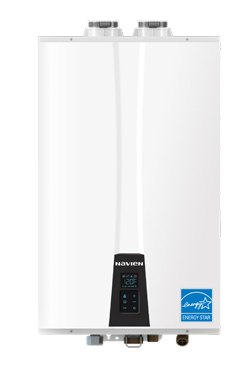
Navien NPE-150S Condensing Tankless Water Heater
-
Navien NPE-180S Condensing Tankless Water Heater
-
Navien NPE-210S Condensing Tankless Water Heater
-
Navien NPE-240S Condensing Tankless Water Heater
NPE-S Series Condensing Tankless Water Heaters
NPE-S Series tankless water heaters are legacy high-efficiency condensing gas systems designed for residential and commercial on-demand hot water without the built-in recirculation pump and buffer tank used in the advanced NPE-A configuration. The series includes several output levels, so selection depends on simultaneous hot-water demand, required temperature rise, installation conditions and whether integrated recirculation is actually needed.
The original NPE-S Series has been discontinued, with the newer NPE-S2 Series serving as the current standard platform. For Toronto and GTA properties with an existing NPE-S unit, replacement decisions should focus on present hot-water demand and infrastructure rather than automatically matching the old model.
NPE-150S, NPE-180S, NPE-210S and NPE-240S Compared
The original series ranges from 120,000 to 199,900 BTU/h. Maximum input increases across the lineup, but the practical difference is how much hot water each model can heat at the temperature rise required by the property.
How to Choose the Right NPE-S Capacity
The correct model depends on simultaneous fixture flow and temperature rise rather than household size alone. This is particularly important in Toronto, where colder winter inlet water increases the amount of heat required for every gallon of hot water.
Simultaneous Flow
Add the realistic flow of showers, faucets and appliances that may operate together. This peak demand is more useful for sizing than total daily water consumption.
Temperature Rise
The greater the difference between incoming cold water and desired outlet temperature, the lower the flow a given model can maintain.
Recirculation Needs
The S-Series does not include the integrated pump and buffer tank of the A-Series. Homes prioritizing built-in recirculation should account for this difference before choosing a replacement.
Existing Gas Supply
Moving to a higher-capacity model increases peak gas demand. Existing piping must be checked before assuming it can support a larger replacement.
Replacement Infrastructure
Existing venting, condensate drainage, water connections and service clearances may reduce replacement work when compatible with current equipment.
Residential or Commercial Load
A single unit may suit many residential loads, while higher commercial demand can require multiple units rather than relying on one maximum-capacity heater.
NPE-S Series Performance in Toronto Winters
Cold incoming water is one of the most important tankless sizing factors in Toronto and the GTA. When inlet temperature falls, the water heater must add more heat to reach the same outlet temperature, reducing the number of gallons it can deliver each minute.
At a 75°F temperature rise, the original models provide approximately 3.2 to 5.2 GPM depending on capacity. This type of cold-season comparison is more useful than choosing a model from a maximum GPM figure measured at a smaller temperature rise.
Maximum GPM vs Usable Winter Flow
The original NPE-S models were promoted with maximum flow rates considerably higher than their flow at a 75°F rise. Both numbers can be correct because tankless output changes with the amount of heating required.
For Toronto installations, the selection should therefore start with expected winter inlet temperature, desired outlet temperature and simultaneous fixture flow. A maximum GPM rating by itself can overstate the capacity available during the coldest months.
Why the Highest GPM Number Can Lead to Undersizing
A tankless system has no fixed tank to empty, but its burner has a fixed maximum heating capacity. Once simultaneous demand exceeds the flow the burner can heat at the required temperature rise, the system reaches its performance limit.
A Maximum-Flow Rating Is Used as Winter Capacity
Several fixtures appear to fit within the advertised maximum GPM, so the system is selected without calculating temperature rise. During cold GTA weather, lower inlet-water temperature increases the heating requirement and usable flow falls, creating a performance problem during simultaneous demand.
NPE-S Series Condensing Efficiency
The original NPE-S Series uses condensing technology and dual stainless-steel heat exchangers, with later configurations reaching approximately 0.97 UEF. The condensing process captures additional heat from combustion gases instead of allowing more usable energy to leave through the exhaust.
Efficiency should not be considered independently from sizing. A high-efficiency unit that cannot satisfy peak winter demand is still the wrong selection, while an unnecessarily large model may provide capacity that the property never uses.
NPE-S Series vs NPE-A Series
The original NPE-S and NPE-A platforms share similar core condensing water-heating technology. The important selection difference is that the standard S-Series removes the internal recirculation pump and buffer tank included with the advanced A-Series.
When the Simpler S-Series Configuration Makes Sense
The standard configuration is useful when the property needs high-efficiency tankless water heating but does not require an integrated recirculation pump and buffer tank. Removing components that do not solve a real need can simplify system selection.
The trade-off appears in homes with distant fixtures or long hot-water piping runs. If reducing wait time is a major goal, recirculation should be addressed separately rather than expecting a standard tankless installation to make hot water reach remote fixtures instantly.
NPE-S Series vs Current NPE-S2 Series
The original NPE-S models are discontinued, while NPE-S2 represents the newer standard condensing tankless generation. For an existing NPE-S installation, a current S2 model is therefore a more relevant replacement comparison than searching for another original-generation unit.
The old model number should not determine replacement capacity automatically. Current simultaneous demand, winter temperature rise, fuel supply and installation conditions should be recalculated before selecting the new system.
NPE-150S Replacement
The NPE-150S operates from approximately 18,000 to 120,000 BTU/h and provides about 3.2 GPM at a 75°F temperature rise. Its lower maximum input makes it most relevant to smaller hot-water loads within the original lineup.
When replacing one, confirm whether the original system still satisfies peak winter demand. Changes to fixtures or household usage can justify a different capacity, while simply installing a much larger model without a load requirement may provide little practical benefit.
NPE-180S Replacement
The NPE-180S reaches 150,000 BTU/h and approximately 3.9 GPM at a 75°F rise. It provides a step up in capacity from the NPE-150S without moving to the two highest-output original models.
Replacement should account for actual simultaneous demand rather than assuming the same capacity is automatically correct. If the existing unit has consistently met winter demand, that operating history is useful, but current fixture loads should still be reviewed.
NPE-210S Replacement
The NPE-210S reaches 180,000 BTU/h and approximately 4.7 GPM at a 75°F rise. It can support heavier simultaneous demand than the smaller original models while remaining below the maximum input of the NPE-240S.
A move from an NPE-210S to a higher-capacity replacement should solve a defined performance requirement. If the existing unit already meets the home's peak load, additional maximum BTU input may not change day-to-day hot-water comfort.
NPE-240S Replacement
The NPE-240S reaches 199,900 BTU/h and approximately 5.2 GPM at a 75°F temperature rise. It is the highest-capacity model in the original standard series and is therefore the most relevant legacy option for demanding single-unit loads.
When replacing an NPE-240S, confirm whether the property actually requires this capacity class. Large square footage or bathroom count alone does not establish peak hot-water demand.
Continuous Hot Water vs Unlimited Hot Water
A properly sized NPE-S system can continue heating water without waiting for a storage tank to recover. This does not mean the system can supply unlimited gallons per minute.
The maximum burner output still limits simultaneous flow at a given temperature rise. If several high-flow fixtures exceed that capacity, moving from a storage tank to tankless does not eliminate the need for proper system sizing.
NPE-S Series vs Conventional Storage Tank
A storage water heater relies on a reserve of heated water plus its recovery rate, while the NPE-S heats water as it passes through the unit. Tankless selection therefore uses flow and temperature rise instead of choosing primarily by stored gallons.
The wall-mounted tankless format can free mechanical-room floor space and reduce standby storage losses, but conversion may require changes to gas piping, venting, electrical service and condensate drainage. Smaller equipment does not necessarily mean a simpler retrofit.
Replacing a Storage Tank With a Standard Tankless System
A tank-to-tankless conversion should begin with a new hot-water load calculation rather than translating tank gallons into a tankless model. The two technologies provide hot water differently, so there is no direct gallon-to-GPM conversion that determines the correct unit.
The existing tank may also use substantially less instantaneous gas input than a high-output NPE-S model. Gas capacity and venting should be evaluated before the conversion is treated as a straightforward replacement.
Indoor and Outdoor Installation Considerations
The NPE-S platform supports indoor and approved outdoor configurations. In the Toronto climate, installation location affects venting, piping exposure and freeze considerations, making indoor placement common where suitable mechanical space is available.
Outdoor installation should not be selected solely to avoid indoor venting. Cold-weather exposure and connected water piping need to be addressed for the specific approved installation configuration.
NPE-S Venting Requirements
The condensing design allows approved plastic venting configurations and provides more vent-routing flexibility than a conventional atmospheric water heater. The original series can use compact vent sizes within specified equivalent-length limits.
Existing venting should still be inspected during replacement. Material, diameter, termination, combustion-air arrangement and total equivalent length must suit the new equipment rather than simply matching the old wall penetration.
Condensate Drainage
Condensing operation produces water that needs to be drained appropriately. This requirement applies even though the appliance itself is compact and wall mounted.
An existing NPE-S installation may already have a condensate route, which can simplify replacement if it remains suitable. A storage-tank conversion may require new drainage provisions that affect installation location and cost.
Gas Supply for NPE-S Models
Maximum gas input ranges from 120,000 BTU/h for the NPE-150S to 199,900 BTU/h for the NPE-240S. The gas system must support the selected heater together with furnaces, boilers, fireplaces, cooking equipment and other connected appliances.
Moving to a larger replacement can change gas requirements even when the physical water-heater connections appear similar. Pipe size, developed length, supply pressure and total connected load should be reviewed before installation.
Natural Gas and Propane Applications
The original NPE-S platform supports natural gas and propane operation with appropriate configuration. Fuel selection should follow the property's available supply and approved setup rather than being used as a method of changing hot-water performance.
The gas system still needs to support the model's required input. Converting fuel does not eliminate the need to verify pressure, piping capacity and commissioning requirements.
Commercial NPE-S Applications
The original NPE-S models can also be used in commercial water-heating applications. When one unit cannot satisfy the required flow, multiple units can be cascaded so total heating capacity better matches the commercial load.
This is an important distinction from simply installing the largest single model. Restaurants, multi-unit properties and other high-demand applications may require multiple heaters to provide adequate capacity and a more appropriate operating strategy.
Single Unit vs Cascaded Tankless Systems
The original NPE platform supports cascading multiple water heaters for higher-demand applications. This allows system capacity to grow beyond the output of one NPE-240S.
A cascade should be selected from calculated load rather than unit count alone. Multiple units require additional gas capacity, venting, piping and controls, but can be more appropriate than expecting one 199,900 BTU/h heater to serve a load beyond its design capability.
External Recirculation With an NPE-S System
The absence of an internal recirculation pump does not mean recirculation is impossible. An appropriately designed external recirculation system can be used where the plumbing layout and application call for it.
The trade-off is additional system design and equipment compared with selecting a platform that includes integrated recirculation. For a replacement project, existing recirculation piping should therefore be identified before the new water heater is chosen.
Water Quality and Maintenance
Mineral accumulation can reduce heat-transfer performance through a tankless heat exchanger, making water quality and periodic maintenance important to long-term operation. Maintenance needs can increase with heavy usage or challenging water conditions.
Replacement installations should preserve practical access to isolation valves and service points. Mounting the unit in the smallest possible space can create unnecessary difficulty when flushing or component service is required later.
NPE-S Series Replacement and Installation Cost
Installed cost depends on equipment capacity and the amount of infrastructure work required. Gas-line changes, vent modifications, condensate drainage, water piping, external recirculation, electrical work and removal of old equipment can all affect the project.
An existing NPE-S installation with compatible infrastructure can have a different replacement scope from a conventional tank conversion. Comparing the complete installed project is more useful than comparing water-heater prices alone.
Repair or Replace an Existing NPE-S?
Discontinued status alone does not mean a functioning NPE-S needs immediate replacement. If the unit remains reliable, satisfies current hot-water demand and can be maintained appropriately, continued operation may still make practical sense.
Replacement becomes more relevant when repair frequency increases, a significant component fails, hot-water requirements have changed or the property would benefit from current-generation equipment. Repair cost should be evaluated alongside equipment condition and the scope of a replacement installation.
NPE-S Series Replacement Checklist
For an existing NPE-S installation, the goal is not simply to find the closest new model number. Review present demand, cold-season performance and existing infrastructure so the replacement corrects any limitations instead of reproducing them.
Plan an NPE-S Replacement
- Identify whether the existing unit is an NPE-150S, NPE-180S, NPE-210S or NPE-240S.
- Calculate realistic simultaneous hot-water demand from the fixtures that may operate together.
- Size the replacement using a Toronto winter temperature rise rather than maximum advertised GPM.
- Determine whether the existing system has ever struggled during peak winter demand.
- Decide whether integrated recirculation would improve the replacement installation.
- Review any existing external recirculation system and return piping.
- Verify gas capacity before increasing maximum BTU input.
- Inspect existing venting for compatibility with current equipment.
- Confirm that the condensate drainage arrangement remains suitable.
- Review water connections, isolation valves and electrical requirements.
- Preserve adequate access for flushing and future service.
- For commercial applications, calculate whether one unit or a cascaded system is required.
- Compare repair cost with current replacement options before replacing an operating legacy unit.
- Evaluate the current NPE-S2 generation rather than limiting the search to discontinued NPE-S equipment.
Choosing an NPE-S Series Replacement in Toronto and the GTA
The original NPE-S Series ranges from the 120,000 BTU/h NPE-150S to the 199,900 BTU/h NPE-240S and provides high-efficiency condensing tankless water heating without an integrated recirculation pump or buffer tank. That simpler configuration remains the key distinction when evaluating an existing unit or comparing it with advanced recirculating systems.
For Toronto and GTA replacements, recalculate simultaneous demand using realistic winter inlet-water conditions, then review gas capacity, venting, condensate drainage, recirculation requirements and service access. This provides a more reliable replacement decision than automatically matching the discontinued model or choosing from maximum GPM alone.
FREE In-Home Estimate