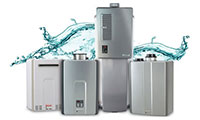
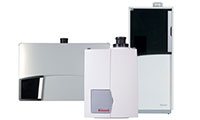


Selected Rinnai Residential
Showing all 5 results
-

Rinnai RSC160i Tankless Water Heaters
-

Rinnai RSC199i Tankless Water Heaters
-

Rinnai RU160iN Tankless Water Heaters
-

Rinnai RU180iN Tankless Water Heaters
-

Rinnai RU199iN Tankless Water Heaters
Residential Tankless Models: Compare Capacity and Convenience
Residential tankless water heaters provide domestic hot water on demand, with output chosen for the household's simultaneous use and inlet-water conditions. This selected collection includes RU and RSC models with different capacity and recirculation arrangements.
Choose around the household's actual needs
Separate hot-water production from delivery time and installation fit. These factors explain why a more powerful unit is not always the complete solution.
Simultaneous use
List showers, taps and appliances likely to run together. Check winter output at the required temperature rise instead of using house size alone.
Delivery time
Long plumbing runs can cause waiting even with sufficient heating capacity. Compare a compatible recirculation arrangement if that is the main complaint.
Installation scope
The preferred location needs suitable venting, utilities and maintenance access. Moving the heater can change both installation cost and delivery time.
Compare RU and RSC by complete model
RSC recirculation configurations and RU models should be compared using their own specifications. Confirm included pump equipment, controls and approved return arrangements rather than inferring them from a category label.
Current model generations may differ from the listed equipment. Ask for the exact Canadian unit being supplied and compare its rating, fuel and application requirements with the existing installation.
Budget for the conversion, not only the heater
A Toronto tank-to-tankless project can require gas-line assessment, approved venting, electrical supply, condensate drainage and water-pipe changes. A similar wall-mounted replacement may also need new components.
Include isolation valves, flushing access and commissioning in the quote. Review water condition and ongoing maintenance before assuming lower equipment cost means lower ownership cost. Tankless operation avoids a finite stored-water supply, but simultaneous flow remains limited by the selected equipment and conditions.
Bring demand and site details
An accurate proposal starts with the existing equipment and the problems you want solved. Confirm these items before choosing a model.
Residential tankless checklist
- Record overlapping fixtures and winter demand.
- Identify capacity shortages versus delivery delays.
- Confirm full model and fuel specification.
- Check pump, controls and return-line requirements.
- Review gas, vent, power and condensate scope.
- Include service valves and maintenance access.
Choose the residential model that meets the required delivery with a practical installation. Compare complete RU and RSC proposals using the same household demand.
FREE In-Home Estimate