


Ecobee 3
Showing all 2 results
Ecobee3 Smart Thermostats for Connected HVAC Control
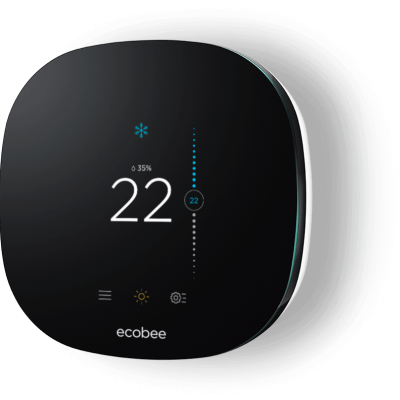
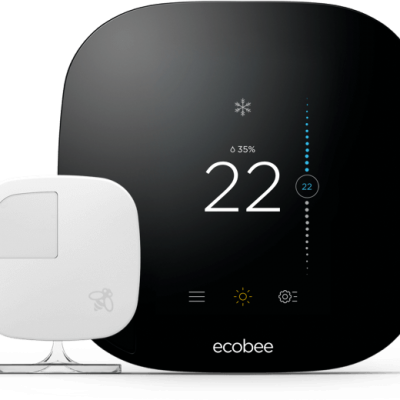
Ecobee3 smart thermostats are Wi-Fi-connected HVAC controls designed to manage compatible heating and cooling systems through touchscreen control, scheduling, remote access and room sensing. The original Ecobee3 can also coordinate compatible HVAC accessories, making equipment compatibility and existing system configuration important when considering installation or replacement.
For Toronto and GTA homes, the Ecobee3 is most relevant as an existing smart thermostat that may need installation support, troubleshooting or replacement. The original Ecobee3 has been discontinued, so homeowners evaluating this category should distinguish between maintaining an existing Ecobee3 and selecting a current smart thermostat as its replacement.
What to Consider With an Ecobee3 Thermostat
Choosing whether to install, keep or replace an Ecobee3 requires more than checking for Wi-Fi. HVAC staging, heat-pump configuration, thermostat power, room sensors and connected accessories can all affect the decision.
HVAC Compatibility
Confirm the heating and cooling equipment before installation or replacement. The original Ecobee3 supports many central HVAC configurations, but compatibility should be verified for the actual system.
Heating and Cooling Stages
The original Ecobee3 can control up to two heating stages and two cooling stages in conventional systems. A replacement should preserve the stages the HVAC equipment requires.
Heat Pump Configuration
Heat-pump systems can require compressor and auxiliary-heat control. Identifying these requirements prevents replacing the thermostat with a control that cannot manage the complete heating sequence.
Room Sensors
Remote sensing can address the limitation of measuring temperature only at the hallway thermostat. Sensor use matters most when occupied rooms regularly differ from the thermostat location.
HVAC Accessories
The original Ecobee3 can support compatible humidification, dehumidification and ventilation equipment. Accessory control should be identified before choosing a replacement thermostat.
Thermostat Power
Continuous power is required. Homes without a suitable common wire may require a compatible power solution rather than assuming the existing thermostat wiring is sufficient.
Ecobee3 vs Ecobee3 Lite
The names are similar, but the original Ecobee3 and Ecobee3 Lite should not be treated as identical thermostats. Accessory control is one of the most important differences when evaluating a replacement.
Ecobee3 Room Sensors and Multi-Room Comfort
A thermostat installed in a hallway can only directly measure conditions at that location. Ecobee3 room sensing allows temperature and occupancy information from other areas of the home to influence comfort decisions.
This is useful when a regularly occupied bedroom, family room or home office differs from the thermostat location. Sensors can improve how the thermostat responds to those spaces, but they cannot correct inadequate ductwork, insulation or HVAC capacity.
Room Sensors vs HVAC Zoning
Room sensors and zoning solve different problems. Sensors give the thermostat more information about conditions around the home, while a true zoned system can direct conditioned air to different areas using dedicated zone controls and compatible equipment.
Adding sensors should therefore not be treated as equivalent to creating independent HVAC zones. If different floors require substantially different heating or cooling at the same time, the distribution system should be evaluated before expecting sensors alone to solve the imbalance.
When Room Sensors Cannot Fix Uneven Temperatures
Remote sensing is valuable only when the HVAC system can physically deliver the required heating or cooling to the affected rooms. Airflow restrictions and building-envelope problems remain mechanical issues even when the thermostat has better temperature information.
The Sensor Detects the Problem but Cannot Correct the Airflow
An upstairs sensor reports that a bedroom is warmer than the main floor during summer, but the room receives inadequate conditioned airflow. The thermostat can respond to the temperature difference, yet longer cooling cycles may overcool other areas without solving the underlying distribution problem.
Ecobee3 for Furnaces and Air Conditioners
The original Ecobee3 can control compatible conventional heating and cooling systems with up to two stages of heating and two stages of cooling. That makes staging an important consideration when retaining or replacing the thermostat.
A replacement thermostat should support the HVAC equipment as installed rather than merely provide similar smart features. Losing a required heating or cooling stage can change system operation even if Wi-Fi, scheduling and app control continue to work.
Ecobee3 for Heat Pumps
The Ecobee3 can be configured for compatible heat pumps, including systems that use auxiliary heating. Heat-pump thermostat replacement requires careful identification of compressor stages, reversing-valve control and auxiliary-heat requirements.
This becomes especially important in Toronto and the GTA because heating performance during cold weather depends on the complete heat-pump control strategy. An incorrect thermostat configuration can cause unnecessary auxiliary heat operation or prevent the system from using its available heating functions correctly.
Ecobee3 and Dual-Fuel Heating
Dual-fuel HVAC systems require coordination between a heat pump and a secondary heating source. Thermostat configuration determines how those components transition under changing outdoor and indoor conditions.
When replacing an Ecobee3 on a dual-fuel installation, the existing system logic should be documented first. Selecting a replacement solely for app features can overlook the more important requirement of managing the heating equipment correctly.
Ecobee3 Humidifier Control
The original Ecobee3 can control a compatible humidifier when the HVAC system and wiring are configured for accessory operation. This can be particularly useful during Toronto winters, when heated indoor air can become uncomfortably dry.
However, thermostat-controlled humidification does not eliminate the need to manage indoor moisture carefully. Excessive winter humidity can contribute to condensation on cold windows and building surfaces, so humidity targets should reflect outdoor conditions and the home's construction.
Ecobee3 Ventilation and Dehumidification Control
Compatible ventilation and dehumidification accessories can also be part of an Ecobee3 installation. This capability matters when the thermostat is doing more than controlling the furnace and air conditioner.
Before replacing an existing Ecobee3, determine whether accessory terminals are actively controlling a ventilator, humidifier or dehumidifier. A replacement with fewer accessory-control capabilities could require a different control strategy for that equipment.
Ecobee3 Wi-Fi and Remote Thermostat Control
Wi-Fi connectivity allows temperature settings and thermostat functions to be managed remotely rather than only from the wall. This can be useful for households with changing schedules, travel periods or a need to adjust HVAC settings before returning home.
Remote access should still be treated as a convenience layer rather than the foundation of HVAC compatibility. The thermostat must first be correctly wired and configured to control the heating and cooling equipment locally.
Ecobee3 Scheduling and Smart Recovery
Scheduling allows comfort settings to change throughout the day rather than maintaining one temperature continuously. Smart recovery can begin heating or cooling before a scheduled comfort period so the target temperature is reached closer to the desired time.
More aggressive setbacks are not automatically better. Recovery behaviour should suit the HVAC system, especially with heat pumps where large temperature changes can affect how auxiliary heating is used.
Ecobee3 Installation Requirements
Installation starts by confirming the HVAC configuration and identifying the existing thermostat terminals. The original Ecobee3 requires continuous low-voltage power and can use a compatible power extender arrangement when an appropriate common wire is unavailable.
Installation should also include equipment configuration rather than ending when the thermostat powers on. Heating stages, cooling stages, heat-pump settings, fan control, sensors and connected HVAC accessories need to be checked so the thermostat controls the complete system correctly.
C-Wire vs Power Extender Installation
A dedicated common wire can provide the continuous power required by the thermostat. Where a suitable common wire is unavailable, a compatible power extender arrangement may provide an alternative for supported HVAC configurations.
The presence of four thermostat wires does not automatically prove that a power extender is the correct solution. Existing terminal functions and equipment wiring should be verified before deciding whether to reuse the cable, repurpose a conductor or use an extender.
Do Not Replace an Ecobee3 by Wire Colour Alone
Wire colours are useful labels but do not guarantee terminal function. Previous HVAC modifications, accessory wiring and non-standard installations can make colour matching unreliable.
The New Thermostat Powers Up but an HVAC Function Is Missing
A replacement is connected by matching visible wire colours from the old thermostat. Heating and cooling appear to work, but a second stage or connected accessory does not operate because the original terminal functions were never documented. Verifying the complete configuration before removal reduces this risk.
Replacing an Original Ecobee3 Thermostat
Because the original Ecobee3 is a discontinued model, replacement planning should focus on preserving the HVAC functions the existing thermostat actually uses rather than simply finding another thermostat with a similar appearance.
Document the connected equipment, stages, sensors and accessories before removing the old control. A current smart thermostat may provide newer connected features, but the most important replacement criterion is whether it can control the existing HVAC configuration correctly.
Ecobee3 Replacement vs Repair
A blank screen, incorrect temperature reading or loss of heating and cooling does not automatically mean the thermostat itself has failed. Power interruptions, loose wiring, equipment safety switches and HVAC faults can produce symptoms that appear to be thermostat problems.
Diagnosing the control circuit before purchasing a replacement can prevent unnecessary thermostat replacement. If the thermostat is confirmed to be the problem, the system information gathered during diagnosis also helps identify an appropriate replacement.
When a New Smart Thermostat Does Not Improve HVAC Performance
A newer thermostat can add interface, connectivity and automation features, but it cannot increase the mechanical heating or cooling capacity of existing equipment. It also cannot correct poor duct design, dirty equipment or an improperly sized HVAC system.
Replacing the Thermostat Does Not Fix a Hot Second Floor
A newer smart thermostat is installed because the second floor remains uncomfortable in summer. The same temperature imbalance continues because the cause is inadequate airflow and heat gain rather than thermostat capability. HVAC distribution should be diagnosed before another control upgrade is considered.
Ecobee3 vs Current Smart Thermostats
Current smart thermostats can provide newer hardware, sensing and connected-home capabilities, but feature count alone should not determine whether an existing Ecobee3 needs replacement. If the current thermostat reliably controls all required HVAC functions, replacement may primarily be a technology or lifecycle decision.
When replacement is necessary, compare HVAC compatibility, room-sensor strategy, accessory control, heat-pump support, wiring requirements and desired smart features. This provides a more useful comparison than choosing solely by display design or purchase price.
Ecobee3 Replacement Cost Factors
The cost of replacing an Ecobee3 depends on both the new thermostat and the HVAC work required to install it correctly. A straightforward compatible replacement can differ significantly from an installation requiring wiring changes, accessory-control modifications or troubleshooting.
Existing room sensors and HVAC accessories can also affect the decision. A lower-priced thermostat may not be the lower-cost solution if replacing it requires additional controls or gives up functions that were previously integrated into the thermostat.
Ecobee3 Thermostats for Toronto and GTA Homes
Toronto and GTA homes can place substantial demands on both heating and cooling controls because the thermostat must manage cold winter conditions, humid summer weather and changing shoulder-season temperatures. Heat-pump, auxiliary-heat and humidity-control configurations deserve particular attention during replacement.
Homes with multiple floors can also benefit from evaluating room temperatures beyond the thermostat location. Sensors may improve control decisions, but persistent floor-to-floor differences should still be assessed for airflow, insulation and system-sizing issues.
Ecobee3 Installation and Replacement Checklist
Before installing, servicing or replacing an Ecobee3, document what the thermostat is controlling and which smart functions the household actually uses. This helps preserve important HVAC functions while avoiding unnecessary replacement features.
Check Before Installing or Replacing an Ecobee3
- Confirm whether the thermostat is an original Ecobee3 or an Ecobee3 Lite.
- Identify the furnace, air conditioner or heat-pump configuration.
- Verify the number of heating and cooling stages.
- Document auxiliary-heat requirements on heat-pump systems.
- Identify any dual-fuel heating configuration before changing controls.
- Check whether a common wire or compatible power extender arrangement is being used.
- Document every thermostat terminal before removing the existing control.
- Identify active room sensors and determine how they are being used.
- Check whether the thermostat controls a humidifier.
- Check whether it controls a dehumidifier or ventilation equipment.
- Confirm that a proposed replacement supports every required HVAC function.
- Decide which Wi-Fi, scheduling and remote-control functions are actually needed.
- Diagnose HVAC power or equipment faults before assuming the thermostat has failed.
- Evaluate persistent room-to-room temperature problems separately from thermostat replacement.
Planning an Ecobee3 Thermostat Replacement
An Ecobee3 replacement should preserve the HVAC functions that matter while addressing the limitations of an ageing or failed control. Compatibility with equipment stages, heat pumps, sensors, accessories and available wiring should be established before comparing newer smart features.
For Toronto and GTA installations, this system-first approach is particularly important when the thermostat participates in heat-pump backup heating, winter humidity control or multi-room temperature management. The replacement should be selected for the complete HVAC configuration, not simply because it is a newer Wi-Fi thermostat.
FREE In-Home Estimate