


Ecobee 4
Showing the single result

Ecobee4 Smart Thermostats for Connected HVAC Control
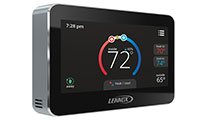
Ecobee4 smart thermostats are Wi-Fi-connected HVAC controls designed to manage compatible heating and cooling systems with scheduling, remote control, room sensing and built-in voice functionality. They are intended for low-voltage HVAC systems and can also manage compatible indoor-air accessories, making equipment configuration and wiring important when installing or replacing one.
For Toronto and GTA homes, Ecobee4 is now primarily a legacy smart thermostat category rather than a current-generation product choice. Homeowners with an existing Ecobee4 should evaluate HVAC compatibility, sensors, accessory connections and wiring before deciding whether to retain the thermostat or replace it with a current smart thermostat.
What to Check Before Installing or Replacing an Ecobee4
An Ecobee4 installation should be evaluated as part of the HVAC control system rather than as a standalone Wi-Fi device. These factors determine whether the thermostat can properly manage the equipment and whether a replacement will preserve existing functions.
HVAC System Type
Identify whether the thermostat controls a conventional furnace and air conditioner, heat pump or dual-fuel system. The equipment configuration determines the required thermostat setup.
Heating and Cooling Stages
The original Ecobee4 supports multi-stage HVAC configurations. A replacement should preserve every stage the existing equipment requires rather than simply matching basic heating and cooling terminals.
Thermostat Power
Ecobee4 requires continuous power from a compatible low-voltage HVAC system. A common wire simplifies installation, while supported systems without one may require a Power Extender Kit.
Room Sensors
Remote sensing can help the thermostat respond to occupied rooms rather than relying only on the temperature at the wall control. Sensor strategy matters most in homes with meaningful room-to-room temperature differences.
HVAC Accessories
Check whether the thermostat controls a humidifier, dehumidifier or ventilator. Selecting a replacement without equivalent accessory capability can require changes to the control strategy.
Replacement Goals
Determine whether the goal is restoring a failed thermostat or gaining newer smart features. Replacing a working control provides limited HVAC benefit if the existing system already meets the household's needs.
Ecobee4 vs Current Smart Thermostats
Ecobee4 introduced features that remain common in modern smart thermostats, including Wi-Fi control, remote sensing and voice integration. Current smart thermostats can add newer sensing, automation and interface capabilities, but HVAC compatibility remains more important than feature count.
Ecobee4 vs Ecobee3
Ecobee4 retained many of the HVAC and remote-sensing capabilities associated with the earlier Ecobee3 generation while adding built-in voice functionality. For homeowners comparing the two legacy generations, HVAC compatibility is often more important than the voice-control difference.
Replacing an Ecobee3 with an Ecobee4 solely for voice functionality is different from replacing a failed thermostat. When either thermostat is already installed, first identify the connected HVAC equipment, sensors and accessories before deciding which current control can take its place.
Ecobee4 Room Sensors and Multi-Room Comfort
Room sensors allow the thermostat to consider temperatures away from its wall location. This can be useful in Toronto homes where bedrooms, upper floors or frequently occupied rooms do not closely match the temperature in the hallway where the thermostat is installed.
The advantage is better temperature information, not independent heating and cooling for every room. The central HVAC system still has to distribute enough conditioned air to the spaces the thermostat is trying to keep comfortable.
Room Sensors Are Not the Same as HVAC Zoning
Remote sensors and duct zoning address different comfort problems. Sensors provide additional temperature and occupancy information, while a zoned HVAC system uses separate controls and dampers to regulate airflow to different areas.
If one floor needs substantially more cooling than another, adding a sensor may change how long the air conditioner operates but cannot independently redirect enough air to that floor. True zoning or airflow improvements may be required when the distribution problem is significant.
When an Ecobee4 Sensor Cannot Solve Uneven Comfort
Before adding sensors to address a hot or cold room, consider whether the HVAC system can physically condition that space properly. A sensor can identify the temperature difference but cannot correct undersized ducts, restricted airflow or inadequate insulation.
The Upstairs Sensor Extends Cooling but the Main Floor Gets Too Cold
An upstairs room remains warm, so its sensor causes the air conditioner to run longer. The main floor becomes colder while the upstairs improvement remains limited because insufficient airflow is reaching that area. The temperature difference requires an airflow or building-envelope solution rather than additional thermostat runtime alone.
Ecobee4 for Furnaces and Air Conditioners
Ecobee4 is designed for compatible low-voltage HVAC equipment and can manage multi-stage conventional heating and cooling. The thermostat configuration should match the actual number of furnace and air-conditioning stages available.
When replacing an Ecobee4, do not assume every smart thermostat offers equivalent staging. A replacement that supports fewer equipment stages can reduce access to the operating capabilities of an otherwise compatible HVAC system.
Ecobee4 for Heat Pumps
Ecobee4 can control compatible heat-pump systems, including configurations that use auxiliary heating. Heat-pump replacement decisions therefore require more information than a conventional furnace and air-conditioner thermostat swap.
The compressor configuration, reversing-valve operation and auxiliary-heating requirements should be identified before installation. In Toronto and the GTA, correct auxiliary-heat control becomes especially important during colder winter conditions.
Heat Pump Setbacks and Auxiliary Heat
Smart scheduling can reduce the temperature while a home is unoccupied, but large heating setbacks can affect heat-pump recovery. Depending on system configuration and outdoor conditions, rapid recovery may increase demand for auxiliary heating.
The better strategy is not necessarily the largest setback. Programming should balance reduced heating demand while the home is unoccupied with how efficiently the installed heat pump can recover the desired indoor temperature.
Ecobee4 for Dual-Fuel HVAC Systems
Dual-fuel systems combine a heat pump with another heating source and require appropriate control logic for changing between them. Thermostat selection should account for this operating strategy rather than treating the system like a standard furnace installation.
If an Ecobee4 is being replaced on a dual-fuel system, document the current configuration first. A newer thermostat may offer additional smart features while still being unsuitable if it cannot manage the required equipment sequence.
Ecobee4 Humidifier Control
Ecobee4 can control compatible humidification equipment when the HVAC system and accessory wiring support that function. This can be valuable in Toronto and GTA homes during winter, when prolonged heating can contribute to dry indoor conditions.
Higher humidity is not always better. Excessive indoor moisture during cold weather can cause condensation on windows and cold building surfaces, so humidity settings should be appropriate for outdoor conditions and the home's construction.
Dehumidifier and Ventilator Control
An existing Ecobee4 may also participate in controlling compatible dehumidification or ventilation equipment. These connections can easily be overlooked when the thermostat appears to be serving only the furnace and air conditioner.
Before replacement, identify every active accessory terminal. If the proposed thermostat cannot control the same accessory, the installation may require another controller or a different HVAC control arrangement.
Ecobee4 Scheduling and Smart Recovery
Scheduling allows heating and cooling setpoints to change automatically according to household routines. Recovery features can begin conditioning before a scheduled comfort period so the desired temperature is reached closer to the selected time.
Scheduling provides the greatest value when it reflects actual occupancy. Repeatedly overriding the thermostat because the schedule does not match the household reduces the practical benefit of automation.
Ecobee4 Remote Control and Wi-Fi
Wi-Fi connectivity allows homeowners to review and adjust compatible thermostat settings away from the wall control. This can be useful for travel, changing work schedules or adjusting comfort before returning home.
Wi-Fi does not determine whether the thermostat can control the HVAC equipment. A thermostat still needs correct low-voltage wiring and system configuration for local heating and cooling operation regardless of its connected features.
Built-In Voice Control
Built-in voice functionality was a major distinction of the Ecobee4 generation and allows compatible commands without requiring a separate voice device in the same room. For replacement decisions, however, this feature should be weighed against HVAC compatibility, sensors and accessory control.
If voice control is rarely used, preserving it may not need to be a priority. If it is part of the household's daily smart-home routine, replacement options should be compared for the desired voice ecosystem before installation.
Ecobee4 Installation With a C Wire
Ecobee4 requires continuous low-voltage power. Where a suitable common wire is available, it can provide the return path needed to power the thermostat continuously.
A visible unused conductor does not automatically mean a working common connection exists. The wire should be confirmed at the HVAC equipment before relying on it for thermostat power.
Ecobee4 Installation Without a C Wire
Supported installations without a common wire can use a Power Extender Kit to provide the thermostat with reliable power. Whether this approach is appropriate depends on the existing low-voltage HVAC wiring and equipment configuration.
The Power Extender Kit is not a universal solution for every heating system. Ecobee4 is designed for compatible 24-volt HVAC controls and should not be connected to line-voltage or millivolt heating systems.
Ecobee4 Is Not for Line-Voltage Heating
Some Toronto homes and condos use electric baseboard or other line-voltage heating controls. These systems require thermostats designed for their electrical voltage and load rather than a conventional low-voltage Ecobee4 installation.
A Smart Thermostat Is Selected for the Wrong Voltage
An existing wall thermostat controls line-voltage electric heating, but a low-voltage Ecobee4 is selected because both products appear to perform the same temperature-control function. The electrical systems are not interchangeable, so the installation cannot proceed as a standard thermostat replacement.
Do Not Install an Ecobee4 by Wire Colour Alone
Thermostat wire colours can help identify a system, but terminal functions should be documented before the old thermostat is removed. Previous HVAC work can result in colours being used differently from common conventions.
Taking note of each existing terminal is particularly important when the system has multiple stages, a heat pump or HVAC accessories. A thermostat that powers up after replacement can still be configured incorrectly for one or more equipment functions.
Ecobee4 Installation and System Setup
A complete installation includes both physical wiring and HVAC configuration. The thermostat needs to know the type of equipment it controls, available stages, heat-pump settings, fan operation and any connected accessories.
Heating, cooling and fan functions should be tested after installation. Heat-pump and accessory configurations deserve additional verification because a wiring or setup error may not become obvious until a particular operating mode is needed.
Replacing an Existing Ecobee4
Ecobee4 is a discontinued thermostat generation, so replacement is usually better approached by identifying a current thermostat that matches the HVAC system rather than searching only for another identical legacy unit.
Before removal, document equipment stages, thermostat terminals, room sensors and HVAC accessories. This creates a functional checklist that can be used to compare replacement thermostats without losing important capabilities.
Repair the HVAC System or Replace the Thermostat?
A thermostat that loses power or fails to start heating or cooling is not automatically defective. HVAC power interruptions, low-voltage faults, equipment safety switches and wiring problems can produce similar symptoms.
Diagnosis is especially important before replacing a legacy thermostat. Installing a new smart control will not restore operation when the underlying fault is elsewhere in the furnace, air conditioner or heat pump.
When Thermostat Replacement Does Not Improve Performance
Replacing Ecobee4 with a newer smart thermostat can improve interface or automation features, but it cannot increase the heating or cooling capacity of the existing HVAC equipment. It also cannot correct mechanical or airflow problems.
A New Thermostat Is Expected to Fix Long HVAC Run Times
The Ecobee4 is replaced because the air conditioner runs for long periods during hot weather, but the same behaviour continues. If the cause is high cooling load, airflow restriction or equipment performance, changing the thermostat does not address the underlying problem.
Ecobee4 Replacement During an HVAC Upgrade
A furnace, air conditioner or heat-pump replacement is an appropriate time to reconsider an older Ecobee4. New equipment may have different staging, accessory or control requirements from the system the thermostat originally managed.
Keeping the Ecobee4 can still be reasonable if it remains compatible and provides the required functions. If new equipment requires capabilities the thermostat cannot provide, control selection should be addressed as part of the HVAC upgrade rather than after installation.
Ecobee4 Replacement Cost Factors
Replacement cost depends on more than the price of the new thermostat. Wiring changes, Power Extender Kit requirements, HVAC staging, heat-pump setup, room sensors and connected accessories can all change the installation scope.
A lower-cost thermostat may not represent the lower-cost replacement if additional controls are needed for a humidifier, ventilator or other function previously handled by the Ecobee4. Compare the complete installed configuration rather than thermostat prices alone.
Ecobee4 Thermostats for Toronto and GTA Homes
Ecobee4 can suit the varied heating and cooling requirements found in Toronto and GTA homes, particularly where remote control and room sensing are useful. Heat-pump operation, winter humidity and multi-storey temperature differences are important considerations when evaluating an existing installation.
Local climate also makes correct configuration important. The thermostat needs to control heating reliably through cold winter conditions and cooling during humid summer weather while preserving any auxiliary heating or indoor-air accessories connected to the system.
Ecobee4 Installation and Replacement Checklist
Before installing or replacing an Ecobee4, document the complete HVAC control configuration rather than focusing only on the wall thermostat. This helps determine whether the existing control can remain or which functions a replacement must preserve.
Check Before Installing or Replacing an Ecobee4
- Identify the furnace, air conditioner, heat pump or dual-fuel equipment being controlled.
- Confirm that the system uses compatible low-voltage HVAC controls.
- Verify all required heating and cooling stages.
- Document heat-pump reversing-valve and auxiliary-heat requirements.
- Check whether a working common wire is available.
- Determine whether an existing Power Extender Kit is part of the installation.
- Record every thermostat terminal before disconnecting the old control.
- Identify the room sensors currently used for comfort control.
- Check whether the thermostat controls a humidifier.
- Check for connected dehumidification or ventilation equipment.
- Determine whether built-in voice control remains important to the household.
- Compare current smart thermostats for equivalent HVAC and accessory compatibility.
- Diagnose HVAC power and equipment faults before assuming the thermostat has failed.
- Reassess airflow problems separately from thermostat or sensor replacement.
Planning an Ecobee4 Thermostat Replacement
Ecobee4 remains a capable legacy smart thermostat when it is functioning correctly and matched to compatible HVAC equipment. Replacement becomes more relevant when the thermostat fails, the HVAC system changes or newer control features provide a practical benefit.
For Toronto and GTA installations, the replacement decision should preserve essential functions first: equipment stages, heat-pump operation, room sensing, thermostat power and HVAC accessory control. Smart features can then be compared without compromising the heating and cooling system the thermostat is responsible for managing.
FREE In-Home Estimate