




Nest Thermostat
Showing the single result
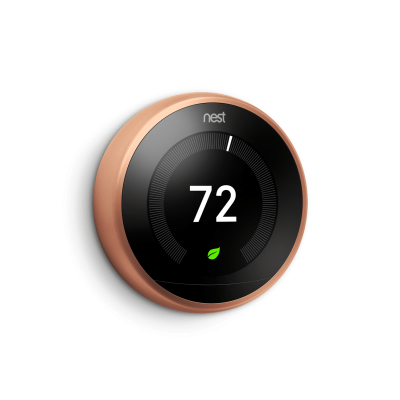
Nest Thermostats for Smart Heating and Cooling Control
Nest thermostats are Wi-Fi-connected HVAC controls designed to manage compatible heating and cooling systems with scheduling, remote temperature adjustment, energy-saving features and smart-home integration. Current options range from a streamlined smart thermostat for everyday control to a learning thermostat with more advanced automation and room-sensing capabilities.
For Toronto and GTA homes, choosing the right Nest thermostat starts with HVAC compatibility rather than smart features. Furnace or heat-pump type, heating and cooling stages, thermostat wiring, power requirements and room-sensing needs should all be checked before installation or replacement.
How to Choose a Nest Thermostat
The most important differences involve HVAC compatibility, automation and how much control is needed beyond the thermostat location. These factors help determine whether a standard smart thermostat or a learning model better matches the home.
HVAC System Type
Confirm whether the home uses a furnace and air conditioner, heat pump or another compatible low-voltage system. Thermostat features have little value if the control does not match the equipment.
Learning vs Scheduled Control
A learning thermostat can adapt temperature control around household patterns, while the standard option places more emphasis on user-defined schedules and straightforward smart control.
Room Sensing
Remote temperature sensing can be useful when bedrooms or living areas differ from the hallway thermostat. Choose a compatible thermostat and sensor strategy if multi-room temperature awareness is important.
Heating and Cooling Stages
Multi-stage and heat-pump systems can require more control functions than basic single-stage equipment. Verify the complete HVAC configuration before selecting the thermostat.
Thermostat Power
Power requirements depend on the thermostat and HVAC system. Some installations work with existing wiring, while others need a common wire or compatible power accessory for reliable operation.
Smart-Home Integration
Connected-home compatibility matters when the thermostat will be managed alongside other smart devices. It should be considered after HVAC compatibility rather than used as the primary selection criterion.
Nest Thermostat vs Nest Learning Thermostat
The current thermostat options target different levels of smart control. Comparing automation, sensing and installation requirements is more useful than choosing solely by appearance or price.
Learning Control vs a Fixed HVAC Schedule
Learning-based control is designed to reduce the amount of manual scheduling required by adapting to temperature preferences and household patterns. A conventional smart schedule instead gives the homeowner more direct control over when temperature changes occur.
Neither approach is automatically more efficient in every home. Households with highly predictable routines may be satisfied with a carefully configured schedule, while changing routines can make adaptive control more useful.
Nest Thermostats for Furnaces and Air Conditioners
Nest thermostats can control many compatible low-voltage furnace and central air-conditioning systems. The thermostat must still support the equipment configuration, particularly when the furnace or air conditioner has multiple operating stages.
A thermostat that can turn both heating and cooling on is not necessarily using every capability of the HVAC system. Stage requirements should be identified before installation so the control does not unintentionally simplify the operation of more advanced equipment.
Nest Thermostats for Heat Pumps
Heat-pump installations require additional compatibility checks because the thermostat may need to manage compressor operation, reversing-valve control and auxiliary heating. The specific equipment configuration should be verified before replacing an existing heat-pump thermostat.
This is particularly important in Toronto and the GTA, where a heat pump can operate across a wide range of outdoor temperatures. Incorrect auxiliary-heat configuration can change how the system responds during colder weather and affect operating cost.
Heat Pump Balance and Auxiliary Heating
Smart thermostat control can help coordinate compatible heat-pump and auxiliary-heating operation, but the thermostat cannot compensate for incorrectly sized or improperly configured HVAC equipment. The control strategy should reflect the actual heat pump and backup heating system.
Large scheduled setbacks can also change recovery behaviour. If restoring the indoor temperature causes unnecessary reliance on auxiliary heat, a smaller setback or different control strategy may be more appropriate.
Nest Temperature Sensors and Multi-Room Comfort
Compatible remote temperature sensors allow supported Nest configurations to consider conditions away from the main thermostat. This can help when an occupied bedroom, home office or family room regularly differs from the hallway where the thermostat is installed.
A sensor changes what temperature the control can respond to; it does not independently change airflow to that room. Homes with significant room-to-room differences should distinguish a sensing problem from a duct-distribution problem.
Temperature Sensors vs HVAC Zoning
Remote sensors and HVAC zoning are not equivalent. A sensor can tell the thermostat that another room is too warm or too cold, while a true zoning system can regulate airflow to separate areas using dedicated controls and dampers.
If the goal is independent temperatures for different floors at the same time, adding a sensor alone may not deliver that result. The duct system and zoning configuration should be evaluated before selecting thermostat accessories as the solution.
When a Temperature Sensor Cannot Fix the Comfort Problem
Remote sensing is most useful when the HVAC system already has enough capacity and airflow to condition the selected room. It cannot repair an undersized duct, blocked register, poor insulation or excessive heat gain.
The Upstairs Sensor Keeps Calling for Cooling
An upstairs room remains warm while the main floor is already comfortable. Giving the upstairs sensor greater influence can extend cooling operation, but the lower floor may become too cold if inadequate upstairs airflow is the actual problem. The distribution issue should be corrected rather than relying only on thermostat settings.
Nest Scheduling and Automatic Temperature Adjustments
Smart scheduling can reduce unnecessary heating or cooling by changing temperature targets when full comfort is not required. The practical benefit depends on whether those changes reflect actual occupancy and household routines.
More aggressive temperature changes do not automatically produce better results. Setbacks should account for HVAC recovery time, outdoor temperature and the characteristics of the heating or cooling system.
Home and Away Temperature Control
Occupancy-aware control can reduce unnecessary conditioning when the home is unoccupied and restore comfort when appropriate. This is most useful for households whose arrival and departure times vary enough that a fixed schedule is inconvenient.
Occupancy automation should still be configured around the people and pets in the home. An automatic away setting that does not match actual occupancy can prioritize energy reduction at the wrong time and create unnecessary comfort complaints.
Wi-Fi and Remote Thermostat Control
Connected control allows compatible thermostat settings to be adjusted remotely and integrated with a broader smart-home environment. This can be useful for travel, changing work schedules or checking home temperatures while away.
Wi-Fi does not replace the thermostat's local HVAC control. Heating and cooling should continue to be configured correctly at the equipment level, while connectivity provides an additional way to manage the thermostat.
Nest vs a Non-Wi-Fi Programmable Thermostat
A programmable thermostat can automate temperature changes without requiring internet connectivity, while Nest adds remote access and smarter automation. The decision depends on whether connected features solve a real household need.
Nest vs Other Smart Thermostats
Smart thermostats differ most meaningfully in HVAC compatibility, room-sensor strategy, automation, wiring requirements and smart-home integration. Comparing only touchscreen appearance or app features can overlook differences that affect everyday HVAC operation.
Nest is particularly relevant for households that value learning-based automation and integration with a connected-home environment. Another smart thermostat may be more appropriate when the HVAC configuration, sensor strategy or preferred ecosystem requires capabilities that better match a different control platform.
Nest Thermostats and Communicating HVAC Systems
Not every modern HVAC system should be controlled by a universal smart thermostat. Some communicating furnaces, heat pumps and variable-capacity systems use proprietary controls that exchange more system information than conventional thermostat wiring provides.
Replacing a communicating control with a Nest thermostat can require equipment reconfiguration and may reduce access to advanced functions. The existing control architecture should therefore be identified before assuming that a smart thermostat upgrade is appropriate.
When a Nest Thermostat Is Not the Right Replacement
A smart thermostat should not be selected solely because the homeowner wants app control. High-voltage heating, certain communicating systems and other specialized HVAC configurations can require different controls.
A Smart Thermostat Replaces an Advanced Communicating Control
The new thermostat provides basic heating and cooling commands, but the original system relied on communicating control for advanced equipment operation. The homeowner gains a familiar smart interface but can lose system functionality. Compatibility should be evaluated before changing the control architecture.
Nest Thermostat Wiring and C-Wire Requirements
Thermostat power requirements depend on the Nest model and the HVAC system. Some compatible installations can operate without a dedicated common wire, while other configurations need a common wire or compatible power accessory for reliable operation.
A thermostat powering on successfully does not prove that the installation is electrically suitable. Repeated power errors, equipment cycling or connectivity problems can indicate that the power configuration needs to be reassessed.
Older Toronto Homes Without a C-Wire
Older Toronto and GTA homes may have thermostat cable installed when fewer conductors were required. This can complicate a smart thermostat installation even when the furnace and air conditioner themselves are compatible.
The correct solution depends on the existing cable and HVAC equipment. Running an additional conductor or using an appropriate power accessory can be preferable to relying on a configuration that does not provide stable thermostat power.
Nest Thermostats Are Not for High-Voltage Wiring
Standard Nest thermostats are intended for compatible low-voltage HVAC control systems and should not be connected directly to high-voltage thermostat wiring. Electric baseboard and other line-voltage heating applications require controls designed for that electrical configuration.
This distinction is particularly important in Canadian homes where electric heating is common. Thick conductors, wire connectors or voltage markings should trigger a compatibility check rather than a conventional smart thermostat installation.
Nest Thermostat Installation
Installation begins by identifying the HVAC equipment and documenting the existing thermostat terminals before removing the old control. Power should be turned off, the correct wiring configuration established and the thermostat configured for the actual heating and cooling system.
Commissioning is as important as mounting the thermostat. Heating, cooling, fan operation, equipment stages and heat-pump functions should be tested so a wiring or configuration error is not mistaken for successful installation simply because the display turns on.
Do Not Install a Nest Thermostat by Wire Colour Alone
Thermostat conductors should be identified by terminal function rather than colour. Previous repairs or non-standard wiring can result in colours that do not match typical conventions.
The Thermostat Works but a Heating Stage Does Not
A replacement thermostat is connected by matching wire colours and appears to operate normally. During colder weather, an additional heating function fails to operate because the original system configuration was not documented. Confirming terminals and equipment requirements before replacement reduces this risk.
Replacing an Existing Nest Thermostat
Replacing an older Nest thermostat should begin by documenting the HVAC configuration rather than assuming the newest model is a direct functional replacement. Thermostat generations can differ in terminals, sensor support, automation and power requirements.
If the existing thermostat reliably controls the HVAC system, replacement may primarily be driven by failure, desired features or lifecycle considerations. When replacement is necessary, preserving required equipment stages and heat-pump functions should take priority over gaining new interface features.
Nest Thermostat Replacement vs HVAC Repair
A blank thermostat, incorrect temperature or HVAC system that does not start does not automatically mean the thermostat has failed. Equipment power, low-voltage fuses, safety switches, wiring and mechanical faults can produce similar symptoms.
Diagnosing the system before replacement can prevent unnecessary thermostat purchases. If the thermostat is confirmed to be faulty, the same diagnostic process provides useful information for selecting the correct replacement.
When a New Nest Thermostat Does Not Improve HVAC Performance
A smart thermostat can improve how a compatible HVAC system is controlled, but it does not increase furnace output, air-conditioner capacity or duct airflow. Comfort problems caused by mechanical or building-envelope issues remain after the thermostat is changed.
If rooms remain consistently too hot or too cold, airflow, equipment sizing, insulation and building exposure should be evaluated. Replacing a functioning thermostat repeatedly is unlikely to correct a problem elsewhere in the system.
Nest Thermostat Cost and Installation Factors
Total cost depends on the thermostat selected and what is required to integrate it with the existing HVAC system. Wiring changes, power accessories, professional installation and troubleshooting can make a seemingly simple replacement more involved.
The premium for learning, sensing and connected features should also be evaluated against how the thermostat will actually be used. A lower-cost option can be the better fit when advanced automation is unnecessary, while additional features can justify a higher initial cost when they solve specific comfort or control needs.
Nest Thermostats for Toronto and GTA Homes
Nest thermostats can suit Toronto and GTA homes that use compatible central HVAC equipment and benefit from remote control, scheduling or automated temperature management. Local heating requirements make heat-pump configuration, auxiliary heating and dependable thermostat power especially important.
Multi-storey homes may also benefit from remote temperature sensing, but significant floor-to-floor differences should not automatically be treated as thermostat problems. Smart control works best when the underlying HVAC distribution system is already capable of conditioning the areas being monitored.
Nest Thermostat Selection Checklist
Choose the thermostat only after identifying what the HVAC system requires and which smart functions the household will actually use. This avoids selecting a thermostat for its interface while overlooking wiring, staging or equipment-control limitations.
Check Before Choosing or Replacing a Nest Thermostat
- Identify whether the home uses a furnace and air conditioner, heat pump or another HVAC configuration.
- Confirm that the existing system uses compatible low-voltage thermostat control.
- Identify all required heating and cooling stages.
- Document reversing-valve and auxiliary-heat requirements for heat pumps.
- Check whether the existing HVAC equipment uses a communicating control.
- Document every existing thermostat terminal before removing the old control.
- Confirm whether a common wire or compatible power accessory is required.
- Choose between standard smart control and learning-based automation according to household routines.
- Decide whether remote temperature sensors would solve a genuine sensing problem.
- Do not treat temperature sensors as a replacement for HVAC zoning.
- Check persistent room-to-room comfort problems for airflow or insulation issues.
- Compare smart-home integration requirements before selecting a model.
- Diagnose HVAC faults before assuming an existing thermostat needs replacement.
- Reassess thermostat compatibility whenever major heating or cooling equipment is upgraded.
Planning a Nest Thermostat Installation or Replacement
A Nest thermostat is most useful when its smart functions are paired with a compatible HVAC system and a household that benefits from connected temperature management. System type, stages, heat-pump requirements, power and sensing needs should be established before deciding which thermostat provides the right level of control.
For Toronto and GTA installations, this system-first approach helps ensure that smart features support reliable winter heating and summer cooling rather than compromising important HVAC functions for the sake of connectivity.
FREE In-Home Estimate