


Performance
Showing all 5 results
-
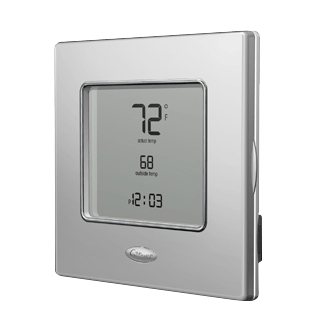
Carrier Performance Edge Programmable Thermostat – TP-PAC01-A
-
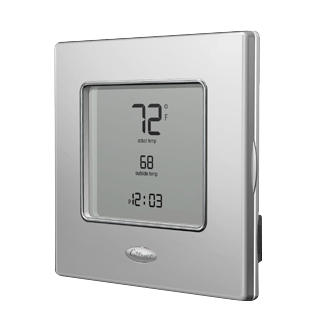
Carrier Performance Edge Programmable Thermostat – TP-PHP01-A
-
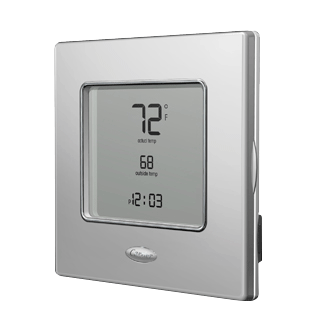
Carrier Performance Edge Relative Humidity Programmable Thermostat – TP-PRH01-B
-
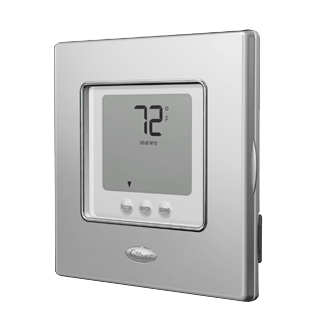
Carrier Performance Edge Touch-N-Go Relative Humidity Thermostat – TP-NRH01-B
-
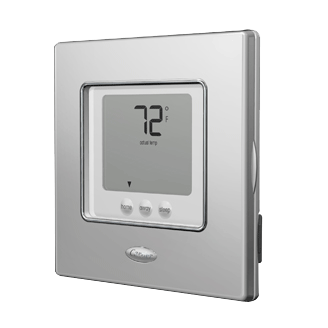
Carrier Performance Edge Touch-N-Go Thermostat – TP-NHP01-A
Non-Wi-Fi Performance Thermostats for HVAC Control
Non-Wi-Fi Performance thermostats are low-voltage HVAC controls designed for homeowners who want dependable temperature management without internet connectivity or app-based operation. The category includes programmable and non-programmable controls for compatible air conditioners, furnaces and heat pumps, with options for multi-stage equipment and more advanced temperature and humidity management.
For Toronto and GTA homes, the right thermostat depends on the HVAC system rather than Wi-Fi capability. Equipment type, heating and cooling stages, heat-pump requirements, humidity control, existing wiring and scheduling preferences should be checked before installation or replacement.
How to Choose a Non-Wi-Fi Performance Thermostat
The category covers different levels of HVAC control, so choosing the simplest thermostat is not always the same as choosing the correct one. Start with equipment compatibility, then determine whether programming, humidity management or additional system control is required.
HVAC System Type
Determine whether the home uses a furnace and air conditioner or a heat pump. The thermostat must support the actual heating and cooling configuration.
Programmable or Non-Programmable
Programmable control suits predictable household schedules, while non-programmable operation can be easier when occupants prefer direct temperature adjustments.
Heating and Cooling Stages
Multi-stage equipment requires appropriate thermostat support. A mismatch can prevent the HVAC system from using its available stages as intended.
Heat Pump Control
Heat pumps can require different thermostat logic from furnace systems, including control of supplemental heat. Compatibility should be confirmed before replacement.
Humidity Management
Some Performance thermostat configurations can manage compatible humidification and dehumidification functions. This capability matters only when the HVAC system includes suitable equipment.
Installation Configuration
Available wiring can influence whether a conventional wall-mounted installation or another compatible configuration is appropriate. Check the existing installation before selecting a replacement.
Programmable vs Non-Programmable Performance Thermostats
Both types can provide reliable HVAC control without Wi-Fi, but they suit different household routines. The useful comparison is how temperatures should be managed throughout the day rather than which thermostat has the longer feature list.
7-Day, 5/2-Day and 1-Day Programming
Programmable Performance thermostats can provide different scheduling approaches, allowing homeowners to select detailed daily programming or a simpler repeating routine. The right option depends on how much household occupancy varies through the week.
Seven-day programming provides greater day-by-day flexibility, while grouped schedules can reduce setup complexity. More programming options do not automatically improve efficiency; the schedule needs to reflect when the home is occupied and how the HVAC equipment responds to temperature setbacks.
Two or Four Comfort Periods Per Day
Programmable configurations can divide the day into multiple temperature periods. Four periods can suit households that want separate settings around waking, leaving, returning home and sleeping, while fewer periods can make sense for simpler routines.
Using every available period is not necessary. Excessive temperature changes can make a schedule harder to manage without producing meaningful comfort or energy benefits.
Smart Recovery and Scheduled Setbacks
Smart recovery can help the HVAC system begin adjusting before a scheduled comfort period so the requested temperature is reached closer to the desired time. This differs from waiting until the scheduled time before starting the entire temperature change.
The benefit depends on the HVAC system and setback strategy. Large setbacks can create longer recovery periods, and heat-pump systems may respond differently from furnaces when significant temperature increases are requested.
Non-Wi-Fi Performance Thermostats for Furnaces and Air Conditioners
For conventional furnace and central air-conditioning systems, thermostat selection should match the available heating and cooling stages. A straightforward system may need only basic temperature control, while multi-stage equipment requires a thermostat capable of managing the additional stages.
A thermostat with more features does not increase the rated efficiency of the furnace or air conditioner. Its performance value comes from operating compatible equipment correctly and managing temperature settings effectively.
Non-Wi-Fi Performance Thermostats for Heat Pumps
Heat-pump thermostat selection requires specific attention to equipment configuration because the control may need to manage compressor stages and supplemental heating. A thermostat designed only for a conventional furnace and air conditioner should not be assumed suitable for a heat pump.
This matters in Toronto and the GTA, where a heat pump can operate across mild fall weather and substantially colder winter conditions. Proper thermostat configuration helps the system use its available heating functions as designed.
Hybrid Heating and Supplemental Heat Control
Some HVAC systems combine a heat pump with another heating source. These configurations require more control coordination than a basic heating and cooling system because the thermostat or associated controls must account for how the available heating sources operate.
Heat-pump compatibility alone does not confirm suitability for every hybrid installation. The complete heating configuration should be identified before replacing the thermostat.
Temperature-Only vs Temperature and Humidity Control
Performance thermostat options can differ in whether they focus primarily on temperature or provide additional humidity-control capability. The additional control is useful when compatible whole-home humidification or dehumidification equipment is part of the HVAC system.
A humidity-capable thermostat does not remove or add moisture by itself. Choosing this functionality without compatible equipment adds control capability that the HVAC system cannot use.
Humidity Control for Toronto and GTA Homes
Indoor humidity requirements can change considerably between Toronto winters and warm-weather cooling periods. Compatible humidity control can be useful when the home has equipment designed to add moisture during dry heating conditions or assist with moisture removal during cooling.
The target humidity should still reflect outdoor conditions and the building. Excessive winter humidification can contribute to condensation on cold surfaces, so more humidity is not automatically better.
Automatic Heating and Cooling Changeover
Automatic changeover allows compatible Performance thermostats to switch between heating and cooling when indoor conditions require it. This can be particularly useful during GTA spring and fall weather when outdoor temperatures change significantly between day and night.
Heating and cooling setpoints should maintain a reasonable separation. Poorly selected settings can result in unnecessary mode changes rather than stable indoor comfort.
Non-Wi-Fi Performance vs Wi-Fi Thermostats
The primary trade-off is local HVAC control versus remote connectivity. Homeowners who do not need phone access can still have programmable scheduling and compatible multi-stage control without making Wi-Fi part of thermostat operation.
When Non-Wi-Fi Performance Control Makes Sense
A non-Wi-Fi thermostat can be a practical choice when the homeowner wants reliable local HVAC control, scheduled temperature changes and compatible staging without remote internet features. It can also reduce unnecessary complexity when no one in the household intends to use app-based controls.
The trade-off is the absence of remote monitoring and adjustment. Homes that are frequently vacant or households with changing schedules may place greater value on connected thermostat access.
Single-Piece vs Two-Piece Thermostat Installation
Performance thermostat configurations can use different installation approaches. A conventional single-piece installation places the control functions at the wall thermostat and can require more wiring between the thermostat and HVAC equipment.
A compatible two-piece configuration can locate the equipment-control portion closer to the furnace or fan coil while using a simpler connection to the wall display. This can be useful when existing wall wiring makes a direct thermostat replacement difficult, but compatibility must be evaluated before choosing the installation method.
Existing Thermostat Wiring Can Affect Replacement
Older Toronto and GTA homes may have thermostat wiring that was installed for simpler heating and cooling controls. A newer thermostat can require different power or control connections even when it is otherwise compatible with the HVAC equipment.
Wiring should therefore be inspected before purchasing a replacement. Choosing the thermostat first can turn what appears to be a simple installation into an unexpected wiring project.
When a Direct Thermostat Swap Does Not Work
Thermostat replacement should account for both equipment compatibility and the existing control installation. Similar-looking wall controls do not necessarily have identical wiring or configuration requirements.
A Replacement Thermostat Is Selected Before the HVAC System Is Checked
The new control fits the wall and provides the desired programming, but the existing system uses additional stages or functions that were not considered. Installation then requires a different thermostat or control configuration to avoid losing part of the HVAC system's intended operation.
Remote Sensors and Temperature Control
Compatible remote sensing can allow temperature information from another location to influence system control. This may help when the main thermostat location does not represent the area where occupants spend most of their time.
A sensor cannot correct insufficient duct airflow, excessive heat gain or inadequate insulation. If one room remains uncomfortable despite reasonable temperatures elsewhere, the underlying cause should be identified before adding thermostat controls.
When Thermostat Replacement Does Not Fix Comfort
A thermostat determines when compatible HVAC equipment operates, but it cannot correct every heating and cooling problem. Uneven temperatures can originate from airflow, ductwork, equipment sizing or building-envelope conditions.
A New Thermostat Is Installed to Fix an Uncomfortable Second Floor
The new control maintains the selected temperature accurately at its location, but upstairs rooms remain uncomfortable because the problem is air distribution. Lowering the setpoint can overcondition the main floor without correcting the original airflow imbalance.
Non-Wi-Fi Performance Thermostat Installation
Installation requires matching the thermostat to the heating and cooling equipment, connecting the correct low-voltage wiring and configuring the available system stages. Heat pumps, multi-stage equipment and humidity-control functions require additional attention during setup.
A thermostat that powers on is not necessarily configured correctly. Incorrect equipment settings can leave stages or comfort functions unused even when basic heating and cooling appear to work.
Replacing an Existing Performance Thermostat
Replacement should begin by identifying the equipment currently connected to the thermostat. If the furnace, air conditioner or heat pump has changed since the original thermostat was installed, the old control is not necessarily a reliable guide to current requirements.
Compare system type, stages, humidity functions, wiring and programming needs before choosing the replacement. A direct replacement is most appropriate when the existing control strategy still matches both the equipment and the household's needs.
Thermostat Replacement During an HVAC Upgrade
Furnace, air-conditioner or heat-pump replacement is an appropriate time to reassess the thermostat because new equipment can have different staging and control requirements. Keeping the existing thermostat can make sense when it remains fully compatible.
If the new HVAC system uses control functions the existing thermostat cannot support, retaining the old thermostat can restrict system operation. Compatibility should therefore be part of the equipment-selection process rather than an afterthought during installation.
Thermostat Replacement vs HVAC Repair
A blank display, poor temperature control or equipment that fails to start can be caused by the thermostat, but wiring, electrical and HVAC equipment problems can create similar symptoms. Replacing the thermostat without diagnosis can leave the original problem unchanged.
Replacement is more appropriate when the thermostat has failed, is incompatible with the current equipment or no longer provides required control functions. Otherwise, the heating or cooling system should be checked before assuming the wall control is responsible.
Non-Wi-Fi Performance Thermostat Cost Factors
The installed cost depends on thermostat capability, HVAC configuration, wiring and whether additional installation components are needed. A straightforward replacement for compatible conventional equipment can involve fewer variables than a multi-stage, heat-pump or humidity-control installation.
Device price should therefore be compared with total installation requirements. A lower-cost thermostat is not a better value if it cannot operate the required equipment functions or creates additional conversion work.
Non-Wi-Fi Performance Thermostats for Toronto and the GTA
Toronto and GTA homes require thermostat control through long heating periods, summer cooling and variable spring and fall weather. Programmable scheduling and automatic changeover can provide useful control through these seasonal changes without requiring internet connectivity.
Heat-pump and humidity-control requirements deserve particular attention because they can affect thermostat selection beyond simple heating and cooling. The final choice should reflect the installed HVAC system and household routine rather than connectivity alone.
Non-Wi-Fi Performance Thermostat Selection Checklist
Start with the HVAC equipment and required control functions, then decide whether programming and additional comfort features provide useful value. This helps narrow the category without paying for unnecessary functions or overlooking an important compatibility requirement.
Choose the Right Non-Wi-Fi Performance Thermostat
- Identify whether the home uses a furnace and air conditioner or a heat pump.
- Confirm the required heating and cooling stages.
- Check supplemental-heating requirements for heat-pump installations.
- Verify hybrid heating requirements where more than one heat source is used.
- Decide whether programmable or non-programmable operation better suits the household.
- Choose a scheduling format that reflects actual weekday and weekend routines.
- Determine whether temperature-only control or humidity management is required.
- Identify humidification, dehumidification or ventilation equipment connected to the HVAC system.
- Check existing thermostat wiring and power requirements before replacement.
- Review whether the installation requires a single-piece or compatible two-piece control arrangement.
- Identify any remote temperature sensors or zoning controls before replacing the thermostat.
- Do not expect a thermostat upgrade to correct ductwork or airflow problems.
- Compare Wi-Fi alternatives only if remote access would provide practical value.
- Recheck thermostat compatibility whenever major heating or cooling equipment is replaced.
Planning a Non-Wi-Fi Performance Thermostat Installation
A Non-Wi-Fi Performance thermostat is best suited to a compatible HVAC system where dependable local control matters more than app access. The right choice should match the heating and cooling equipment, required stages, scheduling preferences and any humidity or accessory-control needs.
For Toronto and GTA installations, confirming those requirements before thermostat replacement helps preserve proper HVAC operation while avoiding connected features the household may not need.
FREE In-Home Estimate