


Comfort
Showing the single result
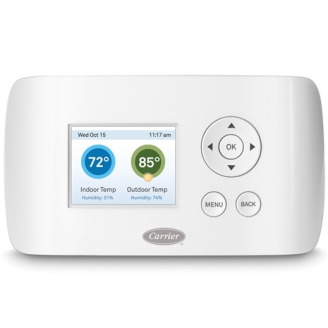
Comfort Thermostats for Simple, Reliable HVAC Control
Comfort thermostats are conventional HVAC controls designed for homeowners who want straightforward temperature management without the complexity of an advanced communicating system. The category includes programmable and non-programmable options for compatible furnaces, air conditioners and heat pumps, with features focused on scheduling, automatic heating and cooling changeover and easy everyday operation.
For Toronto and GTA homes, the right thermostat depends first on the HVAC configuration. System type, heating and cooling stages, heat-pump requirements, wiring and the need for programmable scheduling should be confirmed before choosing a replacement.
How to Choose a Comfort Thermostat
The main decision is whether the thermostat provides the level of control the HVAC equipment and household actually require. A simpler thermostat can be the better fit when connected features are unnecessary, while the wrong system compatibility can limit heating or cooling operation.
HVAC System Type
Determine whether the home uses a furnace and air conditioner or a heat pump. These configurations have different thermostat control requirements.
Programmable or Non-Programmable
Programmable thermostats suit households that want scheduled temperature changes, while non-programmable controls favour simple manual adjustment.
Heating and Cooling Stages
Thermostat capabilities need to match the connected equipment. Incorrect stage support can prevent an HVAC system from operating as intended.
Heat Pump Control
A heat-pump thermostat must support the specific heating and cooling configuration, including supplemental heat when required.
Automatic Changeover
Automatic switching between heating and cooling can be useful during Toronto's spring and fall temperature swings when both modes may be needed within a short period.
Existing Wiring
Wiring and power requirements should be checked before replacement. A thermostat should not be selected only because its physical dimensions resemble the old control.
Programmable vs Non-Programmable Comfort Thermostats
Both thermostat types can provide dependable temperature control when properly matched to the HVAC equipment. The meaningful difference is how homeowners want temperatures managed throughout the day and week.
5-Day and 2-Day Thermostat Programming
Programmable Comfort thermostats can separate weekday and weekend schedules, allowing one routine for the typical five-day work week and another for the two-day weekend. This format can provide useful automation without requiring a different schedule for every day.
The trade-off is flexibility. A household with irregular work hours or significantly different daily routines may find a more advanced scheduling platform more practical, while a predictable weekly routine can make a simpler weekday-and-weekend schedule easier to maintain.
Quick Home, Away and Sleep Temperature Settings
Some programmable Comfort thermostat configurations provide quick preset changes for common occupancy periods such as home, away and sleep. These settings can simplify temperature setbacks without requiring homeowners to reprogram the entire schedule.
The presets still need sensible temperatures. Extreme setbacks can lead to long recovery periods, and heat-pump systems can respond differently from furnace systems when a large temperature increase is requested.
Comfort Thermostats for Furnaces and Air Conditioners
For a conventional furnace and central air-conditioning system, thermostat selection depends on the equipment's control requirements and number of stages. A basic thermostat may provide everything needed for straightforward equipment, while multi-stage systems require the appropriate stage support.
Installing a thermostat with more features does not improve the furnace or air conditioner's rated efficiency. The thermostat influences when and how compatible equipment operates, so proper matching and sensible scheduling matter more than selecting the longest feature list.
Comfort Thermostats for Heat Pumps
Heat pumps require thermostat controls designed for their heating and cooling sequence. This can include management of supplemental heat, making a heat-pump thermostat different from a control intended only for a furnace and air conditioner.
For Toronto and GTA installations, correct heat-pump configuration is particularly important because the system can operate across mild weather and colder winter conditions. A thermostat selected for the wrong HVAC configuration can result in improper staging or backup-heat operation.
Automatic Heating and Cooling Changeover
Automatic changeover allows compatible Comfort thermostats to switch between heating and cooling as indoor conditions require. This feature can be practical during Toronto and GTA shoulder seasons when warm afternoons and cool nights occur close together.
Heating and cooling setpoints still need an appropriate separation. Settings that are too close can cause unnecessary switching instead of maintaining a reasonable comfort range.
Remote Temperature Sensors and Zoning Compatibility
Some Comfort thermostat configurations can work with compatible remote temperature sensing or zoning equipment. A remote sensor can help the control respond to temperature at another location, while zoning divides the HVAC system into separately controlled areas.
Neither approach should be used automatically for every uneven room. If a room is uncomfortable because of restricted ductwork, inadequate insulation or another building issue, adding a sensor changes what the thermostat measures but does not correct the underlying problem.
Comfort Thermostat vs Smart Thermostat
A Comfort thermostat prioritizes straightforward HVAC control, while a smart thermostat typically adds Wi-Fi connectivity, remote access and more advanced automation. The better choice depends on whether those connected features will actually be used.
For homeowners who normally adjust temperature at the wall and follow a predictable routine, a conventional programmable thermostat can avoid unnecessary complexity. For households that frequently change schedules while away from home, remote access may justify moving to a connected thermostat category.
Comfort Thermostat vs Communicating System Control
A conventional thermostat sends standard control commands to compatible HVAC equipment, while a communicating control can exchange operating information with equipment specifically designed for that control architecture. These categories should not be treated as interchangeable.
This distinction is particularly important when replacing a thermostat after an HVAC upgrade. Advanced communicating or variable-capacity equipment may require its dedicated system control to retain functions that a conventional thermostat cannot provide.
When a More Advanced Thermostat Does Not Improve Performance
Thermostat features should match the HVAC equipment and household needs. Paying for additional connectivity or automation does not automatically improve comfort or efficiency when the mechanical system cannot use those capabilities.
A Smart Thermostat Replaces a Simple Control but the Routine Never Changes
The new thermostat provides remote access and additional settings, but the household maintains one temperature and rarely uses the connected features. HVAC performance remains largely dependent on the same equipment, settings and building conditions, so the added thermostat functions provide limited practical benefit.
Thermostat Location and Temperature Accuracy
A thermostat controls the HVAC system using the conditions sensed at its location. Direct sunlight, drafts, exterior walls or nearby supply registers can cause that location to behave differently from the occupied areas of the home.
Replacing the thermostat without reviewing its location can leave the original comfort problem unchanged. If the thermostat regularly reaches its setpoint while other rooms remain uncomfortable, airflow and building conditions should also be evaluated.
Comfort Thermostat Installation
Thermostat installation involves matching the control to the HVAC equipment, connecting the correct low-voltage wiring and configuring the system type and available stages. Heat pumps and multi-stage systems require particular attention because an incorrect setup can still appear to operate while failing to use the equipment properly.
A straightforward thermostat does not necessarily mean every installation is identical. Existing wiring, HVAC equipment and any remote sensors or zoning controls should be checked before replacement.
Replacing an Existing Comfort Thermostat
Replacement should begin by identifying the connected heating and cooling equipment rather than simply ordering a thermostat that resembles the old one. The HVAC system may have been changed since the existing thermostat was originally installed.
A direct replacement can make sense when the system remains conventional and the homeowner wants the same level of control. If equipment or comfort requirements have changed, replacement is also an opportunity to decide whether programmable, smart or communicating control is now more appropriate.
Thermostat Replacement During an HVAC Upgrade
A new furnace, air conditioner or heat pump can change thermostat requirements. Stage count, heat-pump operation and control architecture should all be reviewed before deciding whether an existing Comfort thermostat should remain in service.
Keeping the existing thermostat can avoid unnecessary replacement when it remains fully compatible. However, retaining a basic control that cannot support the new equipment's required functions can limit how the upgraded HVAC system operates.
Thermostat Replacement vs HVAC Diagnosis
Temperature problems do not always originate at the thermostat. Wiring faults, power interruptions, airflow restrictions and equipment failures can produce symptoms that resemble a failed control.
When the cause is uncertain, diagnosis should come before thermostat replacement. Installing a new control will not correct a furnace, air conditioner or heat-pump problem elsewhere in the system.
When Thermostat Replacement Does Not Fix Uneven Comfort
A thermostat determines when compatible heating and cooling equipment operates, but it cannot correct every room-level comfort issue. Before replacing a working control, consider whether the problem is actually related to air distribution.
An Upstairs Room Remains Too Warm After Thermostat Replacement
The new thermostat reaches the requested temperature correctly, but the upstairs room remains uncomfortable because it receives insufficient conditioned air. Repeated thermostat adjustments can overcool other areas while the original airflow problem remains unresolved.
Comfort Thermostat Cost and Installation Factors
Thermostat cost varies with programmable functions, HVAC compatibility and installation requirements. A basic replacement on a compatible conventional system can involve fewer installation variables than a heat-pump or multi-stage configuration.
The lowest thermostat price is not always the lowest installed cost if wiring changes or additional controls are required. Compatibility should be confirmed before comparing replacement options by price.
Choosing Comfort Thermostats for Toronto and GTA Homes
Toronto and GTA homes experience substantial heating and cooling seasons, so dependable control in both modes is more important than adding features that will rarely be used. Automatic changeover can be useful in spring and fall, while programmable setbacks can suit households with consistent away periods.
Homeowners using conventional HVAC equipment may find a simple Comfort thermostat sufficient. Homes with advanced communicating systems, extensive zoning requirements or a strong need for remote access should compare other thermostat types before deciding.
Comfort Thermostat Selection Checklist
Choose the thermostat around the HVAC system first and convenience features second. The following checks help determine whether a programmable or non-programmable Comfort thermostat provides the right level of control.
Choose the Right Comfort Thermostat
- Identify whether the home uses a furnace and air conditioner or a heat pump.
- Confirm the required heating and cooling stages.
- Verify supplemental-heat requirements for a heat-pump system.
- Choose programmable control only when scheduled temperature changes will be useful.
- Consider non-programmable control when simple manual adjustment is preferred.
- Review whether automatic heating and cooling changeover is useful for the household.
- Check existing thermostat wiring and power requirements before replacement.
- Identify any remote sensors or zoning equipment connected to the existing control.
- Review thermostat location when room temperatures remain inconsistent.
- Do not expect a thermostat upgrade to correct ductwork or airflow problems.
- Determine whether Wi-Fi access is genuinely needed before moving to a smart thermostat.
- Confirm whether new HVAC equipment requires communicating rather than conventional control.
- Diagnose uncertain HVAC problems before replacing a functioning thermostat.
- Recheck thermostat compatibility whenever the furnace, air conditioner or heat pump is replaced.
Planning a Comfort Thermostat Installation
Comfort thermostats are a practical choice when a compatible HVAC system needs straightforward programmable or non-programmable temperature control without advanced communicating-system features. The correct thermostat should match the equipment type, staging and household scheduling needs.
For Toronto and GTA homes, confirming these requirements before installation or replacement helps provide dependable heating and cooling control without paying for functions the HVAC system or household does not need.
FREE In-Home Estimate