


Infinity
Showing all 3 results
-
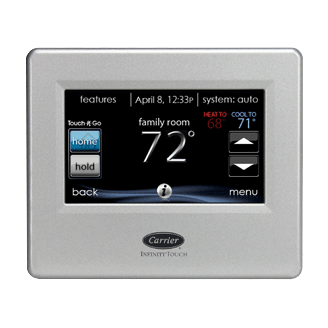
Carrier Infinity Remote Access Touch control Thermostats – SYSTXCCITC01-A
-
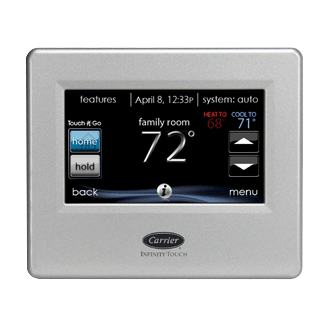
Carrier Infinity Remote Access Touch Control with Wireless Router – SYSTXCCITW01-A Thermostat
-
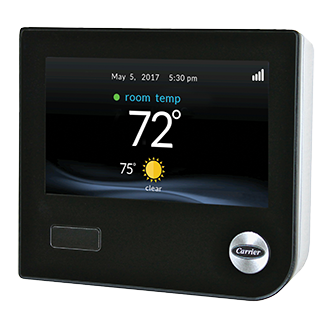
Carrier Infinity System Control Thermostats – SYSTXCCITC01-B
Infinity System Controls for Advanced HVAC Comfort
Infinity controls are smart, communicating HVAC controls designed specifically for compatible Infinity heating and cooling systems. Rather than functioning only as a temperature switch, they can coordinate compatible equipment operation, airflow, humidity, ventilation, energy management and zoning from a central control.
For Toronto and GTA homes, the main selection question is compatibility with the complete HVAC system. These controls provide their greatest value when paired with communicating equipment that can use their advanced functions, especially variable-capacity systems, heat pumps, dual-fuel configurations and zoned HVAC systems.
What to Consider When Choosing an Infinity Control
The control should be selected around the equipment and comfort functions already installed or planned for the home. Advanced features provide little value if the connected HVAC system cannot use them.
System Compatibility
Infinity controls are designed for compatible communicating systems. Confirm the indoor and outdoor equipment before selecting or replacing the control.
Variable-Capacity Operation
Compatible variable equipment can adjust output instead of relying only on full-capacity cycles. The correct communicating control helps preserve this operating strategy.
Heat Pump Control
Heat pumps can require coordinated control of capacity, auxiliary heating and operating modes. System configuration matters more than simply confirming that a thermostat can call for heat.
Zoning
Compatible zoning can divide a home into multiple comfort areas. Zoning is most useful when the duct system and equipment are designed to respond correctly as individual zones change demand.
Humidity and Airflow
Compatible systems can coordinate more than temperature. Integrated humidity and airflow control can be valuable when the HVAC equipment supports those functions.
Replacement Compatibility
An older communicating control should not automatically be replaced with a universal smart thermostat. Changing control architecture can affect access to advanced system functions.
Infinity System Control vs a Conventional Smart Thermostat
Both options can provide connected temperature control, but they interact with HVAC equipment differently. The distinction becomes important when the home has communicating, variable-capacity or zoned equipment.
Why Communicating Control Matters
A conventional thermostat generally sends heating, cooling and fan commands through separate control signals. A communicating system can exchange more operating information between the control and compatible HVAC components.
This distinction becomes important with equipment designed to adjust capacity and airflow dynamically. Using the intended communicating control helps the complete system coordinate those functions rather than reducing control to basic calls for heating or cooling.
Infinity Controls for Variable-Capacity HVAC Systems
Variable-capacity equipment can operate across a range of outputs as heating or cooling demand changes. Instead of repeatedly operating only at maximum capacity, compatible equipment can spend longer periods at lower output when conditions allow.
The control system is an important part of this operation. Choosing advanced variable equipment and then replacing its communicating control with an incompatible thermostat can limit access to the control functions the system was designed to use.
Infinity Controls for Heat Pumps
Heat-pump control involves more than switching between heating and cooling. Depending on the equipment, the system may need to coordinate variable compressor operation, supplemental heat, airflow and outdoor conditions.
This is particularly relevant for Toronto and GTA installations because a heat pump can operate across mild fall weather, cold winter conditions and summer cooling. The control needs to be configured for the actual heat-pump system rather than treated as a generic thermostat replacement.
Infinity Control for Dual-Fuel Heating
A dual-fuel system combines a heat pump with another heating source, commonly a gas furnace. The control strategy determines how the system uses the available equipment as outdoor conditions and heating demand change.
A conventional thermostat may require additional controls to manage this type of system. When dual-fuel operation is part of an Infinity configuration, preserving compatible system control is important during thermostat replacement or HVAC upgrades.
Infinity Zoning for Multi-Level Homes
Compatible zoning can manage multiple areas of a home independently rather than using one temperature reading to represent every floor and room. Current Infinity controls can manage up to eight zones when paired with the appropriate zoning equipment and sensors.
Zoning can be particularly useful in Toronto and GTA homes with multiple storeys, large windows, additions or different exposures, but adding more zones does not automatically solve comfort problems. The duct system, zone dampers and HVAC equipment must be able to respond properly when only part of the home requires conditioning.
Infinity Zoning vs a Single Thermostat
A single thermostat is usually appropriate when temperature conditions are reasonably consistent throughout the home. Zoning becomes more relevant when separate areas have recurring differences in heating and cooling demand.
Before investing in zoning, determine whether the imbalance comes from control limitations or from another problem such as inadequate ductwork, insulation or air sealing. Zoning should manage legitimate load differences rather than compensate for defects that should be corrected directly.
When Zoning Is Used to Hide an Airflow Problem
Zoning can improve control when the HVAC system and ductwork are designed for changing zone demand. It should not be treated as an automatic solution for every hot or cold room.
A New Zone Is Added for a Room With Poor Supply Airflow
A room remains uncomfortable because its supply duct cannot deliver enough conditioned air. Adding a separate sensor or zone gives the control more information, but it does not increase the available airflow and can cause the rest of the system to operate longer without correcting the underlying restriction.
Temperature, Humidity and Airflow Control
Compatible Infinity configurations can coordinate temperature with humidity and airflow rather than treating each function as an isolated setting. This can provide more refined comfort when the connected HVAC equipment supports variable operation and humidity management.
The control itself cannot create capabilities that are absent from the mechanical system. For example, displaying humidity does not mean the home has active humidification or dehumidification equipment, so installed components should be confirmed before selecting control features.
Ventilation and Indoor Air Quality Control
Compatible ventilation and indoor air quality accessories can be integrated into the system-control strategy. Centralized control can simplify operation when a home has several HVAC accessories rather than separate wall controls for each component.
Integration should still follow the home's actual air quality needs. A ventilation system, air purifier or humidity-control accessory should be selected for a defined problem rather than added solely because the control can manage it.
Wi-Fi Control and Remote Access
Connected system controls allow compatible remote functions through a mobile device, making it possible to review or adjust comfort settings while away from the thermostat. This can be useful for travel, schedule changes and households with changing occupancy.
Remote access is a convenience feature rather than the primary reason to select this category. For an Infinity HVAC system, equipment communication and system-control capabilities are more important than choosing a thermostat solely for app access.
Scheduling and Occupancy-Based Control
Scheduling allows comfort settings to change around periods such as home, away and sleep. Occupancy-related functions can further reduce unnecessary conditioning when the home is not being used normally.
Large temperature setbacks are not automatically the best strategy for every system. Variable-capacity heat pumps and other advanced equipment can benefit from steadier operation, so schedules should reflect the system design and household routine rather than maximizing the temperature difference at every unoccupied period.
Energy Tracking and System Performance
Current Infinity controls can provide energy-use information that helps homeowners understand changes in heating and cooling operation. This can be useful for comparing usage patterns after schedule changes or as outdoor temperatures vary.
Energy tracking should be interpreted in context. Weather, thermostat settings, occupancy, building envelope and HVAC condition all influence consumption, so a change in reported use does not by itself identify an equipment problem.
System Monitoring and Diagnostics
Communicating controls can receive operating information from compatible HVAC equipment, which can make system monitoring and troubleshooting more informative than with a basic thermostat. Current configurations can also support connected diagnostic functions when properly enabled.
Diagnostics can identify useful operating information, but they do not replace physical HVAC inspection. Mechanical, electrical, refrigerant and airflow problems can still require on-site testing before the cause is confirmed.
Replacing an Older Infinity Control
An older Infinity control should be treated as part of a communicating HVAC system rather than as an isolated wall thermostat. Before replacement, identify the furnace or fan coil, outdoor unit, zoning equipment and connected accessories.
This is especially important when an older control fails unexpectedly. Choosing a third-party thermostat simply because it can physically connect to available wiring may require control changes and can affect advanced system functions.
Replacing Infinity Control With a Universal Smart Thermostat
A universal smart thermostat may offer popular connected-home features, but compatibility with basic heating and cooling operation does not mean it can reproduce the complete functionality of a communicating Infinity system.
Before changing control platforms, consider which functions are currently being used, including variable-capacity operation, humidity management, zoning and system diagnostics. The trade-off may involve losing integrated capabilities in exchange for broader smart-home compatibility.
Why Wiring Alone Does Not Confirm Compatibility
Communicating HVAC controls use a different control strategy from conventional thermostats. Looking only at the number of wires behind the wall control is therefore not enough to determine whether another thermostat is an appropriate replacement.
A Universal Thermostat Is Chosen Before the HVAC Equipment Is Checked
A replacement thermostat is purchased because its wiring appears suitable, but the existing system relies on communicating control for advanced functions. Additional interface changes may be required, and some system capabilities can be lost if the replacement strategy is not evaluated before installation.
Infinity Control Installation
Installation involves more than mounting the control and connecting wires. The indoor equipment, outdoor equipment, zoning components and HVAC accessories need to be recognized and configured correctly so the control can coordinate the complete system.
This makes professional installation particularly important for variable-capacity systems, heat pumps, dual-fuel configurations and zoning. A control can power up successfully while still being incorrectly configured for the connected equipment.
Installing Infinity Control During HVAC Replacement
Replacing an Infinity furnace, air conditioner or heat pump is an appropriate time to review the system control. New equipment may introduce different communicating capabilities, zoning options or control requirements from the equipment being removed.
The thermostat and HVAC equipment should therefore be considered as one control system during replacement. Retaining an older control without confirming compatibility can prevent access to functions supported by the new equipment.
Infinity Control Replacement vs HVAC Repair
A blank screen, communication message or comfort problem does not automatically mean the wall control has failed. Power interruptions, wiring problems, equipment faults and communication issues elsewhere in the system can produce symptoms at the thermostat.
System diagnosis should come before replacement when the cause is uncertain. Replacing a functioning control will not correct an underlying furnace, heat-pump, wiring or communication fault.
Infinity Control Cost and Installation Factors
Infinity control cost should be evaluated as part of a communicating HVAC system rather than compared only with the retail price of conventional smart thermostats. Replacement complexity can vary depending on equipment generation, zoning, sensors, wiring and connected accessories.
Installation cost can also change when system components need reconfiguration or when an older control is being replaced as part of a larger HVAC upgrade. Confirming the complete system configuration first provides a more meaningful estimate.
Infinity Controls for Toronto and GTA Homes
Toronto and GTA homes require HVAC systems to operate through hot, humid summers, cold winters and large temperature swings during spring and fall. Advanced control can be particularly useful when a home uses a variable-capacity heat pump, furnace and air-conditioner combination, dual-fuel heating or multi-zone system.
The local climate alone does not make an Infinity control the right choice. The deciding factor is whether the installed or planned HVAC equipment belongs to a compatible communicating system that can use its advanced control functions.
Infinity System Control Selection Checklist
Identify every major HVAC component before choosing or replacing the control. This avoids treating a communicating system as a generic thermostat installation and helps preserve the functions the equipment was designed to provide.
Plan the Right Infinity Control Installation
- Identify the indoor and outdoor HVAC equipment before selecting a control.
- Confirm that the installed equipment uses compatible communicating controls.
- Determine whether variable-capacity operation needs to be preserved.
- Review heat-pump and supplemental-heating requirements where applicable.
- Confirm dual-fuel control requirements before changing the thermostat.
- Identify any existing zoning panel, dampers and room sensors.
- Determine whether additional zones are solving real load differences rather than ductwork problems.
- Review humidity, airflow and ventilation functions currently managed by the system.
- Check connected indoor air quality accessories before replacing the control.
- Consider remote access and scheduling after equipment compatibility is confirmed.
- Review available energy tracking and diagnostic functions when those features are useful.
- Do not select a replacement from thermostat wiring alone.
- Diagnose system faults before assuming the wall control requires replacement.
- Reassess control compatibility whenever major HVAC equipment is replaced.
Planning an Infinity Control Installation in Toronto
Infinity controls are most appropriate when the home has compatible communicating HVAC equipment that can use advanced temperature, airflow, humidity, zoning and energy-management functions. For simpler conventional equipment, a universal thermostat may provide the necessary control without the specialized communicating architecture.
For Toronto and GTA installations, reviewing the complete HVAC system before purchasing or replacing the control helps preserve equipment functionality and ensures the thermostat, zoning components and comfort accessories operate as one coordinated system.
FREE In-Home Estimate