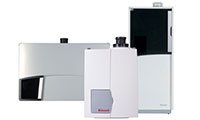


Q Series
Showing all 4 results
-
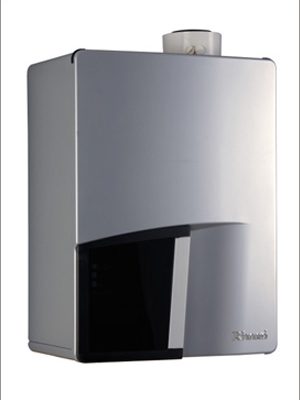
Rinnai Q130 Condensing Gas Boilers
-
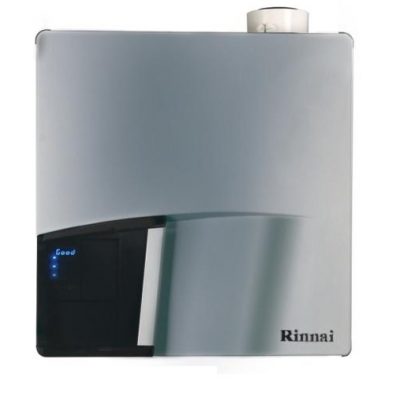
Rinnai Q175 Condensing Gas Boilers
-
Rinnai Q205 Condensing Gas Boilers
-
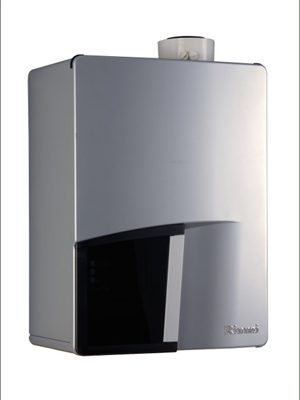
Rinnai Q85 Condensing Gas Boilers
Q Series Condensing Gas Boilers for Hydronic Heating
Q Series boilers are wall-mounted condensing gas boilers designed for hydronic space heating in homes and light commercial applications. The category includes several heating capacities, natural gas and propane configurations, plus a dedicated combination model that can provide both space heating and domestic hot water.
For Toronto and GTA properties, the right model depends on calculated heat loss, fuel type, domestic hot-water strategy, minimum firing rate, existing radiators or baseboards, system water temperature, zoning, venting and replacement conditions. Choosing only by maximum BTU capacity can leave the boiler oversized for most of the heating season.
Compare Q85, Q130, Q175 and Q205 Boilers
The four product groups cover substantially different heating loads. Q85 is the smallest option, Q130 moves into mid-range applications, Q175 adds dedicated combi configurations, and Q205 provides the largest heating capacity represented in the category.
Q85 Condensing Gas Boiler
The Q85 is the lowest-capacity boiler in the category and is available in natural gas and propane heat-only configurations. Its lower maximum and minimum firing range can make it a better fit than larger models for homes with modest design heat loss.
The benefit of selecting Q85 is not simply lower capacity. A boiler that can operate closer to the actual load can run longer, steadier cycles instead of repeatedly satisfying a small zone and shutting down.
Q130 Condensing Gas Boiler
The Q130 increases maximum central-heating input to approximately 130,000 BTU and remains a heat-only boiler. It is available in natural gas and propane versions and can be integrated with a separate domestic hot-water solution when required.
Q130 should be chosen when the building load genuinely requires more output than Q85 can provide. Moving up one model solely for additional safety margin can create excess capacity throughout milder Toronto weather.
Q175 Condensing Gas Boiler
The Q175 provides approximately 175,000 BTU of maximum heating capacity and offers both heat-only and combination configurations. The combi version is the main point of distinction within the Q Series because it can provide space heating and domestic hot water through one appliance.
For a heat-only installation, the Q175 should be justified by calculated building load. For a combi installation, both space-heating demand and simultaneous domestic hot-water demand need to be evaluated before the model is selected.
Q205 Condensing Gas Boiler
The Q205 is the largest-capacity option represented in the category, with maximum heating input of approximately 205,000 BTU. It is available as a heat-only boiler in natural gas and propane configurations.
Its larger capacity can be appropriate for high-load residential or light commercial hydronic systems, but it should not be used as a default choice for a large house. A high maximum rating provides no advantage when the building heat loss is substantially lower.
Choosing the Right Q Series Capacity
Model selection should balance design-day capacity with part-load operation. Toronto heating demand varies widely through the season, so the boiler needs to perform effectively when the building requires much less than its maximum output.
Lower Heating Load
Q85 can provide a better capacity match when a heat-loss calculation confirms that the larger models are unnecessary.
Mid-Range Hydronic Load
Q130 adds heating capacity while avoiding the much larger maximum outputs of Q175 and Q205.
Heating Plus Hot Water
Q175 combi configurations become relevant when one appliance is expected to handle both central heating and domestic water.
Large Heating Load
Q175 heat-only or Q205 should be considered only when calculated design heat loss supports the additional capacity.
Existing Propane Property
Propane configurations can preserve an existing fuel strategy where natural gas service is unavailable or conversion is impractical.
Small Hydronic Zones
Minimum firing rate becomes critical because a large boiler can still cycle when only one low-load zone is calling.
Natural Gas vs Propane Q Series Boilers
Q85, Q130, Q175 and Q205 are represented with fuel configurations that support natural gas or propane applications. Fuel availability is the first decision, but the firing range can also differ between natural-gas and propane versions.
A propane model should not be treated as identical to the natural-gas version simply because the maximum capacity is similar. Minimum input and combustion setup affect part-load performance and must be considered during equipment selection.
Heat-Only vs Q175 Combi Operation
Most Q Series configurations are heat-only boilers. The Q175 combi adds domestic hot-water production, creating a different selection process because two loads must be satisfied by the same appliance.
Q175 Combi Hot-Water Performance
The Q175 combi can provide substantial domestic hot-water flow while also serving the hydronic heating system. Maximum flow, however, should not be confused with guaranteed winter delivery because incoming water temperature directly affects how much hot water can be produced.
Toronto winter groundwater requires a larger temperature rise than warmer seasonal inlet water. A household expecting several simultaneous showers or fixtures should therefore be evaluated using realistic winter conditions rather than a maximum flow number alone.
Why Winter Inlet-Water Temperature Matters
A combi boiler transfers a finite amount of heat into incoming domestic water. As inlet water becomes colder, more energy is required to reach the same outlet temperature, which reduces available flow.
Selecting Q175 Combi From Maximum Flow Alone
A household may expect several fixtures to operate simultaneously because the published maximum flow appears sufficient. During colder Toronto conditions, the greater required temperature rise can reduce usable flow and create disappointing hot-water performance if winter demand was not evaluated before installation.
Using a Heat-Only Q Series Boiler With an Indirect Tank
Heat-only models can be paired with an indirect domestic hot-water tank when the system is designed for it. This keeps the boiler as the heat source while adding stored hot-water capacity instead of relying entirely on instantaneous production.
An indirect arrangement requires additional space but can suit households with short periods of high hot-water demand. It also allows domestic storage capacity and boiler heating capacity to be evaluated as separate design decisions.
Q Series Boiler Efficiency
Q Series boilers operate in the high-efficiency condensing range, with applicable models reaching up to approximately 96% AFUE. A stainless-steel heat exchanger and modulating combustion allow the boiler to recover heat that a conventional non-condensing system would otherwise lose through the vent.
Rated AFUE does not guarantee the same seasonal efficiency in every house. Water temperature, cycling, system sizing, outdoor reset and hydronic design determine how often the boiler can operate under favourable condensing conditions.
Return-Water Temperature and Condensing Performance
A condensing boiler extracts additional heat when return water is cool enough to condense moisture in the combustion gases. Hydronic systems that can operate at lower temperatures therefore offer greater opportunity to take advantage of the boiler's condensing design.
An older system that requires high supply and return temperatures during much of the winter can still use a Q Series boiler, but the real seasonal efficiency may not equal the maximum rating shown for ideal conditions.
Q Series Boilers for Radiant Floor Heating
Radiant floors commonly use lower water temperatures, which can pair well with condensing boiler operation. The combination can support long heating cycles and favourable return-water temperatures when the boiler and floor circuits are properly designed.
The main sizing risk occurs with small radiant zones. Even an efficient modulating boiler can cycle if its minimum output is higher than the active floor loop can absorb.
Q Series Boilers for Cast-Iron Radiators
Cast-iron radiators can work effectively with condensing boilers when their available surface area allows the home to heat at reduced water temperatures for at least part of the season. Older Toronto homes sometimes have generous radiator capacity that can support lower-temperature operation during milder weather.
The old boiler's water-temperature setting should not automatically be copied. Determining how much temperature the radiation actually needs can improve both comfort and condensing performance.
Q Series Boilers for Hydronic Baseboards
Fin-tube baseboards can also be served by Q Series boilers, but available baseboard length affects the temperature required to produce enough heat. A system with extensive baseboard can operate at lower water temperatures than a system with limited emitter length.
If a room has historically been cold, choosing a larger boiler may not solve the problem. Insufficient baseboard, poor flow or distribution imbalance should be investigated separately.
Minimum Firing Rate and Boiler Modulation
Q Series boilers modulate their firing rate instead of operating only at maximum capacity. This is important in the GTA because the home's actual load is well below design-day demand through much of the heating season.
Minimum input varies by boiler size and fuel configuration. The smallest stable firing rate should therefore be compared with the home's lowest active heating load, particularly in properties with extensive zoning.
Why Q Series Oversizing Matters
Selecting more capacity than the building requires can reduce the benefit of modulation. A boiler may reach minimum fire and still produce more heat than a small zone can accept.
Choosing Q205 as Extra Insurance
If the home's calculated heat loss falls well below the Q205 range, the additional maximum capacity provides little practical benefit. During mild weather or single-zone operation, excessive output can increase cycling rather than improve comfort.
Heat-Loss Sizing Before Choosing Q85, Q130, Q175 or Q205
A boiler should be sized from the property's current design heat loss rather than square footage or the rating of an older appliance. Insulation, windows, air leakage, exterior exposure and Toronto winter design temperature all influence the actual heating requirement.
This matters especially in older houses that have received energy upgrades. Installing the same BTU capacity as a decades-old boiler can preserve an oversizing problem even though the home's heat loss has fallen substantially.
Outdoor Reset for Toronto and GTA Homes
Outdoor reset adjusts boiler water temperature as outdoor conditions change. During mild weather, the boiler can supply cooler water and increase temperature only as colder outdoor conditions raise the building load.
This can improve comfort while increasing opportunities for condensing operation. The reset curve still needs to match the radiation system because an excessively high setting reduces efficiency potential, while an excessively low setting can prevent the house from reaching temperature.
Low-Loss Header and Hydronic Flow
Q Series boiler installations incorporate hydraulic design features intended to separate boiler circulation from system flow. Proper hydraulic separation becomes particularly important when several zones, pumps or different types of hydronic emitters are connected.
Correct boiler capacity cannot compensate for incorrect water flow. Poor pump selection or piping design can produce noise, inadequate heat distribution or unstable boiler operation even when the heat-loss calculation is accurate.
Small Zones and Multi-Zone Heating Systems
A zoned Toronto home may have a total design load that supports a larger boiler while individual zones require very little heat. That difference makes minimum firing capacity and hydronic design especially important.
The smallest zone should be evaluated rather than focusing only on the total building load. Frequent cycling when one thermostat calls can reduce comfort and efficiency even if the boiler performs well with all zones operating.
Q Series Boiler Installation
Installation should account for heat-loss sizing, hydronic flow, gas supply, fuel type, venting, condensate drainage, expansion control, pumps, air elimination, water quality, electrical connections, controls and combustion commissioning. Combi and indirect-tank installations add domestic hot-water requirements to the project.
A wall-mounted boiler can reduce floor-space requirements, but it should not be considered a simple appliance swap. Existing piping and mechanical-room conditions often determine how much installation work is required.
Hydronic Water Quality During Installation
Water quality matters because contaminants from an existing heating system can circulate through the new boiler. Older systems may contain sediment, corrosion products or treatment chemicals that require assessment before the new boiler is connected.
Replacing the boiler without addressing dirty system water can compromise pumps, flow paths and heat-transfer surfaces. Existing hydronic systems should therefore be evaluated and prepared as part of the replacement scope.
Gas Supply for Q Series Boilers
The fuel line must supply the selected boiler at maximum firing rate while accounting for other appliances that can operate simultaneously. Larger Q175 and Q205 installations can impose substantially different demand than smaller boiler replacements.
An existing line that supplied the old boiler should not automatically be assumed adequate. Fuel-piping capacity needs to be checked against the new equipment and total connected load.
Q Series Boiler Venting
Condensing boiler venting requires an approved combustion-air and exhaust configuration. Vent material, equivalent length, fittings, termination position and drainage slope all affect whether a proposed installation location is suitable.
Converting from an older chimney-vented boiler generally requires a new venting approach. Vent feasibility should therefore be evaluated before the boiler is ordered rather than after its mechanical-room location has been finalized.
Condensate Drainage
Condensing operation creates water that must drain safely away from the boiler. The vent system and boiler installation need to support reliable condensate drainage throughout the heating season.
Mounting the boiler where no practical drain is available can add pumps, piping and maintenance components. Condensate management should be included in the initial installation design.
Q Series Boiler Replacement
Replacing an existing Q Series boiler should begin with a new assessment of building heat loss, zoning, radiation, water temperatures, pumps, fuel supply, venting and domestic hot-water requirements. The original model is useful information but should not automatically determine the new capacity.
The Q Series represents an established boiler platform, so exact model availability should be confirmed when planning replacement. A current condensing platform may provide a more practical solution when an identical legacy model is unavailable.
Replacing a Q85 or Q130 Boiler
When replacing a Q85 or Q130, the first question is whether the current building still requires the original heating capacity. Renovations and envelope upgrades can reduce heat loss enough to change the correct replacement size.
Domestic-water strategy should also be reviewed. An existing indirect or separate water heater may still be suitable, allowing the replacement boiler to remain focused exclusively on space heating.
Replacing a Q175 Combi Boiler
A Q175 combi replacement requires evaluation of both space-heating load and domestic hot-water use. Selecting another combination boiler with similar heating capacity does not guarantee identical hot-water performance.
Household size, shower use and fixture demand may also have changed since the original installation. Replacement provides an opportunity to confirm whether combi operation remains the best configuration.
Replacing a Q205 Boiler
The Q205's large capacity makes heat-loss verification particularly important during replacement. An existing Q205 may have been selected from older sizing practices that included significantly more capacity than the building currently requires.
Downsizing should never be arbitrary, but a current heat-loss calculation can establish whether the replacement truly needs to remain in the 205,000 BTU class.
Q Series vs Current Condensing Boiler Platforms
The Q Series offers high-efficiency condensing operation, modulation and several capacity choices, but it belongs to an established product generation. For a new installation or major replacement, current availability and compatibility should be considered alongside original Q Series specifications.
A newer platform with a similar maximum input is not necessarily a direct replacement. Minimum firing rate, internal pumping, piping connections, controls and venting can differ, so replacement should be designed as a complete system.
Q Series vs Conventional Gas Boiler
A Q Series boiler provides condensing operation and modulation compared with many older fixed-output non-condensing boilers. The potential advantages include higher rated efficiency and better adjustment to changing heating demand.
The trade-off is a more involved installation. Condensing equipment requires suitable venting, condensate drainage and hydronic conditions, so the total replacement scope matters more than the boiler purchase price alone.
Q Series Boiler vs Furnace
Q Series boilers distribute heat through water, while furnaces rely on ducted air. A Toronto property with functioning radiators, baseboards or radiant floors can often retain its existing distribution system when the boiler is replaced.
Changing to a furnace can require extensive duct installation. Comparing only appliance prices therefore understates the cost and disruption of changing from hydronic to forced-air heating.
Q Series Boiler vs Cold-Climate Heat Pump
A cold-climate heat pump provides electric heating and cooling, while a Q Series boiler provides gas-fired hydronic heat. The systems use fundamentally different distribution approaches unless a specialized hydronic heat-pump design is considered.
For a home with extensive radiators or radiant floors, retaining a boiler can preserve existing infrastructure. Switching to a ducted or ductless heat pump can add cooling and reduce onsite combustion but may require substantial electrical and indoor-distribution changes.
Q Series Boiler Installation Cost
Total installation cost depends on model size, natural gas or propane configuration, heat-only or combi operation, fuel piping, venting, condensate management, hydronic piping, pumps, controls, water treatment and domestic hot-water requirements.
A Q Series boiler replacing another modern wall-mounted unit can involve a very different scope from converting an older floor boiler. Cost comparisons should therefore use complete installed proposals rather than equipment prices alone.
What Affects Q Series Boiler Replacement Cost?
These project factors should be identified before quotations are compared. They determine whether the work is mainly an equipment replacement or a broader upgrade to the hydronic system.
- Q85, Q130, Q175 or Q205 capacity requirement
- Natural gas or propane configuration
- Current building heat loss
- Heat-only or Q175 combi selection
- Domestic hot-water demand
- Existing indirect tank or separate water heater
- Radiators, baseboards or radiant-floor heating
- Required supply and return water temperatures
- Number and size of heating zones
- Fuel-line capacity
- Combustion-air and exhaust venting
- Condensate drainage
- Hydronic piping and hydraulic separation
- Circulator and zone-control requirements
- Expansion and air-elimination equipment
- Existing system water condition
- Removal of the existing boiler
- Compatibility with current replacement equipment
Q Series Boiler Selection Checklist
The strongest selection considers both maximum design-day demand and minimum part-load operation. Complete these checks before choosing a Q Series model or planning replacement of an existing unit.
Choose the Right Q Series Boiler
- Complete a heat-loss calculation before choosing Q85, Q130, Q175 or Q205.
- Do not automatically duplicate the BTU capacity of the existing boiler.
- Compare minimum firing rate with the smallest active hydronic zone.
- Choose natural gas or propane equipment to match the approved fuel supply.
- Use Q175 combi only after evaluating realistic domestic hot-water demand.
- Account for colder Toronto winter inlet water when evaluating combi performance.
- Consider an indirect tank when stored hot-water capacity better matches household demand.
- Determine the required water temperature for radiators, baseboards or radiant floors.
- Use outdoor reset where the hydronic system can benefit from variable water temperature.
- Review pumps, zoning and hydraulic separation before installation.
- Assess existing system-water quality during replacement planning.
- Verify fuel-line capacity for the selected maximum input.
- Confirm an approved vent route before finalizing boiler location.
- Plan condensate drainage as part of the installation.
- Verify current equipment availability when replacing an older Q Series boiler.
- Compare current condensing alternatives when an exact replacement is unavailable.
- Compare total installed cost rather than boiler price alone.
Choose a Q Series Boiler for Toronto and the GTA
The Q Series category ranges from the approximately 85,000 BTU Q85 through the 130,000 BTU Q130, 175,000 BTU Q175 and 205,000 BTU Q205. Most configurations are dedicated to hydronic space heating, while the Q175 also provides a combination option for homes that want heating and domestic hot water from one appliance.
For Toronto and GTA properties, the correct choice depends on heat loss, minimum firing requirements, fuel type, radiation temperature, zoning and domestic-water strategy rather than maximum capacity alone. Careful sizing and hydronic integration are essential to achieving stable operation and making effective use of condensing efficiency.
FREE In-Home Estimate