


See Through
Showing all 7 results
-
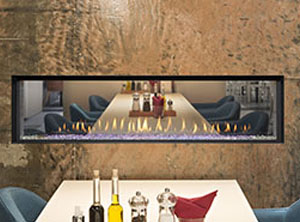
Montigo Distinction D Series – Linear, Star Ice Firestones Fireplace
-
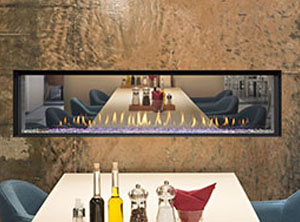
Montigo Distinction DL Series – Linear, Star Ice Firestones Fireplace
-
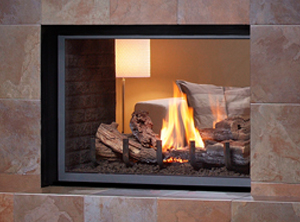
Montigo H Series – Traditional, Logs Fireplace
-

Montigo H Series Outdoor Ventless See Through – Traditional, Logs Fireplace
-
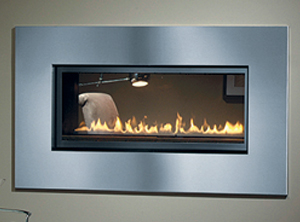
Montigo L Series – Linear, Glass Stones Fireplace
-
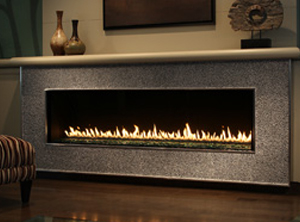
Montigo R Series – Linear, Glass Stones Fireplace
-
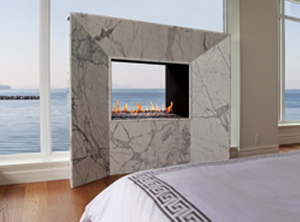
Montigo R Series Indoor Outdoor – Linear, Glass Stones Fireplace
See Through Fireplaces for Toronto and GTA Homes
See through fireplaces are two-sided fireplace systems designed to show the flame from opposite sides, allowing one fireplace to visually connect two spaces. They are commonly used between living rooms and dining areas, kitchens and family rooms, bedrooms and bathrooms, or indoor and outdoor transition areas where both design impact and shared comfort matter.
When a See Through Fireplace Makes Sense
This category works best when the fireplace is part of the room layout, not just a wall feature. The main decision is whether the home needs one fireplace to serve two connected areas or whether a single sided model would provide better heat control, simpler installation, and lower project complexity.
Two-Room Visibility
A see through fireplace creates flame visibility from both sides, making it useful for open-concept layouts. If only one room needs the focal point, a single sided fireplace may be more practical and cost-effective.
Shared Ambiance
This style works well where two areas benefit from the same visual warmth, such as a dining room and living room. Poor placement can make both spaces feel partially served instead of properly designed.
Architectural Separation
A two-sided fireplace can divide spaces without fully closing them off. The trade-off is that framing, finishing, venting, and clearances need more planning than a standard front-facing installation.
Gas, Electric, and Multi-Sided Options Compared
The right system depends on heat expectations, installation conditions, wall depth, and how the fireplace will divide or connect the rooms. Comparing the main options early helps prevent choosing a model that looks impressive but does not fit the home’s structure or comfort needs.
Installation Planning Before You Choose a Model
See through fireplace installation is more complex than placing a standard fireplace into one wall. Because the unit affects two spaces at once, the installer must account for room layout, wall structure, gas or electrical access, venting, heat movement, service access, and finishing materials on both sides.
In Toronto and the GTA, this matters even more because fireplaces are often used during long heating seasons, not only for decoration. A model that looks right in a showroom can perform poorly at home if the heat output, room size, and installation conditions are not reviewed first.
The Two-Room Heat Balance Problem
If a see through fireplace is oversized, one side may feel too warm while the other still feels underheated because of airflow, room size, or ceiling height differences. If it is undersized, the fireplace may become mainly decorative and fail to provide the comfort expected during colder months.
Cost Factors That Affect the Final Project
See through fireplace cost depends on more than the fireplace unit. Fuel type, venting route, framing, wall depth, custom finishing, glass exposure, controls, media options, and whether the project is new construction or replacement can all change the final price.
Gas models often require more technical installation work but can provide stronger heating performance. Electric models can reduce venting and fuel-line requirements, but custom built-ins, recessed walls, tile, stone, cabinetry, or media wall design can still add meaningful project cost.
Replacement and Retrofit Considerations
Replacing an older fireplace with a see through model can improve visibility, room flow, and design value, but it is not always a direct swap. Existing framing, venting, gas access, electrical access, clearances, and wall structure determine whether a retrofit is practical.
If the existing fireplace was originally designed as a single sided unit, converting it to a see through fireplace may require significant reconstruction. In that situation, the decision should compare the cost and disruption of a two-sided upgrade against the benefit of serving both rooms with one fireplace.
How to Choose the Right See Through Fireplace
The best choice depends on how the fireplace will function in daily use, not only how it looks. Use this checklist to narrow the decision before selecting the fuel type, size, viewing style, or surround design.
See Through Fireplace Selection Checklist
- Confirm whether both rooms need heat, flame visibility, or only visual connection.
- Compare gas and electric options before planning wall framing or finishes.
- Measure both room sizes, ceiling heights, traffic flow, and furniture placement.
- Review wall depth, venting route, gas line access, electrical needs, and service access.
- Plan finishes on both sides, including stone, tile, cabinetry, mantels, and TV placement.
- Choose the fireplace size around room scale, not only the width of the opening.
Local Suitability for Canada, Toronto, and the GTA
See through fireplaces are well suited to GTA homes where open-concept layouts, renovated basements, custom feature walls, and shared living spaces are common. Gas models are often stronger when heat performance is a major priority, while electric models can be better for condos, interior partitions, bedrooms, and projects where venting is difficult.
The wrong system selection can create uneven heating, high installation complexity, awkward room division, or a finished design that does not work well from both sides. The safest approach is to match the fireplace to the room layout, heating expectations, wall structure, and installation conditions before choosing a final model.
Plan Your See Through Fireplace Installation
A see through fireplace can create a strong design statement when it is planned around both rooms from the beginning. Before buying, review the fuel type, heat output, wall depth, venting, clearances, finishing materials, and replacement requirements with a qualified fireplace installation team.
FREE In-Home Estimate