


Ventilators
Showing all 8 results
-
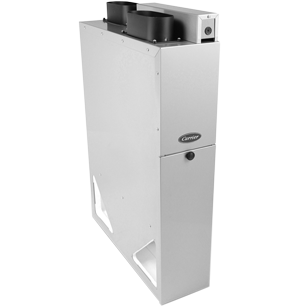
Carrier Comfort Energy Recovery Ventilator – ERVXXNVA1090 Indoor Air Quality
-
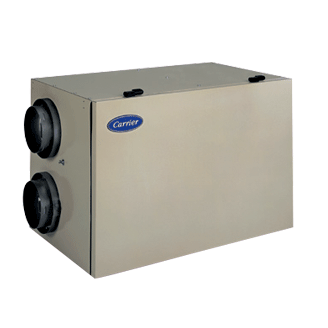
Carrier Performance Energy Recovery Ventilator – ERVXXLHB1200 Indoor Air Quality
-
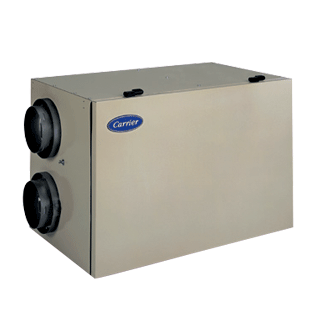
Carrier Performance Heat Recovery Ventilator – HRVXXLHB1150 Indoor Air Quality
-
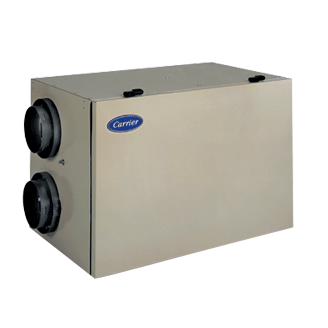
Carrier Performance Heat Recovery Ventilator – HRVXXLHB1250 Indoor Air Quality
-
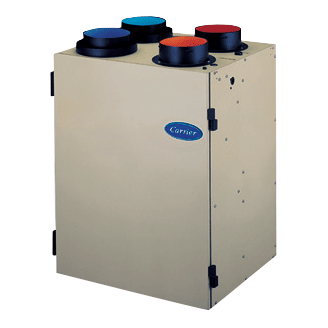
Carrier Performance Heat Recovery Ventilator – HRVXXLVU1330 Indoor Air Quality
-
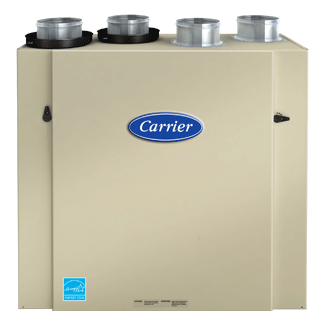
Carrier Performance Heat Recovery Ventilator – HRVXXSVU1157 Indoor Air Quality
-
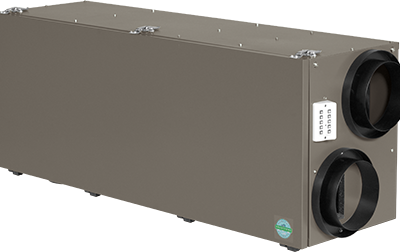
Lennox Healthy Climate Energy Recovery Ventilator (ERV) Indoor Air Quality
-
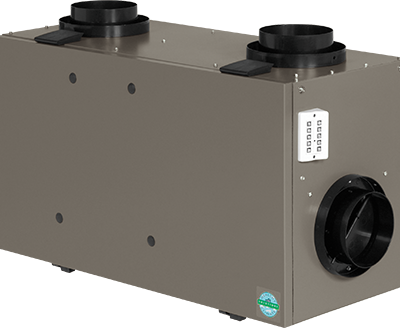
Lennox Healthy Climate Heat Recovery Ventilator (HRV) Indoor Air Quality
Whole-Home Ventilators for Fresh Air and Energy Recovery
Ventilators are balanced indoor air quality systems that bring fresh outdoor air into a home while exhausting stale indoor air. Heat recovery ventilators and energy recovery ventilators reduce the energy penalty of this air exchange by transferring heat, or heat and moisture, between the outgoing and incoming airstreams.
For Toronto and GTA homes, the main decisions are HRV versus ERV, required ventilation airflow, moisture conditions and installation design. The highest-capacity unit is not automatically the right choice because ventilation needs to be balanced to the home rather than maximized.
HRV vs ERV: The Main Ventilator Decision
Both systems provide balanced fresh-air ventilation and energy recovery. The important difference is moisture transfer: an HRV transfers heat between the two airstreams, while an ERV also transfers some moisture.
How to Choose a Ventilator for Your Home
Climate matters, but it should not be the only selection factor. Occupancy, airtightness, indoor humidity, ventilation requirements, HVAC configuration and duct design all influence whether an HRV or ERV is the better fit.
Ventilation Airflow
Select capacity from the home's ventilation requirement and duct resistance rather than choosing the highest CFM available.
Winter Humidity
Persistent winter condensation can favour stronger moisture removal, while an unusually dry home may benefit from retaining some indoor moisture.
Home Airtightness
Tighter homes have less uncontrolled air leakage, making properly controlled mechanical ventilation increasingly important.
Duct Design
A fully ducted installation and an HVAC-integrated installation distribute air differently. Available ductwork can influence both performance and installation cost.
Static Pressure
Actual airflow decreases as duct resistance increases. Model selection should consider the installed system rather than nominal airflow alone.
Controls
Ventilation schedules, boost modes and humidity-responsive operation can provide better control than simply running the system at maximum speed.
Heat Recovery Ventilators for Toronto Homes
HRVs use a heat-transfer core to recover sensible heat while keeping the fresh and exhaust airstreams separate. During winter, heat from outgoing indoor air preheats the colder incoming outdoor air before it reaches the living space.
This makes an HRV particularly relevant when a Toronto home needs controlled fresh air while also needing to exhaust indoor moisture. The trade-off is that an HRV does not intentionally recover moisture, so a home that already becomes very dry during winter needs a different moisture strategy.
Energy Recovery Ventilators for Toronto Homes
ERVs recover both sensible heat and part of the moisture energy carried by the airstreams. During winter, some indoor moisture can be transferred toward the incoming air, while during warm humid conditions the core can reduce some moisture transfer from incoming outdoor air.
An ERV can therefore be useful in tightly constructed homes where retaining some winter moisture or moderating summer moisture transfer is desirable. It should not be selected simply because it performs both heat and moisture exchange; the home's actual humidity behaviour should justify that feature.
Do Toronto Homes Always Need an HRV Instead of an ERV?
No single ventilator type is automatically correct for every Toronto or GTA home. The region's cold winters make heat recovery important, but indoor moisture conditions vary substantially between properties.
A busy household with persistent winter window condensation may benefit from stronger moisture removal, while a very airtight home that becomes excessively dry can have different requirements. The decision should therefore consider measured indoor humidity and the building envelope rather than climate alone.
Ventilator Capacity and CFM
Whole-home ventilators are available across a wide airflow range. Current Healthy Climate HRV configurations span roughly 95 to 270 CFM classes, while ERV options include approximately 130 to 175 CFM classes, giving installers different capacities for different ventilation loads.
These numbers should not be interpreted as actual airflow in every installation. Duct resistance changes delivered airflow, which is why the ventilation system needs to be sized and balanced after considering the complete air path.
Healthy Climate HRV Model Selection
The HRV range includes several airflow classes rather than one universal model. Smaller units suit lower ventilation loads, while higher-capacity models provide additional airflow for applications that require it.
Healthy Climate ERV Model Selection
ERV options provide different airflow capacities while adding moisture transfer to the energy-recovery process. Selecting between ERV capacities still requires the same attention to duct resistance and actual ventilation demand used for HRV sizing.
ERV5-130, ERV5-150-TPD and ERV5-175-TPD configurations cover progressively different airflow requirements. A larger ERV does not provide better indoor air quality merely because it can move more air; excessive ventilation can increase energy use and create unnecessary humidity challenges.
Why Bigger Is Not Always Better
A ventilator should exchange enough air to meet the home's ventilation needs without unnecessarily overventilating it. Choosing a larger unit simply because it offers more CFM can increase fan energy, noise and conditioning loads without solving an indoor air quality problem.
A Ventilator Is Chosen by Maximum CFM Instead of Required Airflow
An oversized unit is installed and operated at unnecessarily high airflow. During winter, the home can become drier than intended and the heating system must condition more incoming air, while the additional ventilation provides little practical benefit.
Actual Airflow Changes With Duct Resistance
A ventilator's airflow is not fixed at one number. Bends, duct length, grilles, filters and other restrictions create static pressure, reducing the amount of air the fans can move at a given speed.
This is why comparing ventilators by a single CFM rating can be misleading. A correctly sized unit connected to well-designed ductwork can outperform a nominally larger unit installed with excessive resistance.
Ventilator Airflow Must Be Balanced
Balanced ventilation means the supply and exhaust airstreams are adjusted so the system delivers the intended amount of fresh air while removing a corresponding amount of stale air. Proper balancing is a core part of HRV and ERV installation.
A unit can be correctly sized yet perform poorly when its airflow is not balanced. Excessive exhaust can depressurize the home, while excessive supply can pressurize it, so commissioning matters as much as equipment selection.
Fully Ducted vs HVAC-Integrated Ventilation
A fully ducted system uses dedicated ventilation ducts to distribute fresh air and collect stale air. An integrated installation can use portions of the central heating and cooling ductwork, reducing the amount of dedicated ventilation ducting required.
Ventilators in Newer Airtight Homes
Air sealing reduces uncontrolled drafts and improves energy performance, but it also reduces incidental outdoor-air exchange. In a tight home, mechanical ventilation provides a controlled way to replace stale indoor air rather than depending on leakage through the building envelope.
This does not mean that more ventilation is always better. The goal is controlled air exchange at an appropriate rate, with heat or energy recovery reducing the conditioning penalty.
Ventilators in Older Toronto Homes
An older home can also benefit from mechanical ventilation, particularly after window replacement, insulation upgrades or air sealing reduce natural leakage. However, adding a ventilator without considering existing air leakage can produce a different result than installing the same system in a newly built airtight home.
Before selecting capacity, the home's present ventilation conditions and moisture behaviour should be assessed. A larger unit should not be used as a substitute for understanding how much controlled ventilation the house actually requires.
Ventilation and Winter Window Condensation
Persistent winter condensation can indicate that indoor moisture is high relative to the temperature of windows and other cold surfaces. Increasing controlled ventilation can help remove moisture when insufficient air exchange contributes to the problem.
An HRV may be more suitable than an ERV when removing excess winter moisture is a major objective because an ERV transfers some moisture between the airstreams. Ventilation cannot, however, correct water intrusion or other building problems that are creating the moisture.
Ventilation and Dry Winter Air
Ventilation brings cold outdoor air into the home and exhausts indoor air. Once cold winter air is heated, its relative humidity becomes low, so excessive ventilation can contribute to indoor dryness.
This is one reason airflow and HRV-versus-ERV selection matter. A very dry, tightly built home may benefit from an ERV's moisture-transfer characteristics, while a home with excessive winter humidity may require the opposite approach.
ERVs and Summer Humidity
An ERV can transfer some moisture from incoming warm-season air toward the outgoing airstream, reducing part of the latent load associated with ventilation. This can help the cooling system compared with bringing the same amount of humid outdoor air directly indoors without energy recovery.
An ERV is not a whole-home dehumidifier. If a Toronto home has a persistent summer humidity problem caused by a wet basement, water intrusion, oversized cooling equipment or another moisture source, ventilation alone should not be expected to correct it.
A Ventilator Is Not an Air Purifier
Ventilators and air purifiers address different indoor air quality requirements. A ventilator replaces stale indoor air with outdoor air, while an air purifier focuses on removing contaminants from air circulating through the filtration system.
Ventilator filters primarily protect the unit and its core rather than replacing high-efficiency whole-home filtration. Homes that need both controlled outdoor air and fine-particle removal may require ventilation and filtration as separate parts of the indoor air quality system.
A Ventilator Is Not a Dehumidifier
An HRV can remove indoor moisture when outdoor air is colder and drier, while an ERV moderates moisture exchange. Neither should be treated as a direct replacement for equipment specifically designed to remove large amounts of excess indoor moisture.
If high humidity is caused by a building moisture problem or substantial summer latent load, increasing ventilation can sometimes make conditions worse when outdoor air is also humid. The moisture source should be identified before changing ventilation rates.
A Ventilator Does Not Replace Local Exhaust
Whole-home ventilation provides continuous or scheduled air exchange, while kitchen and bathroom exhaust systems are designed to remove concentrated contaminants and moisture close to their source.
A high-capacity range hood or bathroom fan serves a different purpose from an HRV or ERV. Increasing whole-home ventilation should not be used to compensate for inadequate source exhaust where dedicated exhaust is required.
Ventilator Installation Location
HRV and ERV equipment is generally best located in conditioned space where the unit and condensate system are protected from freezing. The location should also provide practical access for filter cleaning, core maintenance and airflow balancing.
Installing a unit in a difficult-to-access ceiling or unconditioned area can create additional drainage, freeze-protection and service considerations. The smallest available space is not necessarily the best installation location.
Fresh-Air Intake and Exhaust Placement
The outdoor intake needs access to clean outdoor air, while the exhaust termination should be positioned to reduce the risk of exhausted air being drawn back into the intake. Snow accumulation, dryer exhaust, combustion vents and other outdoor contaminant sources can affect termination placement.
This is particularly important in the GTA, where winter snow and ice can obstruct poorly positioned exterior hoods. Exterior placement should be considered as part of the installation design rather than after the indoor unit has already been mounted.
Cold-Weather Defrost Operation
During cold weather, moisture in outgoing indoor air can freeze within an HRV or ERV core. Cold-climate ventilators use defrost strategies to protect the heat exchanger and maintain operation.
Defrost performance matters in Toronto because winter operation occurs at temperatures where frost can develop. A system selected without considering cold-weather operation may have adequate nominal airflow but provide less effective ventilation during periods when defrost is frequently required.
Ventilator Controls and Boost Modes
Ventilation demand changes throughout the day. Low continuous ventilation can address background air exchange, while higher-speed boost operation can increase airflow during periods of greater occupancy or moisture generation.
Controls should support the way the household actually uses the home. Running maximum airflow continuously can increase energy use and winter dryness, while operating too little can leave stale air and excess moisture insufficiently controlled.
Ventilator Replacement
An existing HRV or ERV should not automatically be replaced with a unit having the same nominal CFM. Replacement is an opportunity to check whether the original system was properly sized, balanced and suited to the home's current moisture conditions.
Renovations, air sealing, additions, HVAC changes and occupancy changes can alter ventilation requirements. Existing duct sizes and exterior terminations can simplify replacement, but they should be inspected before assuming they are appropriate for the new unit.
Replacing an HRV With an ERV
Switching from HRV to ERV can make sense when moisture behaviour has changed or the original system type does not suit the home. The decision should be driven by indoor humidity conditions rather than treating an ERV as a universal upgrade.
A home experiencing winter condensation may lose some desired moisture-removal capability by switching to an ERV. Conversely, a very dry airtight home may benefit from retaining more moisture instead of exhausting it through an HRV.
Replacing an ERV With an HRV
An HRV can be worth considering when winter moisture removal has become a higher priority than moisture retention. This can occur when household occupancy or moisture generation increases and condensation becomes persistent.
The replacement still needs to match required airflow and existing duct conditions. Changing the core type without addressing an unbalanced or restrictive duct system may leave the original performance problem unresolved.
Ventilator Installation Cost
Installed cost depends on equipment capacity, HRV or ERV configuration, controls and the amount of ductwork required. Replacing an existing ventilator can be substantially different from adding a fully ducted ventilation system to a home that has never had one.
Exterior intake and exhaust penetrations, insulated outdoor-air ducts, condensate drainage, electrical work, control wiring and airflow balancing can all affect the project. Equipment price alone is therefore not a reliable comparison of total installation cost.
Ventilator Maintenance
Filters and exterior grilles need regular cleaning so airflow does not become restricted. HRV heat-transfer cores are designed for periodic cleaning, while ERV cores have different maintenance requirements and should be serviced using the appropriate method.
Maintenance affects more than cleanliness. Restricted filters increase static pressure and can reduce airflow, meaning a ventilator that was correctly balanced when installed may no longer deliver the intended ventilation rate if maintenance is neglected.
When a Ventilator Is the Right Indoor Air Quality Upgrade
An HRV or ERV is particularly useful when the problem is insufficient controlled outdoor-air exchange in a tightly constructed or renovated home. It can also help when stale air and moisture accumulation are linked to inadequate ventilation.
If the main concern is fine particles, low winter humidity or high summer humidity, another indoor air quality technology may be needed instead of or alongside ventilation. Identifying the actual problem prevents a ventilator from being expected to perform the job of an air purifier, humidifier or dehumidifier.
Whole-Home Ventilator Selection Checklist
Choose a ventilator by determining the home's required fresh-air rate and moisture behaviour before comparing model capacities. Installation design and commissioning are just as important as choosing between HRV and ERV technology.
Choose the Right HRV or ERV
- Determine the home's required ventilation airflow before choosing a CFM class.
- Review winter indoor humidity and window condensation before choosing HRV or ERV technology.
- Consider whether the home becomes excessively dry during the heating season.
- Evaluate summer humidity separately from winter moisture conditions.
- Account for home airtightness, occupancy and recent renovations.
- Choose equipment capacity from required airflow rather than selecting the largest available unit.
- Account for duct resistance when comparing actual airflow capability.
- Decide whether fully ducted or HVAC-integrated ventilation is more practical.
- Plan outdoor intake and exhaust locations away from likely contamination and obstruction.
- Consider cold-weather defrost performance for Toronto winter operation.
- Confirm condensate drainage and freeze protection where required.
- Choose controls that support continuous low-speed ventilation and higher-demand operation where appropriate.
- Require supply and exhaust airflow to be balanced after installation.
- Provide convenient access for filters, core maintenance and future service.
- When replacing an existing ventilator, reassess current airflow and humidity needs instead of matching the old model automatically.
- Compare complete installation scope rather than equipment price alone.
Choosing a Ventilator in Toronto and the GTA
Whole-home ventilators provide controlled fresh-air exchange while recovering energy that would otherwise be lost with exhausted indoor air. HRVs prioritize heat recovery and moisture removal, while ERVs recover heat and transfer some moisture, making indoor humidity behaviour a key part of the selection process.
For Toronto and GTA homes, choose the required airflow first, then evaluate HRV versus ERV, duct design, static pressure, controls, cold-weather operation and maintenance access. A correctly sized and balanced system is more important than simply choosing the ventilator with the highest CFM or recovery rating.
FREE In-Home Estimate