


iComfort
Showing all 3 results
-
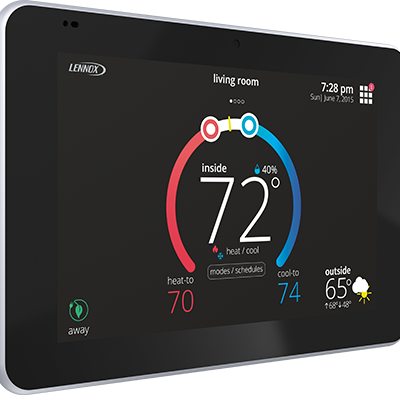
Lennox iComfort E30 Smart Thermostat
-
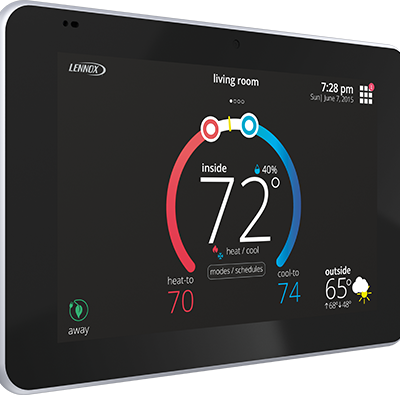
Lennox iComfort S30 Ultra Smart Thermostat
-
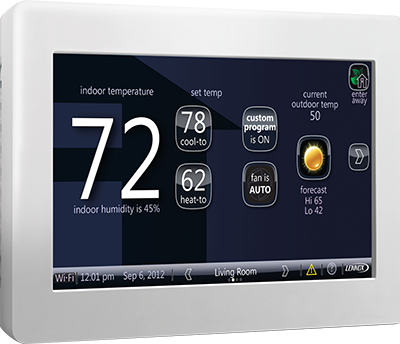
Lennox iComfort Wi-Fi Touchscreen Thermostat
iComfort Smart Thermostats for Connected HVAC Control
iComfort thermostats are smart HVAC controls designed to manage heating, cooling, scheduling, humidity and compatible system functions from one interface. Options range from controls for conventional HVAC equipment to advanced communicating thermostats that can coordinate directly with compatible variable-capacity furnaces, air conditioners and heat pumps.
For Toronto and GTA homes, the most important selection factor is HVAC compatibility. A thermostat should be matched to the equipment and control architecture first, then compared for features such as remote access, scheduling, humidity management, diagnostics and room-level sensing.
How to Choose an iComfort Thermostat
The thermostat is part of the HVAC control system, so features should be considered after compatibility has been confirmed. These factors have the greatest impact on system selection, installation and long-term use.
HVAC Compatibility
Determine whether the heating and cooling equipment uses conventional controls or communicating technology. Installing the wrong control can prevent advanced equipment from operating as designed.
Communicating Control
Compatible communicating systems can exchange operating information with the thermostat and coordinate equipment stages or capacity more precisely than basic on-and-off control.
Heat Pump Control
Heat pumps may require control of multiple operating stages, auxiliary heat or dual-fuel changeover. Thermostat capability should match the actual system configuration.
Humidity Management
Homes with compatible whole-home humidity equipment can benefit from integrated control, reducing the need for separate wall controls.
Remote Access
Wi-Fi connectivity can provide temperature adjustments, schedules and system information through a mobile device, but reliable internet connectivity is required for remote functions.
Replacement Compatibility
An older communicating thermostat cannot always be replaced with a conventional smart thermostat without affecting system functions. Existing equipment and wiring should be identified before replacement.
Communicating vs Conventional Smart Thermostat Control
The key distinction within smart HVAC controls is not the touchscreen or mobile app. It is how the thermostat communicates with the heating and cooling equipment and which equipment functions it can control.
Why Thermostat Compatibility Matters
Two smart thermostats can offer similar scheduling and remote-access features while controlling HVAC equipment very differently. Compatibility becomes particularly important with variable-capacity systems, multi-stage equipment, heat pumps and integrated humidity controls.
Choosing solely by screen design or smart-home features can result in lost HVAC functionality. The heating and cooling equipment, wiring and existing control configuration should be identified before deciding which thermostat is appropriate.
Thermostats for Variable-Capacity HVAC Systems
Variable-capacity furnaces, air conditioners and heat pumps can operate across a range of output levels rather than simply switching between full output and off. A compatible communicating thermostat can work with this equipment to coordinate capacity with changing comfort demand.
A conventional thermostat may be able to operate some systems through an appropriate interface, but that does not automatically mean it will provide the same control strategy. Preserving the capabilities of premium HVAC equipment should therefore be considered during thermostat replacement.
Smart Thermostats for Heat Pumps
Heat-pump control can be more complex than controlling a basic furnace and air conditioner. Depending on the system, the thermostat may need to manage compressor stages, variable operation, auxiliary heating or another heat source.
This is particularly relevant in Toronto and the GTA, where heat pumps operate across a wide range of outdoor temperatures. The thermostat should be configured around the actual heat-pump system rather than treated as a generic heating and cooling switch.
Thermostat Control for Dual-Fuel Systems
A dual-fuel system combines a heat pump with another heating source, commonly a gas furnace. The control system determines when heating should come from the heat pump and when the system should transition to the alternate source.
Incorrect control configuration can undermine the purpose of a dual-fuel installation. When replacing the thermostat, confirm that the new control can manage the equipment combination and required changeover strategy.
Temperature and Humidity Control
Temperature alone does not determine how comfortable a home feels. Compatible smart controls can incorporate humidity information and work with whole-home humidity equipment to coordinate temperature and moisture management.
This can be useful in Toronto's seasonal climate, where winter heating can coincide with dry indoor conditions and summer cooling must also manage humidity. A thermostat cannot create humidity control by itself, however; compatible HVAC or indoor air quality equipment must also be installed.
Remote Thermostat Control and Scheduling
Connected thermostats can allow homeowners to adjust temperature, review settings and manage schedules while away from home. Scheduling and occupancy-based adjustments can also reduce unnecessary heating or cooling when the home is unoccupied.
The energy impact depends on how the schedule is configured and how the HVAC system operates. Aggressive temperature setbacks are not automatically the most efficient strategy for every heat pump or variable-capacity system, so scheduling should reflect the equipment rather than copying settings from a different HVAC configuration.
Smart Room Sensors and Uneven Temperatures
Compatible room sensors can provide additional temperature information from areas away from the main thermostat. This can improve control decisions in homes where the thermostat location does not represent conditions in commonly occupied rooms.
A room sensor cannot correct every comfort problem. Undersized ductwork, poor airflow, inadequate insulation or significant heat loss can still create hot and cold rooms even when the control system has more temperature data.
When a New Thermostat Does Not Fix Uneven Comfort
Smart controls can improve how compatible HVAC equipment responds, but they cannot compensate for every mechanical or building problem. The underlying cause should be checked when temperature differences remain significant between rooms.
A Smart Thermostat Is Installed to Fix a Cold Room
A remote sensor identifies that one room remains colder than the rest of the home, but the room has restricted supply airflow. Changing thermostat settings may cause the HVAC system to run longer without correcting the airflow problem, potentially overheating other areas while the original room remains uncomfortable.
Smart Thermostat Diagnostics and HVAC Monitoring
Compatible communicating controls can monitor more HVAC operating information than a basic thermostat and can provide alerts when certain system conditions require attention. This can make troubleshooting easier because the control system has access to information from connected equipment.
Diagnostics are useful for identifying and communicating operating conditions, but they do not replace physical inspection when equipment has a mechanical, electrical or airflow problem. Monitoring should be treated as a service aid rather than a substitute for HVAC maintenance.
Wi-Fi and Smart-Home Integration
Wi-Fi connectivity enables remote thermostat functions and can support integration with compatible smart-home platforms. This is useful when homeowners want temperature control to be part of a broader connected-home setup.
Smart-home compatibility should remain secondary to HVAC compatibility. A thermostat that integrates with a preferred voice assistant but cannot properly control the installed heating and cooling system is the wrong choice for the application.
Replacing an Older iComfort Thermostat
Older communicating thermostats should not be replaced as if they were ordinary conventional controls. The existing thermostat may be exchanging equipment data through a proprietary communicating system rather than standard thermostat wiring.
Before replacement, identify the furnace or air handler, outdoor equipment, accessories and existing control connections. This determines whether a current communicating control, a compatible interface or another thermostat configuration is required.
Replacing an Older Communicating Control With a Current System
Current thermostat generations can provide a replacement path for older communicating controls, but compatibility still depends on the HVAC equipment connected to the system. A newer control may also use different accessories or installation components from the original thermostat.
Replacement is therefore a system-level decision rather than a simple wall-control swap. Confirming equipment compatibility before purchase reduces the risk of discovering during installation that additional interface hardware or wiring changes are needed.
Do Not Replace a Communicating Thermostat by Wiring Alone
Seeing wires behind an existing thermostat does not reveal everything about how the HVAC system communicates. Conventional thermostats and communicating controls can use fundamentally different signalling methods even when the wall installation appears similar.
A Conventional Smart Thermostat Replaces a Communicating Control
A homeowner chooses a popular smart thermostat because it has the desired app features, but the existing HVAC equipment relies on communicating control. The replacement may require additional interface equipment or a different control strategy, and advanced equipment functions can be affected if compatibility is not addressed first.
Thermostat Installation and Wiring Requirements
Installation requirements depend on whether the system uses conventional thermostat wiring, communicating connections or an equipment interface. Power requirements also matter because smart thermostats require continuous electrical power for displays, wireless connectivity and processing.
Professional installation becomes more important as system complexity increases. Multi-stage furnaces, variable-capacity equipment, heat pumps, dual-fuel systems, zoning and humidity-control accessories all require correct configuration after the thermostat is physically connected.
Installing a Thermostat During HVAC Replacement
Replacing a furnace, air conditioner or heat pump is an appropriate time to reconsider the thermostat because the new equipment may support a different level of control. Pairing advanced HVAC equipment with the correct thermostat can preserve modulation, diagnostics and integrated comfort functions.
Keeping an older thermostat can sometimes limit how new equipment is controlled. Conversely, purchasing an advanced communicating thermostat provides little benefit when the installed HVAC system cannot use its additional capabilities.
Thermostat Replacement vs Repair
Not every control problem requires thermostat replacement. Connection problems, equipment faults, sensor issues or configuration errors can sometimes create symptoms that appear to originate at the thermostat.
Replacement becomes more relevant when the existing control has failed, is no longer appropriate for the HVAC system, lacks required functionality or is being updated as part of an equipment change. Diagnosing the cause first helps avoid replacing a functioning thermostat while leaving the actual HVAC problem unresolved.
Thermostat Cost and Installation Factors
The cost of a smart thermostat depends on control capability and installation complexity. A universal thermostat on conventional equipment can involve a different installation scope from a communicating control connected to variable-capacity HVAC equipment and integrated accessories.
When comparing costs, consider whether additional interface equipment, wiring changes, sensors or system configuration will be required. The thermostat purchase price alone does not represent the complete installed cost.
Choosing a Thermostat for Toronto and GTA Homes
Toronto and GTA homes require heating and cooling control across substantial seasonal temperature changes. Heat pumps, gas furnaces, central air conditioners and dual-fuel systems can each place different demands on the thermostat.
System compatibility should therefore come before convenience features. Once the correct control architecture has been identified, homeowners can compare remote access, scheduling, humidity management, diagnostics and sensor options without compromising HVAC operation.
iComfort Thermostat Selection Checklist
Start by identifying the installed HVAC equipment and whether it uses communicating or conventional control. Then compare smart features within the group of thermostats that can correctly operate the complete system.
Choose the Right iComfort Thermostat
- Identify the furnace, air handler, air conditioner or heat pump before selecting the thermostat.
- Determine whether the existing HVAC equipment uses communicating or conventional controls.
- Check whether variable-capacity or multi-stage equipment requires advanced control functions.
- Confirm heat-pump and auxiliary-heating compatibility where applicable.
- Verify dual-fuel control requirements before replacing a thermostat on a hybrid heating system.
- Determine whether whole-home humidification or dehumidification needs integrated control.
- Check thermostat power and wiring requirements before installation.
- Confirm whether an equipment interface is required for the proposed system configuration.
- Consider room sensors when the thermostat location does not represent important occupied spaces.
- Do not expect room sensors to correct underlying ductwork or insulation problems.
- Compare remote access, scheduling and smart-home integration only after HVAC compatibility is confirmed.
- Review diagnostic and monitoring capabilities when controlling advanced communicating equipment.
- Identify the correct replacement path before removing an older communicating thermostat.
- Reassess thermostat requirements whenever the furnace, air conditioner or heat pump is replaced.
Planning an iComfort Thermostat Installation
The right thermostat should match the control capabilities of the entire HVAC system, not simply provide the desired touchscreen or mobile features. Communicating equipment, conventional systems, heat pumps and dual-fuel configurations can require different control strategies.
For Toronto and GTA installations, reviewing equipment compatibility, wiring, accessories and control requirements before replacement helps preserve HVAC performance while adding the smart functions that are useful for the home.
FREE In-Home Estimate