


Non-Programmable
Showing all 4 results
-
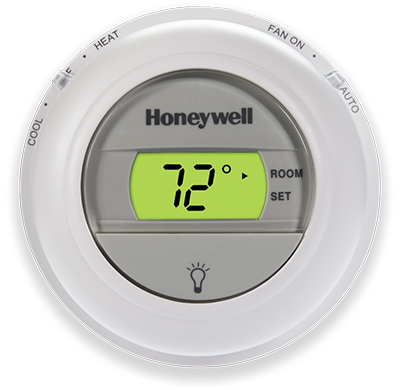
Honeywell Digital The Round Non-Programmable Thermostat
-
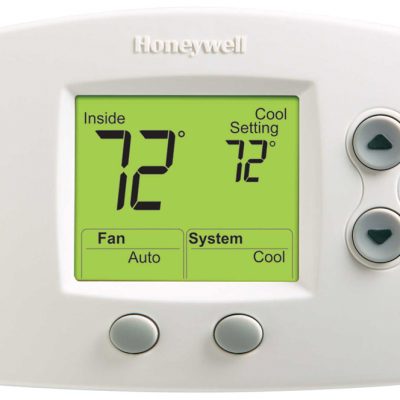
Honeywell FocusPRO 5000 Non-Programmable Thermostat
-
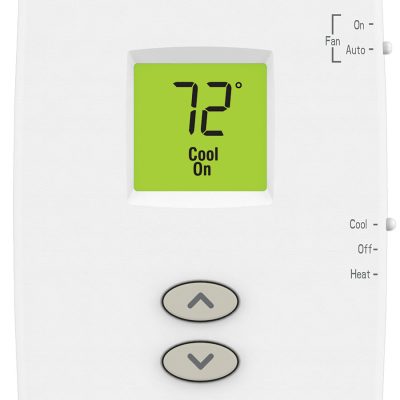
Honeywell PRO 1000 Non-Programmable Thermostat
-
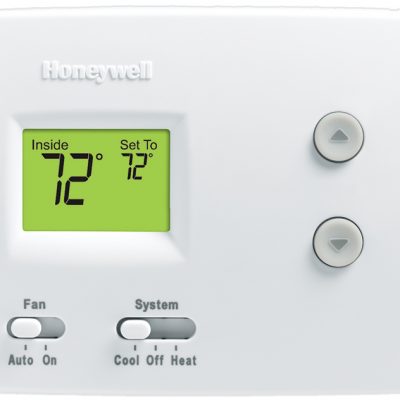
Honeywell PRO 3000 Non-Programmable Thermostat
Non-Programmable Thermostats for Simple HVAC Control
Non-programmable thermostats are manual HVAC controls that maintain the temperature selected by the user without automatically changing setpoints on a daily or weekly schedule. They are designed for straightforward heating and cooling control when scheduling, Wi-Fi access and smart-home automation are unnecessary.
For Toronto and GTA homes, the right thermostat still has to match the HVAC system. Equipment type, heating and cooling stages, voltage, wiring and heat-pump requirements matter more than whether the thermostat has a digital display or mechanical controls.
How to Choose a Non-Programmable Thermostat
Simplicity does not mean every manual thermostat is interchangeable. The following factors determine whether a thermostat can properly control the connected heating and cooling equipment.
HVAC Compatibility
Match the thermostat to the furnace, air conditioner, heat pump or other supported heating system. Choosing by appearance alone can result in an incompatible control.
System Voltage
Low-voltage central HVAC controls and line-voltage electric heating controls are fundamentally different. The thermostat must be designed for the electrical system it will control.
Equipment Stages
Single-stage and multi-stage HVAC systems have different control requirements. A thermostat that supports too few stages can prevent equipment from operating as designed.
Heat Pump Requirements
Heat pumps may require dedicated thermostat functions, particularly when auxiliary heating is present. Compatibility should be confirmed before replacement.
Digital or Mechanical
Digital models can provide easier temperature reading and adjustment, while mechanical controls emphasize basic operation. The HVAC compatibility requirements remain more important than the interface.
Power Requirements
Depending on the thermostat, operation may rely on batteries, HVAC control power or line voltage. Existing wiring should be checked before selecting a replacement.
Non-Programmable vs Programmable vs Smart Thermostats
The main difference is how temperature changes are managed. Manual controls prioritize direct adjustment, while programmable and smart thermostats add increasing levels of automation and connectivity.
Digital vs Mechanical Non-Programmable Thermostats
Both types provide manual temperature control, but their interfaces and temperature adjustment methods differ. The better choice depends on the desired operating simplicity and the heating or cooling system being controlled.
Low-Voltage vs Line-Voltage Thermostats
Voltage is one of the most important distinctions when choosing a non-programmable thermostat. Central furnaces and air conditioners commonly use low-voltage controls, while electric baseboard and other electric heating applications can use line-voltage thermostats.
These thermostat types are not interchangeable. A thermostat designed for a low-voltage central HVAC control circuit should not be selected for line-voltage electric heating simply because both products provide manual temperature control.
Non-Programmable Thermostats for Furnaces and Air Conditioners
A manual thermostat can be a practical choice for a conventional central furnace and air conditioner when the household wants a consistent setpoint and does not need scheduling or remote access. The thermostat must still support the equipment's heating and cooling stages.
A basic single-stage thermostat should not be assumed suitable for multi-stage equipment. If the HVAC system has additional stages, the replacement control needs the appropriate terminals and operating logic to use them correctly.
Single-Stage and Multi-Stage HVAC Control
Single-stage equipment has simpler thermostat requirements because the thermostat primarily calls for heating or cooling at one operating level. Multi-stage equipment can use different levels of output and requires a thermostat capable of controlling the appropriate stages.
A non-programmable thermostat can still support more than basic single-stage operation when specifically designed to do so. The important distinction is equipment compatibility, not whether the thermostat has scheduling features.
Non-Programmable Thermostats for Heat Pumps
Some manual thermostats can control heat pumps, but heat-pump compatibility must be explicitly confirmed. Systems with auxiliary or backup heat can require additional thermostat functions beyond those needed for a simple heating and cooling system.
This is especially important in Toronto and the GTA, where backup heating can become relevant during colder outdoor conditions. Replacing a heat-pump thermostat with an incompatible basic control can interfere with the intended heating sequence.
Non-Programmable Thermostats for Electric Heating
Electric baseboards, convectors, fan heaters and radiant heating can require thermostats designed for their specific voltage, electrical load and control method. A thermostat suitable for central forced-air HVAC should not automatically be considered suitable for electric resistance heating.
For line-voltage applications, the connected heating load is also part of product selection. The thermostat's electrical rating must be appropriate for the equipment it controls rather than selected only by desired temperature range or display style.
Manual Control vs Automatic Scheduling
A non-programmable thermostat maintains the temperature the user selects until someone changes it. This makes operation straightforward, but it also means the thermostat will not automatically reduce heating or cooling when the home is unoccupied or occupants are sleeping.
For someone who is home much of the day or prefers a stable temperature, that trade-off may be acceptable. Homes with predictable periods of daily absence may benefit more from programmable control because scheduled setbacks do not depend on someone remembering to change the thermostat.
Does a Non-Programmable Thermostat Save Energy?
A manual thermostat can be used efficiently, but energy savings depend on how the homeowner manages the temperature. Lowering the heating setpoint or raising the cooling setpoint when full comfort is unnecessary can reduce HVAC demand.
The limitation is that these changes are manual. If the thermostat remains at the same comfort setting while the home is empty, it cannot automatically create the setbacks that a properly configured programmable or smart thermostat can provide.
When Simple Control Is the Better Choice
Additional thermostat technology only provides value when the household uses it. A straightforward manual control can make sense where occupants want direct temperature adjustment and have little need for schedules, apps or connected automation.
A Smart Thermostat Is Installed but Its Features Are Never Used
The household adjusts temperature manually at the wall and never uses remote access, schedules or automation. In this situation, the added connected features provide little practical benefit, while a compatible non-programmable thermostat could provide the required day-to-day control more simply.
When Non-Programmable Control May Be Too Limited
Simple manual operation also has limitations. Households with regular periods away from home, frequently changing schedules or a need for remote temperature control may find manual adjustment inconvenient.
The thermostat should therefore be chosen around actual operating habits rather than a preference for either more or fewer features. Simplicity is useful when it matches the way the HVAC system will be controlled.
Thermostat Accuracy and Temperature Control
Electronic non-programmable thermostats can provide precise setpoint control without requiring scheduling or Wi-Fi functions. However, thermostat accuracy alone does not guarantee even temperatures throughout the home.
The thermostat only reacts to conditions at its sensing location. Duct performance, HVAC sizing, building envelope conditions and room-by-room heat loss or gain still influence comfort elsewhere in the house.
Thermostat Location Matters
A manual thermostat should be installed where it can sense conditions representative of the occupied space. Direct sunlight, drafts, supply registers, exterior doors and nearby heat sources can distort the temperature the thermostat senses.
If the existing location is poor, replacing the thermostat in the same location may reproduce the same comfort complaint. Location should therefore be considered during replacement, especially when the displayed temperature does not seem representative of the home.
A New Thermostat Cannot Fix an HVAC Distribution Problem
Thermostat replacement can solve a failed or unsuitable control, but it cannot correct restricted ducts, insufficient airflow, poor insulation or an improperly balanced HVAC system. Persistent room-to-room temperature differences should be diagnosed before the thermostat is blamed.
One Room Remains Cold After Thermostat Replacement
The new thermostat maintains the selected temperature correctly in the main living area, but an upstairs room remains cold because it receives insufficient supply airflow. Replacing the thermostat again will not correct the underlying distribution problem.
Non-Programmable Thermostat Installation
Installation begins by identifying the HVAC system, thermostat voltage, control functions and existing terminal connections. The replacement thermostat must then be wired and configured for the actual equipment rather than installed solely by matching wire colours.
After installation, heating, cooling and fan functions should be tested as applicable. Heat-pump stages, auxiliary heating or other supported functions should also be verified before the thermostat is considered fully commissioned.
Replacing an Existing Manual Thermostat
Replacing an older mechanical or digital thermostat can provide a clearer interface and updated temperature control without adding programming or Wi-Fi. The replacement still needs to match the existing electrical and HVAC configuration.
This is particularly important in older Toronto and GTA homes, where an existing wall control could be serving central HVAC, electric heating or another type of heating equipment. Identifying what the thermostat actually controls should come before selecting the replacement.
Do Not Select a Replacement by Wire Count Alone
The number of wires behind an existing thermostat can provide useful information, but it does not fully identify the HVAC configuration. Terminal functions, equipment type and voltage should be confirmed before a replacement is installed.
A Similar-Looking Thermostat Is Assumed to Be Compatible
A replacement is selected because it has a similar display and enough terminals for the visible wires, but the connected HVAC system requires a control function the new thermostat does not support. The system can lose part of its intended operation even though the thermostat powers up.
Replacing a Non-Programmable Thermostat With a Programmable Model
Moving to programmable control can make sense when the household wants automatic temperature changes at predictable times. Compatibility still comes first, so the new thermostat needs to support the same HVAC equipment and stages before scheduling features are considered.
The upgrade provides the most practical benefit when occupants will actually use scheduled setbacks. If the preferred temperature rarely changes, programming may add complexity without significantly changing how the HVAC system is operated.
Replacing a Non-Programmable Thermostat With a Smart Thermostat
A smart thermostat can add Wi-Fi access, remote adjustments and automation, but installation can require different power or wiring arrangements. Existing HVAC compatibility must also be checked before choosing the connected features.
Smart control is most useful when remote access or automated temperature management solves a real need. Upgrading solely for additional features may not improve comfort if the existing manual thermostat already controls the HVAC system properly.
Thermostat Replacement During an HVAC Upgrade
Replacing a furnace, air conditioner or heat pump is an appropriate time to reassess the thermostat. New equipment may have different staging, heat-pump or control requirements that an older manual thermostat cannot fully support.
Keeping the existing thermostat can still be reasonable when compatibility is confirmed. The decision should be made from the requirements of the new HVAC system rather than simply because the old thermostat remains operational.
Non-Programmable Thermostat Cost Factors
Basic manual thermostats are generally simpler than programmable and connected controls, but total replacement cost depends on more than the thermostat itself. System type, voltage, wiring, equipment stages and installation complexity all affect the scope of work.
A straightforward compatible replacement can require relatively little modification, while changing thermostat type, correcting wiring or diagnosing an HVAC control problem can add labour. Purchase price alone is therefore not enough to compare replacement options.
Non-Programmable Thermostats for Toronto and GTA Homes
Manual thermostats can suit Toronto and GTA homes where occupants prefer direct temperature control and do not require scheduling or internet connectivity. They can be appropriate for compatible central HVAC systems as well as specific electric heating applications when the correct thermostat type is selected.
Toronto's heating and cooling seasons make compatibility more important than simplicity alone. A thermostat should reliably control the equipment through winter heating and summer cooling conditions without sacrificing required stages or system functions.
Non-Programmable Thermostat Selection Checklist
Before purchasing or replacing a manual thermostat, identify exactly what equipment it needs to control. These checks help separate a genuinely simple replacement from an installation that requires different voltage, staging or heat-pump capabilities.
Check Before Choosing a Non-Programmable Thermostat
- Identify the heating and cooling equipment controlled by the existing thermostat.
- Confirm whether the application uses low voltage or line voltage.
- Verify the number of heating and cooling stages.
- Check heat-pump and auxiliary-heat requirements where applicable.
- For electric heating, confirm that the thermostat is designed for the equipment and electrical load.
- Decide whether digital or mechanical operation is more practical for the household.
- Confirm the thermostat's power requirements and available wiring.
- Verify terminal functions instead of relying only on wire colours.
- Evaluate the thermostat location if temperature readings seem inaccurate.
- Investigate airflow problems when individual rooms remain uncomfortable.
- Consider programmable control if regular automatic setbacks would be useful.
- Consider smart control only when remote access or connected automation provides practical value.
- Reassess thermostat compatibility whenever major HVAC equipment is replaced.
Planning a Non-Programmable Thermostat Installation
A non-programmable thermostat is a practical choice when direct manual temperature control is preferred over scheduling and connectivity. Correct selection starts with voltage, HVAC type and equipment stages rather than the thermostat's display or interface.
For Toronto and GTA installations, confirming those requirements before replacement helps ensure that a simple thermostat remains simple in operation without giving up HVAC functions the system needs.
FREE In-Home Estimate