

Comfortzone II
Showing all 3 results
-
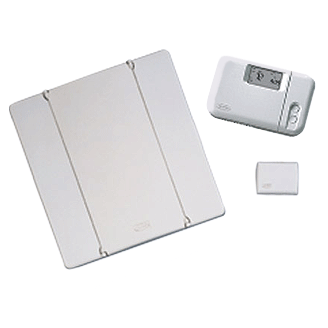
Carrier Performance Comfortzone II Zoning System – ZONECC2KIT01-B Thermostat
-
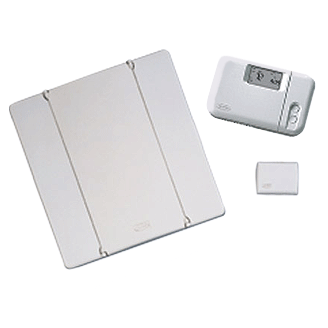
Carrier Performance Comfortzone II Zoning System Thermostat
-
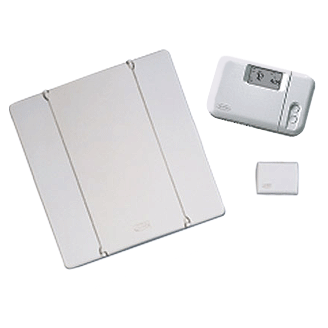
Carrier Performance Comfortzone II Zoning System Thermostat – ZONECC4KIT01-B
Non Wi-Fi Comfortzone II Thermostats and Zoning Controls
Non Wi-Fi Comfortzone II is a traditional HVAC zoning control category designed to manage separate comfort zones without relying on Wi-Fi or smartphone control. Rather than using one thermostat setting for an entire home, the zoning system coordinates a central user interface, zone sensors, equipment controls and motorized dampers so different areas can have their own temperature requirements.
For Toronto and GTA homes, selecting or replacing this type of control requires more than choosing a wall thermostat. The number of zones, existing zoning equipment, HVAC configuration, duct design, damper operation and control compatibility all affect whether an existing Comfortzone II system can be retained, repaired or replaced.
How to Choose a Comfortzone II Zoning Configuration
The number of zones is only one part of system selection. A useful zoning design also considers how the home is divided, how much conditioned air each area needs and whether the HVAC equipment can operate properly as dampers open and close.
Number of Zones
Comfortzone II configurations were designed for two, four or up to eight zones. More zones provide greater separation, but they also increase the importance of proper airflow and damper design.
Zone Layout
Zones should reflect meaningful differences in occupancy, floor level, exposure or comfort needs. Dividing rooms arbitrarily can create unnecessary control complexity without improving comfort.
HVAC Compatibility
The complete heating and cooling configuration must be identified before selecting replacement controls. Compatibility can vary with the zoning configuration and connected equipment.
Duct and Damper Design
Closing zones changes system airflow. Dampers and ductwork must be designed so the equipment can operate safely when only part of the home requires heating or cooling.
Temperature Sensors
Each controlled area needs suitable temperature sensing. Poor sensor placement can make a correctly operating zoning system respond to temperatures that do not represent the occupied space.
Replacement Strategy
Comfortzone II is a legacy product family, so replacement decisions should consider the entire zoning system rather than assuming a current thermostat can directly replace the existing user interface.
Two-Zone, Four-Zone and Eight-Zone Control
Comfortzone II systems were offered in configurations for different numbers of controlled areas. The correct choice depends on the home's layout and duct system rather than simply selecting the configuration with the greatest zone capacity.
Comfortzone II Is More Than a Wall Thermostat
A Comfortzone II installation operates as a zoning system rather than as a standalone thermostat. The wall interface works with an equipment controller, zone temperature sensing and motorized dampers that regulate conditioned airflow to different areas.
This distinction becomes especially important during replacement. Changing only the visible wall control may not be possible if the existing zoning components use a control architecture that is incompatible with a new thermostat or zoning panel.
Individual Temperature Control by Zone
Zoning is useful when different areas of a home have genuinely different heating and cooling requirements. Upper floors, lower levels, frequently occupied living spaces and less-used rooms can experience different loads even though they share one central HVAC system.
The advantage over a single thermostat is that the system can respond to separate zone demands. The limitation is that one central HVAC system still has finite heating, cooling and airflow capacity, so zoning cannot make every zone operate like an independent HVAC system.
Seven-Day Programming Without Wi-Fi
Comfortzone II supports local scheduling, allowing temperature settings to be programmed across a seven-day cycle without internet connectivity. Different comfort periods can be used to reduce unnecessary conditioning when particular zones are less active.
Local programming works well for households with predictable routines. Homeowners who require frequent remote adjustments, app access or connected-home automation should compare a modern connected zoning solution rather than expecting those functions from a non-Wi-Fi control.
Non Wi-Fi Zoning vs a Wi-Fi Smart Thermostat
A conventional smart thermostat and a zoning system solve different problems. Wi-Fi primarily changes how a control can be accessed, while zoning changes how conditioned air is distributed among separate areas of a ducted HVAC system.
Comfortzone II vs a Single-Zone Thermostat
A single-zone thermostat is simpler because the entire HVAC system responds to one main temperature reading. Comfortzone II adds separate sensing and damper control so different areas can call for conditioning independently.
The additional control is valuable when the home's comfort differences correspond to sensible duct zones. If the real problem is inadequate insulation, undersized ductwork or a room with insufficient supply airflow, adding or changing zones may not correct the underlying cause.
Zone Dampers and Airflow Performance
Motorized dampers regulate which zones receive conditioned air, making airflow design one of the most important parts of zoning performance. When several dampers close, the remaining open duct paths must handle the airflow delivered by the HVAC equipment.
A zoning control can send the correct commands while the home still experiences noise, pressure problems or poor comfort if the duct system is not designed for changing airflow conditions. This is why zoning installation should be evaluated as an HVAC airflow project, not only a thermostat project.
More Zones Do Not Automatically Mean Better Comfort
Creating additional zones can provide finer temperature control, but every added zone changes the airflow conditions the HVAC system may encounter. Very small zones can become difficult to serve properly when they are the only areas requesting heating or cooling.
A Small Zone Calls While Most Dampers Are Closed
If the active zone cannot accept enough airflow for the operating equipment, duct pressure and air velocity can increase while equipment airflow becomes harder to manage. Adding zones without considering minimum airflow can therefore create performance problems instead of improving comfort.
Zone Sensors and Temperature Accuracy
A zoning system depends on accurate temperature information from each controlled area. Sensor location should represent normal occupied conditions rather than direct sunlight, supply-air discharge, exterior drafts or nearby heat sources.
Moving or replacing a sensor may improve control when its location is misleading the system, but it will not correct an airflow problem. If the sensor accurately reports a cold room and that room receives insufficient conditioned air, the duct system requires attention.
Humidity Control With a Zoned HVAC System
Comfortzone II systems can integrate humidity management when the connected HVAC configuration and accessories support it. This can be useful in Toronto and the GTA, where winter dryness and summer humidity create different seasonal comfort concerns.
Humidity control should still be treated as a system function rather than a thermostat feature alone. The control cannot add or remove moisture effectively unless compatible HVAC or indoor-air equipment is available to respond.
Heating and Cooling Changeover
Automatic changeover can help a zoned system respond when seasonal conditions move between heating and cooling needs. This is particularly relevant during Toronto spring and fall weather, when outdoor temperatures can vary significantly between daytime and overnight periods.
All zones still share the same central equipment, so the system cannot normally provide heating to one zone while the same central system simultaneously provides cooling to another. Zone design and setpoints should avoid creating conflicting demands whenever possible.
Comfortzone II With Different HVAC Configurations
Legacy Comfortzone II configurations were designed for multiple HVAC applications, but compatibility is not identical across every zoning kit and equipment combination. Heat-pump, conventional cooling and dual-fuel applications can have different control and sensor requirements.
For an existing system, the exact zoning controller and HVAC equipment should therefore be identified before repair or replacement components are selected. A feature supported by one Comfortzone II configuration should not automatically be assumed available on every version.
When Zoning Cannot Fix a Duct Problem
Zoning can redirect available conditioned air, but it cannot create duct capacity that does not exist. Rooms with restricted branches, poorly sized ducts or inadequate return-air paths can remain uncomfortable even when their zone repeatedly calls for heating or cooling.
A New Zone Is Used to Correct a Chronically Uncomfortable Room
The room receives its own temperature control, but the supply duct still cannot deliver enough conditioned air. The zone remains uncomfortable while the HVAC system operates longer, showing why airflow should be checked before a control problem is assumed.
Comfortzone II Installation
Installation requires decisions about zone boundaries, sensor locations, dampers, equipment control and duct airflow before the control system is commissioned. The zoning panel and thermostat interface are only part of the installation.
After installation, each zone should be tested individually along with the heating, cooling and fan functions. Damper response and equipment operation should also be checked under different zone demands so problems are identified before normal operation begins.
Installing Zoning in an Existing Toronto Home
Retrofitting zoning into an existing Toronto or GTA home can be more complex than including zoning during a new duct installation. Existing duct layouts may not divide cleanly into useful zones, and access for installing motorized dampers can affect the practical scope of the project.
Older multi-storey homes can be strong candidates when floor-to-floor temperature differences correspond to separate duct branches. Where several rooms share inaccessible duct runs, however, the cost and disruption of creating individual zones may outweigh the benefit.
Replacing an Existing Comfortzone II Control
Comfortzone II is a legacy zoning family, and the original systems are no longer current production equipment. Replacement planning should therefore begin by identifying the existing user interface, equipment controller, zone sensors, dampers and HVAC equipment.
If only one component has failed, compatibility and component availability determine whether a targeted repair is practical. If several parts are aging or replacement controls are unavailable, upgrading the zoning architecture may be more sensible than repeatedly repairing individual legacy components.
Do Not Replace the User Interface Like a Standard Thermostat
The wall control is connected to a broader zoning architecture. A current thermostat that can operate the furnace or air conditioner does not automatically communicate with the existing Comfortzone II equipment controller and zone components.
A Standard Thermostat Is Installed in Place of the Zoning Interface
The new thermostat may be capable of controlling compatible HVAC equipment, but the existing zoning system can lose the control logic needed to operate separate zones and dampers. The replacement can therefore require a new zoning control strategy rather than a simple thermostat swap.
Repair the Existing Zoning System or Replace It?
The decision depends on the failed component, availability of compatible parts, condition of the dampers and sensors, and whether the current HVAC equipment is likely to remain in service. A minor repair can be reasonable when the rest of the zoning system is operating correctly.
A broader replacement becomes more attractive when multiple legacy components are failing, HVAC equipment is also being upgraded or the homeowner wants control functions that the existing non-Wi-Fi system cannot provide.
Comfortzone II Replacement During an HVAC Upgrade
Replacing a furnace, air conditioner or heat pump is an important time to reassess an older zoning system. New HVAC equipment can have different airflow, staging and control requirements from the equipment the zoning system was originally configured to manage.
Keeping existing zoning equipment can reduce project scope when compatibility is confirmed and the components remain in good condition. Retaining it solely to avoid replacement can be a false economy if it prevents the new HVAC system from operating as intended.
Zoning System Cost Factors
The cost of a Comfortzone II repair or replacement cannot be judged from the wall control alone. The number of zones, failed components, damper condition, wiring access, duct modifications, sensor requirements and HVAC compatibility can all change the project scope.
A two-zone repair with functional dampers is fundamentally different from redesigning a larger legacy zoning installation. Comparing quotes is more useful when each proposal clearly identifies which existing components will remain and which will be replaced.
Comfortzone II for Toronto and GTA Homes
Zoning can be useful in Toronto and GTA homes where different floors or sections experience consistently different heating and cooling loads. Multi-level layouts, large windows, solar exposure and different occupancy patterns can make one central temperature setting less effective.
Local climate also makes correct design important because the system must operate through sustained winter heating and summer cooling conditions. A zoning arrangement that appears acceptable under mild weather should still maintain appropriate airflow when the HVAC system is operating at higher demand.
Non Wi-Fi Comfortzone II Selection and Replacement Checklist
For an existing Comfortzone II installation, the first decision is whether the current zoning architecture can continue to meet the home's needs. Review the complete system before choosing replacement controls or changing the number of zones.
Evaluate the Complete Zoning System
- Identify whether the existing system uses a two-zone, four-zone or eight-zone configuration.
- Confirm the exact zoning controller and connected HVAC equipment before selecting replacement parts.
- Check whether each existing zone represents a meaningful difference in heating or cooling demand.
- Test zone temperature sensors for accurate readings and appropriate placement.
- Confirm that each motorized damper opens and closes correctly.
- Evaluate duct airflow when only one or a small number of zones are calling.
- Check whether uneven comfort is caused by zoning or by an underlying duct problem.
- Confirm compatibility before replacing the wall interface with another thermostat.
- Review humidity-control requirements if humidification equipment is connected.
- Assess the condition and availability of legacy components before investing in repeated repairs.
- Re-evaluate the zoning controls when replacing a furnace, air conditioner or heat pump.
- Compare repair with a current zoning solution when several legacy components require replacement.
- Decide whether local non-Wi-Fi control still meets the household's needs or whether remote access is now important.
Planning a Comfortzone II Repair or Replacement
An existing Non Wi-Fi Comfortzone II system can continue to provide useful multi-zone control when its components, ductwork and HVAC equipment remain compatible and functional. The critical decision is whether a specific component needs attention or the age and condition of the overall zoning system justify a broader upgrade.
For Toronto and GTA homes, evaluating the zones, dampers, sensors, airflow and HVAC equipment together provides a more reliable replacement plan than treating Comfortzone II as an ordinary thermostat.
FREE In-Home Estimate