


Programmable
Showing all 6 results
-
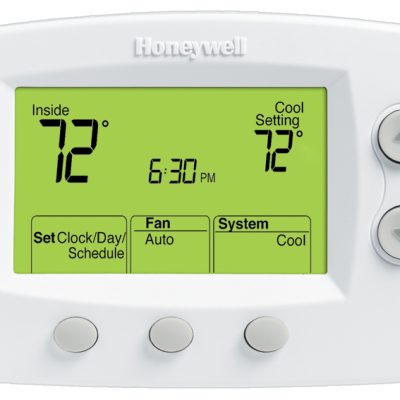
Honeywell FocusPRO 6000 5-1-1/5-2 Day Programmable Thermostat
-
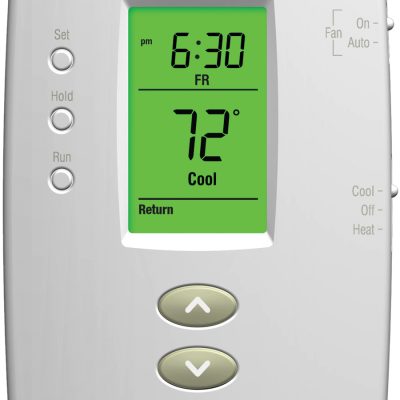
Honeywell PRO 2000 5-2 Day Programmable Thermostat
-
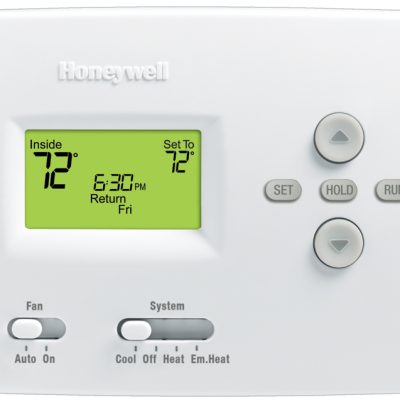
Honeywell PRO 4000 5-2 Day Programmable Thermostat
-
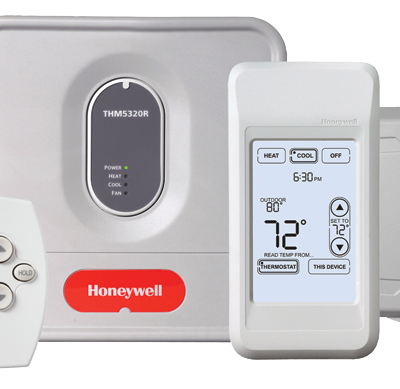
Honeywell Programmable Wireless FocusPRO Comfort System Thermostat
-
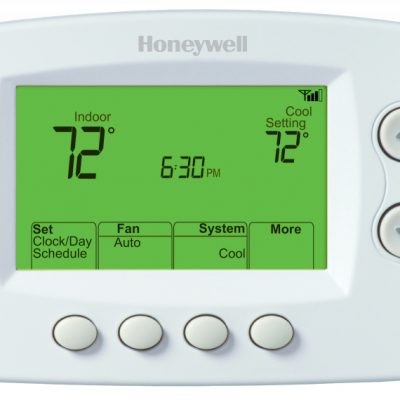
Honeywell Wi-Fi 7-Day Programmable Thermostat
-
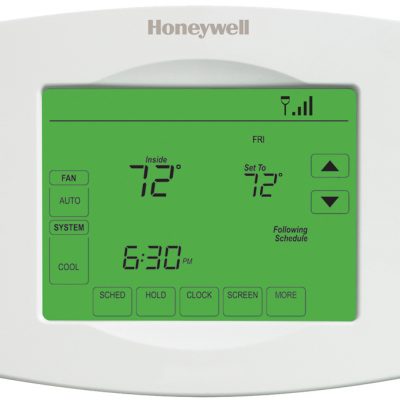
Honeywell Wi-Fi 7-Day Programmable Touchscreen Thermostat
Programmable Thermostats for Scheduled HVAC Control
Programmable thermostats are HVAC controls that automatically change heating and cooling temperature settings according to a schedule set by the homeowner. They are designed for households that want automatic temperature setbacks and consistent comfort without relying on Wi-Fi, smartphone apps or learning-based automation.
For Toronto and GTA homes, choosing the right programmable thermostat depends on the HVAC system first and the scheduling features second. Furnace or heat pump compatibility, heating and cooling stages, wiring, power requirements and household routines all need to match the thermostat for reliable operation.
How to Choose a Programmable Thermostat
The best choice is not necessarily the thermostat with the most programming options. Start with equipment compatibility, then choose the scheduling format and control features that match how the home is actually used.
HVAC Compatibility
Confirm whether the thermostat supports the furnace, air conditioner, heat pump or combined system. An incompatible thermostat can prevent equipment stages or heating functions from operating correctly.
Heating and Cooling Stages
Single-stage and multi-stage HVAC systems have different control requirements. The thermostat must support the stages the equipment is designed to use.
Schedule Type
Choose 7-day, 5-2, 5-1-1 or simpler scheduling according to the household routine. Extra programming flexibility has little value if the schedule is never used.
Heat Pump Control
Heat pumps can require different thermostat functions from conventional furnace and air conditioner combinations, especially when auxiliary heating is present.
Power and Wiring
Some programmable thermostats can operate with battery power while others depend on HVAC wiring. Existing wires should be checked before selecting a replacement.
Ease of Programming
A schedule only provides value when it is correctly configured and maintained. Straightforward controls can be more practical than additional features that make programming difficult.
7-Day vs 5-2 vs 5-1-1 Programmable Thermostats
Scheduling format determines how independently each day can be programmed. A household with the same weekday routine may need less flexibility than one with changing work, school or weekend schedules.
Programmable vs Smart Thermostats
Both thermostat types can automatically adjust temperatures on a schedule, but they differ substantially in connectivity and automation. A programmable thermostat follows the schedule entered at the wall, while a smart thermostat can add remote access and other connected functions.
Programmable Thermostats for Furnaces and Air Conditioners
For a conventional furnace and central air conditioner, the thermostat must support the number of heating and cooling stages used by the equipment. A basic single-stage thermostat may be appropriate for a simple system but can be unsuitable for multi-stage equipment.
Installing a thermostat with fewer supported stages than the HVAC system requires can reduce access to the equipment's intended control sequence. Verify the equipment configuration rather than choosing a thermostat solely because its terminals appear similar to the existing control.
Single-Stage vs Multi-Stage Thermostat Control
A single-stage system essentially operates at one main heating or cooling output, while multi-stage equipment can operate at different capacity levels. The thermostat needs the appropriate control capability to call for those stages correctly.
Multi-stage control can improve how compatible equipment responds during lighter and heavier loads. A thermostat cannot create additional stages in single-stage equipment, so upgrading the thermostat alone does not convert the HVAC system into a multi-stage system.
Programmable Thermostats for Heat Pumps
Heat pumps require careful thermostat selection because their control sequence differs from a conventional furnace and air conditioner. The thermostat must support the specific heat-pump configuration and any auxiliary or backup heating that is part of the system.
Temperature setbacks also deserve more consideration with heat pumps. An aggressive recovery from a large setback can cause some systems to rely more heavily on backup heat, so the programming strategy should match the equipment rather than simply copying a furnace schedule.
Programmable Thermostats for Dual-Fuel Systems
A dual-fuel system combines a heat pump with another heating source and requires a control strategy that determines how the available heating equipment is used. A thermostat suitable for a straightforward furnace installation should not automatically be assumed suitable for dual-fuel control.
When replacing a thermostat on this type of system, identify how the existing controls manage equipment changeover before choosing the replacement. Losing the correct control sequence can affect comfort and system operation during Toronto's colder weather.
Scheduled Temperature Setbacks
The primary efficiency advantage of a programmable thermostat comes from automatically changing setpoints when full comfort conditions are unnecessary. Common periods include waking, daytime absence, evening occupancy and overnight sleeping.
The thermostat itself does not make a furnace, air conditioner or heat pump mechanically more efficient. The benefit comes from reducing unnecessary heating or cooling through a schedule that reflects actual occupancy.
When More Programming Does Not Improve Efficiency
More scheduling options only help when they match the household's routine. Excessively complicated programming can lead to frequent overrides, while unrealistic temperature setbacks can create long recovery periods.
The Schedule Does Not Match the Household
A thermostat is programmed to reduce heating every weekday even though someone regularly remains home. The setting is repeatedly overridden, so the programmed schedule provides little practical benefit. A simpler schedule that reflects actual occupancy can be more effective.
Temperature Recovery Before You Arrive Home
A useful schedule changes the setpoint early enough for the HVAC system to restore comfortable conditions when they are needed. The required recovery time depends on outdoor temperature, equipment capacity, home construction and the size of the setback.
During a Toronto winter, recovering several degrees can take longer than during mild weather. Programming should therefore balance energy-saving setbacks with realistic system recovery rather than expecting immediate temperature changes.
Temporary Hold vs Permanent Hold
Temporary hold allows a scheduled temperature to be changed without permanently cancelling the programmed routine. Permanent hold maintains a selected temperature until the schedule is deliberately restored.
This distinction matters because leaving a thermostat on permanent hold can effectively turn a programmable thermostat into a manually controlled thermostat. If expected setbacks are no longer occurring, checking the hold setting should be part of troubleshooting before assuming the thermostat has failed.
Automatic Heating and Cooling Changeover
Some programmable thermostats can automatically switch between heating and cooling when indoor conditions move outside the selected temperature range. This can be useful during Toronto and GTA spring and fall weather when daytime and overnight temperatures differ considerably.
Automatic changeover should still maintain an appropriate separation between heating and cooling setpoints. Poor configuration can cause unnecessary cycling between operating modes instead of providing efficient seasonal control.
Thermostat Location Affects HVAC Performance
The thermostat controls the system from the temperature it senses at its installation location. A thermostat exposed to direct sunlight, drafts, exterior doors, supply registers or unusual internal heat can respond to conditions that do not represent the main living area.
Replacing the thermostat without addressing a poor location can leave the original comfort problem unchanged. Sensor location should therefore be evaluated whenever persistent temperature complaints do not match conditions elsewhere in the home.
A New Programmable Thermostat Cannot Fix an Airflow Problem
A thermostat can decide when heating or cooling should operate, but it cannot correct restricted ducts, inadequate return air, poor insulation or an improperly balanced distribution system. Uneven temperatures should be diagnosed before assuming that the control is responsible.
An Upstairs Bedroom Stays Too Cold
A new programmable thermostat is installed because one bedroom remains cold during winter. The thermostat correctly controls the home's main temperature, but the bedroom still receives inadequate supply airflow. The comfort problem remains because the underlying issue is distribution rather than scheduling.
Programmable Thermostat Installation
Installation begins with confirming HVAC compatibility, available thermostat wiring and power requirements. The thermostat then needs to be configured for the actual equipment type, stages and operating functions rather than simply attached to matching wire colours.
After installation, heating, cooling and fan operation should be tested. The schedule, clock, temperature settings and any available changeover or heat-pump functions should also be configured so the thermostat operates correctly from the first cycle.
Replacing an Existing Programmable Thermostat
A failed or outdated programmable thermostat can often be replaced without changing the HVAC equipment, but the new thermostat still needs to match the system. The old thermostat's appearance and terminal arrangement are not sufficient evidence of compatibility.
Before replacement, identify the equipment type, number of stages, heat-pump requirements and available wiring. This becomes particularly important when the existing HVAC system has been modified since the original thermostat was installed.
Do Not Choose a Replacement From Wire Colours Alone
Thermostat wiring should be identified by its actual control function. Wire colours are useful during service, but they do not guarantee how a previous installer connected or configured the HVAC system.
A Replacement Thermostat Is Connected by Colour Matching
The new thermostat powers up, but one HVAC stage or auxiliary heating function does not operate correctly because the existing system configuration was never verified. Confirming terminal functions and equipment requirements before installation avoids this type of incomplete replacement.
Replacing a Programmable Thermostat With a Smart Thermostat
Moving from programmable to smart control can add remote access and automation, but it is not automatically a direct replacement. Smart thermostats can have different power requirements, and HVAC compatibility still determines whether the upgrade can control all existing system functions.
The upgrade makes the most sense when connected features solve a real need, such as changing schedules remotely or managing an unpredictable routine. A household with a stable schedule may find that a correctly configured programmable thermostat already provides the required temperature control.
Thermostat Replacement During an HVAC Upgrade
A furnace, air conditioner or heat pump replacement is a good time to reassess the thermostat because new equipment may use different staging or control requirements. Retaining an older thermostat can be reasonable when full compatibility is confirmed.
Keeping an existing thermostat solely because it still turns the system on and off can be a poor decision if it cannot control the new equipment as designed. Thermostat capability should be reviewed as part of system selection rather than after the HVAC installation is complete.
Programmable Thermostat Cost Factors
Programmable thermostat cost depends on the control capabilities required and the complexity of installation. A straightforward single-stage replacement can have a different scope from a multi-stage, heat-pump or dual-fuel installation.
Wiring changes, control configuration and troubleshooting an existing HVAC problem can also affect installation cost. Comparing thermostats only by purchase price can therefore be misleading when one option requires additional work to operate correctly with the system.
Programmable Thermostats for Toronto and GTA Homes
Programmable thermostats can suit Toronto and GTA households with predictable daily routines and central HVAC systems that do not require connected control. Scheduled winter setbacks can reduce unnecessary heating while the home is unoccupied, while summer programming can limit unnecessary cooling.
Local climate makes equipment compatibility especially important. A thermostat controlling a heat pump or multi-stage heating system must manage that equipment correctly during colder conditions, not merely provide convenient scheduling during mild weather.
Programmable Thermostat Selection Checklist
Before buying or replacing a programmable thermostat, verify the HVAC system and decide how much scheduling flexibility the household will actually use. This prevents paying for unnecessary features or selecting a thermostat that cannot properly control the equipment.
Check Before Selecting a Programmable Thermostat
- Identify whether the HVAC system uses a furnace, air conditioner, heat pump or dual-fuel configuration.
- Confirm the number of heating and cooling stages that require thermostat control.
- Check heat-pump and auxiliary-heat compatibility where applicable.
- Choose between 7-day, 5-1-1, 5-2 or simpler programming according to the household routine.
- Confirm available thermostat wiring before purchasing the replacement.
- Check whether the thermostat requires HVAC power, batteries or another power arrangement.
- Decide whether automatic heating and cooling changeover is useful for the home.
- Evaluate the existing thermostat location if temperature readings appear unrepresentative.
- Investigate persistent uneven temperatures before assuming the thermostat is the cause.
- Use realistic setbacks that match the HVAC system's recovery capability.
- Confirm whether remote access is unnecessary before choosing a non-Wi-Fi programmable thermostat.
- Reassess thermostat compatibility when replacing major HVAC equipment.
Planning a Programmable Thermostat Installation
A programmable thermostat is a practical choice when automatic scheduling is important but Wi-Fi connectivity and app-based control are not. The strongest selection starts with HVAC compatibility and then matches the programming format to the household's actual routine.
For Toronto and GTA installations, confirming system type, stages, wiring and heat-pump requirements before replacement helps ensure that the new thermostat provides reliable scheduled control through both heating and cooling seasons.
FREE In-Home Estimate