

Performance Heat Recovery
Showing all 4 results
-
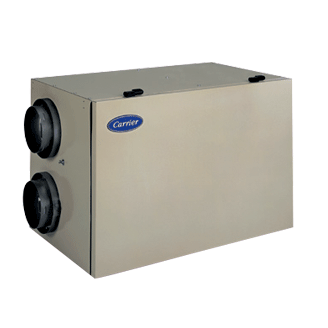
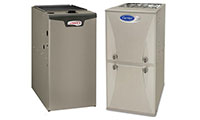
Carrier Performance Heat Recovery Ventilator – HRVXXLHB1150 Indoor Air Quality
-
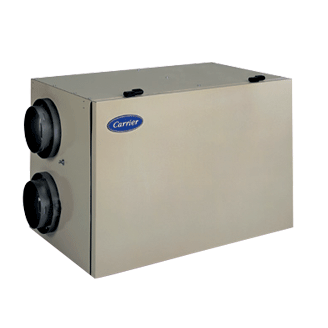
Carrier Performance Heat Recovery Ventilator – HRVXXLHB1250 Indoor Air Quality
-
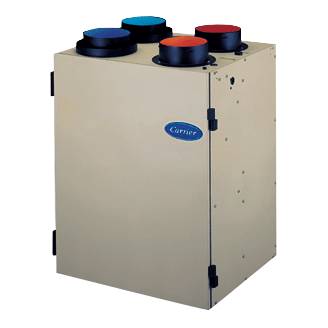
Carrier Performance Heat Recovery Ventilator – HRVXXLVU1330 Indoor Air Quality
-
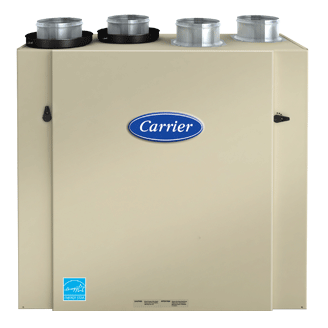
Carrier Performance Heat Recovery Ventilator – HRVXXSVU1157 Indoor Air Quality
Performance Heat Recovery Ventilators for Controlled Fresh Air
Performance heat recovery ventilators exchange stale indoor air with outdoor air while recovering sensible heat between separate air streams. They suit homes that need controlled ventilation with less heat loss than a comparable exhaust-only arrangement.
An HRV does not actively transfer moisture in the same way as an ERV. In Toronto winters, the choice should account for indoor humidity as well as heat recovery, because ventilation can also dry the home.
Match the ventilation system to the building
Compare the air requirement, moisture conditions and available installation space. These factors determine a more useful shortlist than choosing the highest maximum airflow.
Ventilation demand
Size for the home's calculated airflow requirement and occupancy. Excess ventilation can increase heating demand and dryness without solving a poorly distributed air supply.
Humidity conditions
An HRV may help remove indoor moisture when outdoor air is drier. It is not a substitute for a dehumidifier during humid outdoor conditions.
Cabinet arrangement
Horizontal and vertical configurations have different service and duct-connection needs. Confirm the full unit and core-removal space before selecting a replacement.
Compare ratings at useful operating conditions
The HRVXXLHB, HRVXXSVU and other listed models differ in capacity and configuration. Use exact-model performance data at the intended airflow rather than transferring one unit's maximum recovery figure across the range.
Recovery efficiency does not mean the unit provides free heating or eliminates the furnace load. Fans use electricity, and frost management affects cold-weather operation. Review the selected model's controls and operating guidance for the installation.
Balance the installed airflows
Plan outdoor intake and exhaust locations, insulated ducts, condensate drainage and access for filters and the heat-exchange core. A restrictive or poorly routed duct system can prevent the unit from delivering its intended airflow.
For a Toronto or GTA replacement, measure and balance supply and exhaust after installation even when existing ducts are retained. Include control integration, duct repairs and drain work in the quote. An unbalanced installation can change building pressure and fail to deliver the ventilation expected in occupied rooms.
Compare the entire installation proposal
Bring the old model details and information about condensation, dryness or stale rooms. Those observations help identify whether replacement alone will address the problem.
Heat recovery ventilator project checklist
- Calculate ventilation needs and review occupancy.
- Assess winter humidity and condensation patterns.
- Verify exact-model airflow and recovery data.
- Measure cabinet and maintenance clearances.
- Review ducts, outdoor terminations and drainage.
- Include controls and measured airflow balancing.
Choose the HRV around the building's ventilation and moisture needs, then commission it as a balanced system. Compare model-specific installation scopes before selecting a replacement.
FREE In-Home Estimate