


Weatherexpert
Showing all 4 results
-
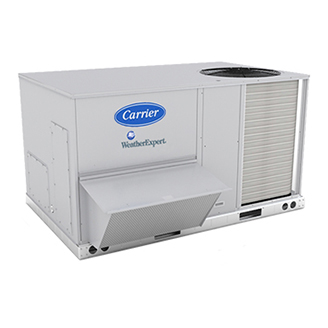
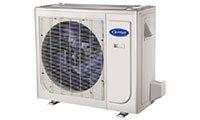
Carrier Weatherexpert – 48LC Commercial Rooftop Units
-
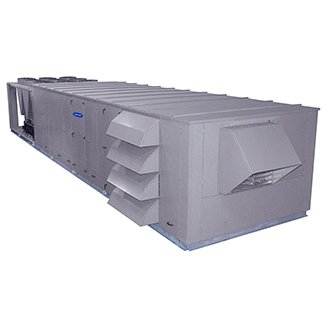
Carrier Weatherexpert – 48N Commercial Rooftop Units
-
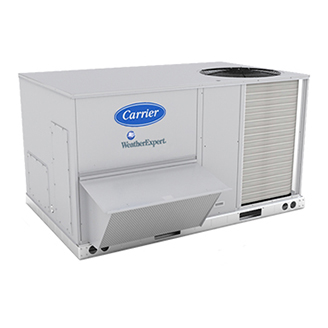
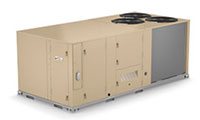
Carrier Weatherexpert – 50LC Commercial Rooftop Units
-
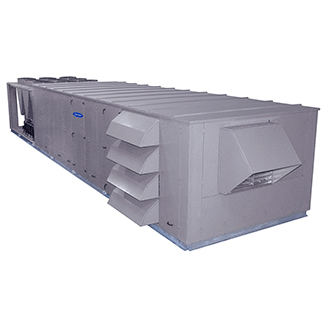
Carrier Weatherexpert – 50N Commercial Rooftop Units
WeatherExpert Commercial Rooftop Units
WeatherExpert commercial rooftop units are ultra-high-efficiency packaged HVAC systems that combine cooling, heating, ventilation, humidity management, and air distribution in one roof-mounted cabinet. The category is designed for commercial buildings that need stronger part-load efficiency, advanced capacity control, and greater outdoor-air capability than conventional rooftop equipment.
Available configurations can support gas heating with electric cooling, electric cooling with optional electric heat, single-zone applications, variable-air-volume operation, and high-outdoor-air projects. The right system depends on building load, operating hours, ventilation demand, humidity requirements, Toronto winter conditions, duct performance, utilities, controls, and rooftop compatibility.
When a WeatherExpert Rooftop Unit Is the Right Choice
WeatherExpert equipment is most valuable when the building can use its advanced efficiency, staging, ventilation, and control capabilities. These factors help determine whether the category offers a practical return over a standard commercial rooftop unit.
Long Commercial Operating Hours
Buildings that operate for extended daily schedules have more opportunity to benefit from improved part-load efficiency. A lightly used property may not recover the higher equipment investment as quickly.
Changing Occupancy and Internal Loads
Retail traffic, meeting-room use, lighting, equipment, and solar gain can change throughout the day. Multi-stage or variable operation can match these changes more closely than a basic full-capacity system.
High Outdoor-Air Requirements
Selected configurations can condition substantial amounts of outdoor air for ventilation or make-up air. The system must be chosen specifically for this duty because a conventional rooftop unit may be overloaded by the same airflow.
Humidity-Sensitive Applications
Dehumidification and reheat options can help buildings that require moisture control while maintaining a stable indoor temperature. Oversizing or incorrect control setup can prevent these features from working effectively.
Energy-Focused Replacement
The category can replace aging packaged equipment while improving operating efficiency and control. Curb, duct, electrical, gas, control, and structural compatibility must be assessed before the upgrade is approved.
Advanced Commercial Controls
Integrated controls can support staging, ventilation, diagnostics, scheduling, and building-system communication. These capabilities add limited value when the property lacks proper commissioning or ongoing control support.
WeatherExpert System Configurations
The equipment configuration determines the available heating source, ventilation capability, control strategy, and installation requirements. System selection should begin with the building’s actual operating needs rather than choosing a model solely by cooling tonnage.
WeatherExpert vs WeatherMaster Rooftop Units
Both categories can provide high-efficiency packaged commercial comfort, but WeatherExpert is intended for projects that need greater part-load performance, advanced control, or specialized outdoor-air capability. WeatherMaster may be more practical when the building needs high efficiency without the same level of operational complexity.
WeatherExpert vs Standard Rooftop Units
A standard rooftop unit may be sufficient for a lightly used property with stable loads and ordinary ventilation. WeatherExpert becomes more compelling where operating hours, outdoor-air demand, energy consumption, or comfort requirements create measurable performance consequences.
WeatherExpert Model Families
The category includes different model families and configurations for varying capacities, heating methods, airflow strategies, and commercial applications. Model selection should account for both nominal performance and the specific options required by the building.
48-Series Gas and Electric Models
Gas-heating and electric-cooling models can suit properties with established natural gas service and significant Toronto winter demand. The gas input, temperature rise, airflow, utility pressure, and venting arrangement must be confirmed independently from cooling tonnage.
50-Series Electric Models
Electric cooling models can support cooling-only applications or optional electric heating. These configurations may simplify projects without gas service, but large electric heat loads can require substantial service upgrades.
LC Ultra-High-Efficiency Models
LC configurations are designed for high full-load and part-load cooling performance using multiple cooling stages and coordinated fan operation. The category provides the greatest value where long commercial schedules create significant annual cooling use.
N-Series Commercial Models
N-series equipment supports larger commercial applications, replacement projects, and more advanced controls. Building load, zoning, airflow, rooftop structure, utilities, and service access become increasingly important as capacity rises.
High-Outdoor-Air Configurations
High-outdoor-air models are optimized for applications where ventilation or make-up air represents a major portion of total airflow. These systems should not be selected as ordinary comfort units because their coil, heat, humidity, and control requirements differ from standard recirculating applications.
Selecting the Right Capacity
WeatherExpert system selection requires separate heating, cooling, ventilation, and moisture-load calculations. Existing tonnage and floor area can provide context, but neither confirms the capacity required by the current building use.
Cooling demand is affected by glazing, roof exposure, lighting, people, equipment, ventilation, solar gain, and operating schedules. Heating demand depends on envelope losses, outdoor-air volume, door openings, ceiling height, wind exposure, and Toronto winter temperatures.
An undersized unit may run continuously without maintaining temperature. An oversized unit can short cycle, reduce dehumidification, create temperature swings, and prevent advanced staging from operating as intended.
Advanced Efficiency Still Requires Correct Sizing
Ultra-high-efficiency components cannot correct a rooftop unit that is substantially larger than the building load. The replacement capacity should be recalculated whenever the property’s use, occupancy, layout, ventilation, or envelope has changed.
An Oversized Unit Never Reaches Efficient Low-Stage Operation
When the selected capacity greatly exceeds the building load, the system may satisfy the thermostat before stable operation is established. The result can be frequent cycling, inconsistent humidity control, unnecessary wear, and limited benefit from the equipment’s advanced efficiency features.
Part-Load Efficiency and Capacity Control
Commercial rooftop units spend much of the year operating below peak load. WeatherExpert configurations use multiple cooling stages or variable-capacity operation to match output more closely to changing demand.
Lower-stage operation can extend cycles, reduce starts and stops, and provide more consistent air circulation. The benefit is strongest in retail stores, offices, schools, clinics, and other properties with changing occupancy or internal loads.
Capacity control must be coordinated with indoor fan airflow, economizer operation, thermostat logic, and zone requirements. Incorrect sequencing can force unnecessary full-capacity operation and reduce expected energy savings.
Variable-Speed Operation
Selected models can vary cooling output across a wide operating range rather than relying only on fixed stages. This can improve load matching during mild weather and reduce the comfort limitations of repeated full-capacity cycling.
Variable-speed operation is most valuable where demand changes frequently throughout the day. A property with stable loads and limited annual operating hours may not receive the same financial benefit.
The compressor, fan, sensors, and controls must operate as a coordinated system. Incorrect minimum settings or airflow can cause comfort problems even when the variable components are functioning normally.
High Outdoor Air and Make-Up Air
WeatherExpert high-outdoor-air configurations can serve projects where ventilation or exhaust replacement represents a major part of the HVAC load. These applications require a different selection process from ordinary recirculating rooftop systems.
Schools, hotels, offices, restaurants, gymnasiums, and other occupied facilities may require substantial outdoor air. High-exhaust properties may also need conditioned make-up air to prevent severe negative building pressure.
The selected unit must handle outdoor-air temperature and moisture extremes while maintaining stable discharge-air conditions. Using a conventional rooftop unit for this duty can cause coil freezing, high humidity, inadequate heating, or compressor reliability problems.
Standalone vs Paired High-Outdoor-Air Systems
A high-outdoor-air unit can operate as a standalone system in selected applications or work with separate comfort equipment. The better arrangement depends on ventilation percentage, zoning, humidity requirements, and the building’s heating and cooling strategy.
Humidity Control and Reheat
Ventilation introduces moisture during warm and humid Toronto weather. A unit may satisfy the indoor temperature while leaving humidity too high when the sensible cooling load is low but the outdoor-air moisture load remains significant.
Dehumidification and reheat options can remove moisture while preventing the occupied space from becoming excessively cold. This is particularly relevant to schools, fitness facilities, restaurants, hotels, healthcare spaces, and high-outdoor-air applications.
Reheat should be selected and controlled for the actual moisture load. Adding the option without proper sensors, sequences, and commissioning can increase energy use without achieving stable humidity.
Single-Zone vs Variable-Air-Volume Operation
WeatherExpert units can support different airflow strategies depending on the model and project. The correct approach depends on how many zones are served and whether their loads change independently.
Toronto Winter Performance
WeatherExpert units installed in Toronto and the GTA must be selected for local winter temperatures, outdoor-air loads, wind exposure, snow accumulation, door activity, and the building envelope.
Gas-heating capacity should be calculated separately from cooling capacity. A model selected for summer tonnage may provide insufficient winter heat where ventilation, loading doors, high ceilings, or poor insulation create substantial heat loss.
High-outdoor-air applications require particular attention because incoming winter air can dominate the heating load. Heating modulation, discharge-air control, freeze protection, and minimum airflow must be resolved before installation.
Economizer Selection
An economizer can reduce compressor use by introducing outdoor air when exterior conditions are suitable for cooling. WeatherExpert efficiency can be improved further when the economizer is selected, controlled, and maintained correctly.
The benefit is greatest in properties with internal cooling demand during mild weather. Offices, retail stores, schools, data rooms, and equipment-heavy facilities may require cooling even when outdoor temperatures are low.
A failed sensor or stuck damper can introduce excessive cold, hot, or humid air. Damper operation, relief air, minimum ventilation, and high-limit controls should be tested during commissioning and maintenance.
Ductwork and Fan Performance
The duct system must be able to distribute the required airflow within the unit’s available fan pressure. Supply ducts, returns, filters, diffusers, terminals, dampers, and coils all contribute resistance.
High external static pressure can reduce airflow, increase fan energy, limit cooling capacity, freeze coils, and overheat gas-heating sections. Excessive airflow can create sound, drafts, and inadequate moisture removal.
Variable and staged airflow require accurate setup across all operating modes. Confirming full-capacity airflow alone is insufficient because the unit must also remain stable at lower stages.
Controls and System Integration
WeatherExpert equipment can support integrated unit controls, advanced staging, economizer management, ventilation sequences, diagnostics, and commercial building communication. The controls should be selected around the property’s operational requirements.
A standalone retail building may need scheduling, staging, ventilation, and alarms. A school, hotel, or multi-zone office may require more extensive communication with terminal units or a central building-management system.
Advanced controls require trained setup and ongoing support. Incorrect sensor placement, programming, setpoints, or network integration can reduce efficiency and cause persistent comfort complaints.
Roof Curb and Replacement Compatibility
WeatherExpert replacement compatibility depends on cabinet dimensions, curb size, supply and return openings, airflow direction, utility locations, unit weight, service clearance, and roof condition.
Selected models may share established rooftop footprints and accessories, which can simplify upgrades. Field measurements remain necessary because previous adapters, custom transitions, and roof modifications can change the actual installation.
A curb adapter may reduce roof reconstruction when footprints differ, but it can add height, weight, airflow resistance, and installation cost. The existing curb should also be inspected for corrosion, insulation damage, leakage, and structural deterioration.
Avoid Assuming an Ultra-High-Efficiency Unit Is a Direct Fit
Capacity, cabinet dimensions, duct openings, electrical requirements, gas input, controls, and equipment weight can differ from the existing rooftop unit. These conditions should be verified before the crane and shutdown are scheduled.
The New Unit Requires Unplanned Roof and Utility Changes
When the replacement is ordered from tonnage alone, installers may discover that the curb, duct openings, electrical service, gas piping, or control wiring is incompatible. The business can remain without heating, cooling, or ventilation while adapters and utility upgrades are arranged.
Electrical and Gas Requirements
Voltage, phase, circuit capacity, disconnect size, control power, gas pressure, gas pipe capacity, meter load, and available heating input must be confirmed before equipment selection.
Advanced controls, variable-speed components, electric heat, reheat, and ventilation accessories can change the electrical requirements. A replacement with similar nominal tonnage may still require larger conductors or service modifications.
Gas-heating configurations require proper combustion setup and temperature-rise verification. Insufficient gas pressure or airflow can prevent the unit from delivering its rated heating performance safely.
WeatherExpert Rooftop Unit Installation
Installation requires coordination among mechanical, electrical, gas, roofing, structural, controls, crane, ventilation, drainage, and building-operation requirements. The project scope should be resolved before the existing unit is disconnected.
The roof must support the operating weight of the unit, curb, accessories, snow, and service personnel. Safe access and clearances are required for filters, fans, burners, compressors, coils, controls, sensors, and electrical components.
Commissioning should verify airflow at every operating stage, static pressure, cooling performance, temperature rise, gas pressure, combustion, electrical load, economizer operation, outdoor-air volume, reheat, humidity control, drainage, sensors, alarms, and safety sequences.
WeatherExpert Rooftop Unit Replacement
Replacement should address equipment condition and the causes of current performance problems. Age, compressor wear, heat-exchanger damage, corrosion, obsolete controls, refrigerant considerations, repeated repairs, and rising energy use can all influence the decision.
A direct replacement may reduce construction where the existing capacity, curb, ducts, utilities, zoning, and ventilation strategy remain appropriate. It can also reproduce old problems when the original system was oversized or poorly configured.
Crane access, parking restrictions, roof protection, tenant schedules, temporary conditioning, permits, equipment lead time, weather, and business downtime should be planned before removal.
Standard Replacement vs WeatherExpert Upgrade
The decision should compare total installed cost with expected energy, ventilation, humidity, comfort, and operational benefits. WeatherExpert is most appropriate when its advanced capabilities solve a defined building requirement.
What Affects WeatherExpert Rooftop Unit Cost?
The installed cost depends on capacity, heating configuration, efficiency level, compressor control, fan system, outdoor-air percentage, reheat, humidity options, electrical requirements, gas work, controls, curb compatibility, crane access, roofing, duct transitions, permits, and commissioning.
A compatible replacement on a suitable existing curb generally requires less work than a project involving structural reinforcement, a curb adapter, extensive duct modifications, utility upgrades, variable-air-volume conversion, or building-management integration.
Commercial quotations should identify equipment, accessories, crane service, removal, disposal, curb work, roofing, gas connections, electrical work, controls, duct transitions, ventilation setup, balancing, start-up, and commissioning. Equipment price alone does not represent total project cost.
Repair or Replace a WeatherExpert Unit?
Repair may be reasonable when the cabinet, coils, compressors, heat exchanger, fans, and controls remain serviceable and the failed component is available. A single sensor, actuator, motor, or control failure does not automatically require replacement.
Replacement becomes more practical when the system has repeated compressor failures, extensive corrosion, heat-exchanger damage, obsolete controls, declining efficiency, or costly business interruptions.
Major repairs should be evaluated against the condition of the complete unit. Repairing one component does not renew the remaining equipment and will not correct improper sizing, ventilation, zoning, or duct restrictions.
Maintenance and Long-Term Efficiency
WeatherExpert units require planned maintenance to preserve staging, airflow, cooling efficiency, heating safety, economizer operation, ventilation, humidity control, and equipment life. Service frequency should reflect operating hours, outdoor-air volume, dust, grease, and local roof conditions.
Maintenance should include filters, fans, coils, drains, burners, heat exchangers, refrigeration circuits, electrical connections, dampers, actuators, sensors, compressors, reheat components, and control sequences.
Neglected filters, sensors, coils, or dampers can eliminate the operating advantage of ultra-high-efficiency equipment. Maintenance capability should therefore be considered during system selection.
WeatherExpert Selection Checklist
Use this checklist before choosing a model or approving a commercial rooftop replacement. Each item directly affects performance, compatibility, installation cost, and long-term operating value.
Confirm Before Choosing a WeatherExpert Rooftop Unit
- Complete separate heating, cooling, ventilation, and moisture-load calculations.
- Confirm whether annual operating hours justify an ultra-high-efficiency rooftop unit.
- Select gas heat, electric heat, cooling-only, or specialized outdoor-air operation appropriately.
- Determine whether the application requires single-zone or variable-air-volume control.
- Verify the required cooling stages or variable-capacity operating range.
- Calculate the minimum and maximum outdoor-air requirements.
- Determine whether a high-outdoor-air configuration or dedicated outdoor-air arrangement is required.
- Assess summer humidity loads and the need for dehumidification or reheat.
- Verify Toronto winter heating capacity at the required outdoor-air percentage.
- Inspect supply and return ducts for restrictions, leakage, and balancing requirements.
- Measure external static pressure and verify airflow at every operating stage.
- Measure the existing curb, cabinet footprint, and supply and return openings.
- Determine whether a curb adapter, structural work, or roof modification is required.
- Verify equipment weight, drainage, snow clearance, and safe service access.
- Confirm electrical voltage, phase, circuit capacity, and accessory loads.
- Verify gas pressure, pipe capacity, meter load, regulator, and shut-off location.
- Review thermostat, staging, economizer, ventilation, humidity, alarm, and automation compatibility.
- Plan crane access, permits, parking control, roof protection, and business downtime.
- Include removal, disposal, utility work, start-up, testing, balancing, and commissioning.
- Establish a maintenance plan capable of supporting advanced controls and components.
Choose WeatherExpert for the Right Commercial Application
WeatherExpert commercial rooftop units are best suited to buildings that can benefit from ultra-high efficiency, advanced capacity control, high-outdoor-air capability, humidity management, or variable-air-volume operation. The category offers less value when a property has short operating hours, stable loads, and only basic ventilation requirements.
For Toronto and GTA projects, system selection should account for peak summer cooling, winter heating, outdoor-air load, humidity, duct airflow, roof exposure, snow clearance, utility capacity, curb compatibility, controls, crane logistics, and business downtime. Accurate design and comprehensive commissioning determine whether the equipment delivers its intended efficiency, comfort, and reliability.
FREE In-Home Estimate