

Weathermarker
Showing all 8 results
-
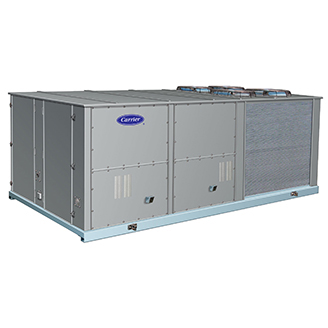
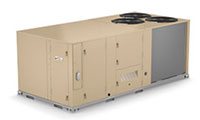
Carrier Weathermaker – 48A Commercial Rooftop Units
-
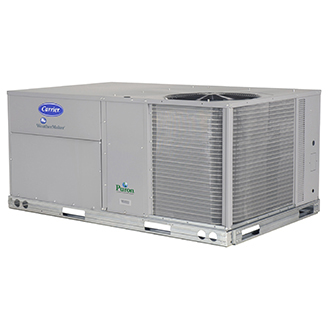
Carrier Weathermaker – 48KC Commercial Rooftop Units
-
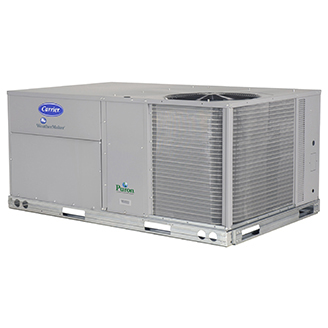
Carrier Weathermaker – 48TC Commercial Rooftop Units
-
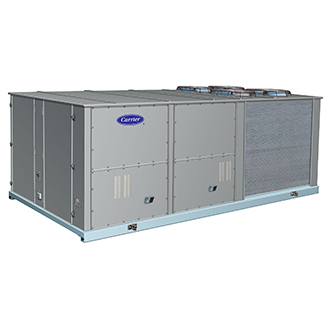
Carrier Weathermaker – 50A Commercial Rooftop Units
-
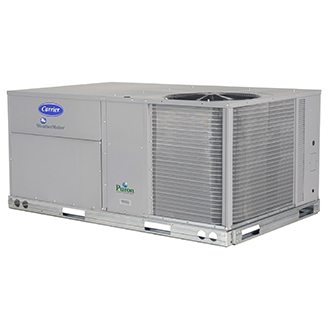
Carrier Weathermaker – 50KC Commercial Rooftop Units
-
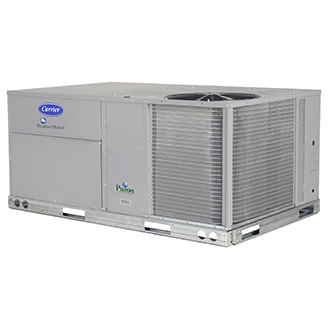
Carrier Weathermaker – 50KCQ Commercial Rooftop Units
-
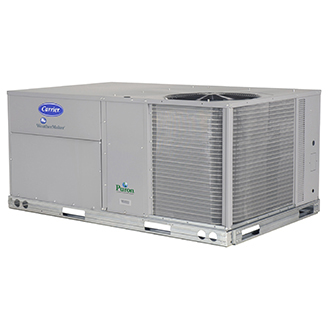
Carrier Weathermaker – 50TC Commercial Rooftop Units
-
Carrier Weathermaker – 50TCQ Commercial Rooftop Units
WeatherMaker Commercial Rooftop Units
WeatherMaker commercial rooftop units are packaged HVAC systems that combine cooling, air circulation, ventilation, and selected heating configurations in one roof-mounted cabinet. The category is designed for light-commercial properties that need practical installation, dependable operation, service-friendly components, and replacement flexibility across a range of building sizes.
Available configurations can support gas heating with electric cooling, electric cooling-only applications, and packaged heat-pump operation. Selecting the right unit requires more than matching the existing tonnage. Building load, Toronto winter conditions, ventilation, airflow, electrical service, gas capacity, roof curbs, controls, and operating schedules must all be considered.
When WeatherMaker Is the Right Rooftop Unit Category
WeatherMaker equipment is generally suited to commercial projects that prioritize reliable packaged performance and manageable installation complexity. These decision factors help determine whether the category matches the building and its long-term operating needs.
Light-Commercial Applications
The category can serve retail units, offices, clinics, restaurants, workshops, and similar low-rise properties. Buildings with extensive zoning or specialized ventilation may require a more configurable system.
Existing Rooftop Replacement
Selected units are designed to support practical replacement on established rooftop installations. Curb dimensions, duct openings, utilities, weight, and airflow direction must still be verified before ordering.
Packaged Heating and Cooling
Major HVAC components are contained in one outdoor cabinet, preserving indoor mechanical space. The trade-off is that service, installation, and maintenance require safe roof access.
Straightforward Commercial Control
WeatherMaker systems can support common commercial thermostat, staging, ventilation, and economizer requirements. Buildings needing extensive modulation or automation should compare more advanced alternatives.
Flexible Airflow Installation
Convertible airflow options can support vertical or horizontal duct arrangements on suitable models. The selected configuration must align with the actual roof opening and duct system.
Balanced Initial and Operating Cost
The category can provide a practical balance of equipment cost, efficiency, installation access, and serviceability. Paying for unnecessary capacity or accessories can reduce that value.
WeatherMaker Rooftop Unit Configurations
The correct heating and cooling configuration depends on available utilities, winter demand, electrical capacity, operating cost, and building use. A configuration that works well for one commercial property may be unsuitable for another with the same floor area.
WeatherMaker Capacity and Model Selection
WeatherMaker rooftop units are available across light-commercial capacity ranges, allowing the selected equipment to match different building sizes and loads. Nominal tonnage is only a starting point because actual performance also depends on airflow, outdoor temperature, ventilation, and the chosen configuration.
Smaller units may suit compact retail, office, or service spaces with moderate occupancy. Higher-capacity models can support larger commercial zones, but increasing tonnage without recalculating the load can create short cycling, poor humidity control, and uneven temperatures.
The replacement unit should be selected from a current heating and cooling load calculation. Existing tonnage may no longer be appropriate after changes to occupancy, insulation, windows, lighting, equipment, ventilation, or operating hours.
Factors That Determine the Right WeatherMaker Unit
System selection should account for the building as a complete operating environment. Each factor below can change the required capacity, configuration, installation cost, or expected energy performance.
Heating and Cooling Loads
Capacity should be calculated from the building envelope, occupancy, lighting, equipment, ventilation, and schedules. Selecting by square footage alone can produce an oversized or undersized unit.
Annual Operating Hours
A property operating twelve hours per day places different efficiency and durability demands on equipment than a space used intermittently. Longer schedules can strengthen the case for staged performance.
Outdoor-Air Demand
Ventilation air adds heating and cooling load. Failing to include it can leave a correctly operating unit unable to maintain indoor temperature during peak weather.
Duct Static Pressure
The supply and return system must remain within the unit’s available fan performance. Restrictive ducts can reduce airflow, capacity, efficiency, and equipment life.
Utility Compatibility
Voltage, phase, breaker capacity, gas pressure, gas pipe size, and control power must match the selected model. Similar tonnage does not guarantee similar utility requirements.
Roof and Curb Conditions
The roof must support the equipment and provide suitable drainage, weather protection, snow clearance, and service access. Existing curbs should be measured and inspected before reuse.
WeatherMaker vs Higher-Performance Rooftop Units
WeatherMaker units generally focus on practical light-commercial performance and replacement value. Higher-performance categories may provide greater staging, modulation, diagnostics, and building-management integration, but those features must deliver a real operational benefit to justify their additional cost.
Gas Heat vs Heat-Pump WeatherMaker Units
The heating configuration has a direct effect on winter performance, utility use, electrical requirements, and installation scope. Toronto and GTA properties should compare available capacity at cold outdoor temperatures rather than relying only on nominal heating ratings.
Commercial Applications for WeatherMaker Units
WeatherMaker units can serve a range of light-commercial properties, but building use changes the required capacity, ventilation, filtration, and control strategy. A system suitable for an office may not perform correctly in a restaurant or workshop of the same size.
Retail Stores
Retail spaces commonly need packaged heating and cooling with outdoor-air capability and predictable scheduling. Entrance traffic, display lighting, glazing, and changing customer volume should be included in the system load.
Professional Offices
Open offices and small professional buildings can be suitable where rooms share similar occupancy and operating schedules. Enclosed meeting rooms, perimeter offices, and equipment rooms may require separate zoning or supplemental conditioning.
Clinics and Service Businesses
Clinics, salons, and personal-service spaces may require more ventilation or exhaust than ordinary offices. Selecting equipment without including these loads can result in poor comfort and building-pressure problems.
Restaurants
A rooftop unit may serve dining and support areas, but kitchen exhaust and make-up air should be designed separately. Increasing rooftop tonnage does not correct an unbalanced commercial kitchen ventilation system.
Workshops and Light Industrial Spaces
Workshops may experience equipment heat, dust, exhaust, high ceilings, and frequent door openings. These conditions can increase both heating and cooling requirements and may require enhanced filtration or ventilation.
WeatherMaker Rooftop Unit Sizing
Correct rooftop unit sizing begins with separate heating and cooling load calculations. The selected capacity must account for the building envelope, solar gain, occupancy, lighting, equipment, ventilation, exhaust, door openings, and hours of operation.
An undersized system may run continuously during peak weather without maintaining the setpoint. An oversized system can reach the thermostat temperature too quickly, leaving remote areas uncomfortable and increasing compressor and burner cycling.
Staged equipment also requires accurate sizing. When a unit is substantially oversized, even its lower operating stage may exceed the actual building load during moderate conditions.
Avoid Replacing Equipment by Tonnage Alone
A direct tonnage match may appear to simplify replacement, but it can reproduce an old sizing mistake or ignore changes to the occupied space. The current load and airflow should be verified before the replacement model is ordered.
The Existing Unit Was Oversized for the Building
Installing another unit with the same capacity can continue short cycling, temperature swings, excessive sound, and weak summer moisture control. New equipment may be operating correctly while the building remains uncomfortable because the original sizing problem was never corrected.
EcoBlue Fan Technology and Airflow Performance
Selected WeatherMaker rooftop units use direct-drive fan technology designed to reduce the maintenance and efficiency limitations associated with traditional belt-driven arrangements. The practical benefit depends on correct fan setup, duct resistance, airflow measurement, and commissioning.
A direct-drive fan can eliminate routine belt adjustment and replacement, but it does not remove the need to inspect filters, wheels, motors, electrical components, and duct static pressure.
Fan settings should be matched to the required heating, cooling, and ventilation airflow. Excessive airflow can create noise and poor moisture removal, while insufficient airflow can reduce capacity and cause equipment safety or reliability problems.
Ventilation and Economizer Selection
Outdoor-air and economizer options can support commercial ventilation and reduce mechanical cooling under suitable conditions. The selected arrangement should reflect occupancy, exhaust, climate, controls, and available unit capacity.
An economizer can introduce cool outdoor air when exterior conditions are appropriate. It is most useful in buildings that require cooling during mild weather because of internal equipment, lighting, or occupancy loads.
Dampers, actuators, sensors, relief air, and minimum ventilation settings must be commissioned. A failed economizer can remain open during unsuitable conditions, increasing energy use and making the building difficult to heat or cool.
Building Pressure and Exhaust Requirements
Commercial exhaust affects rooftop unit performance and indoor comfort. Restaurants, salons, clinics, washrooms, and workshops may remove significant amounts of air from the building.
When exhaust exceeds the available outdoor-air supply, the building can operate under negative pressure. This may cause drafts, difficult doors, uncontrolled infiltration, odour movement, and problems with combustion equipment.
A rooftop unit should not automatically be used as the sole source of replacement air for high-exhaust applications. Dedicated make-up air may be required where the outdoor-air load exceeds the rooftop system’s practical capability.
Toronto Winter Performance
WeatherMaker equipment installed in Toronto and the GTA must be selected for winter heating demand, outdoor-air load, roof exposure, snow conditions, and building heat loss. Cooling tonnage alone does not confirm suitable heating capacity.
Gas-fired models require adequate burner output and airflow for the space. Buildings with frequent door openings, loading activity, high ceilings, or substantial ventilation can require more heat than similarly sized offices.
Heat-pump configurations require confirmation of available capacity at low outdoor temperatures. Supplemental heat, electrical capacity, defrost operation, and control sequences should be resolved before installation.
Ductwork and External Static Pressure
The existing duct system must support the airflow required by the selected unit. Supply ducts, return ducts, filters, diffusers, dampers, coils, and zoning components all contribute to external static pressure.
High resistance can reduce airflow, increase fan energy, lower capacity, freeze cooling coils, and overheat gas heating sections. Low resistance combined with incorrect fan settings can produce excessive airflow, noise, and drafts.
Replacement planning should include duct inspection, pressure measurement, and airflow verification. A new rooftop unit cannot correct an undersized or poorly balanced distribution system by itself.
Roof Curb Compatibility
WeatherMaker replacement compatibility depends on cabinet dimensions, curb size, supply and return openings, airflow orientation, utility locations, equipment weight, and service clearance. Similar model capacity does not guarantee a direct fit.
Selected smaller-capacity models can support established curb footprints, which may simplify replacement where the existing roof installation is compatible. Every project still requires field measurement because previous adapters, roof modifications, or non-standard duct transitions may be present.
A curb adapter can connect equipment with a different footprint, but it can add height, weight, airflow resistance, and cost. The roof curb should also be checked for corrosion, insulation, flashing, leakage, and structural condition.
Avoid Replacement-Day Curb Problems
Curb measurements, utility locations, duct openings, equipment dimensions, and adapter requirements should be confirmed before crane work is scheduled. This prevents avoidable downtime and unexpected fabrication.
The New Unit Does Not Align With the Roof Opening
If the supply and return openings do not match, the unit cannot simply be placed and connected. Crane time may increase, the roof opening may remain exposed, and the commercial space can be left without heating, cooling, or ventilation while a transition is prepared.
Electrical, Gas, and Control Compatibility
WeatherMaker units are available with different electrical and heating configurations. Voltage, phase, circuit size, disconnect requirements, control voltage, gas pressure, gas pipe capacity, and meter load must be confirmed before equipment selection.
A new rooftop unit may require different electrical protection or gas input than the equipment it replaces. Matching tonnage does not mean that the existing utility connections are adequate.
Thermostat staging, economizer control, smoke shutdown, occupancy scheduling, alarms, and building-management connections should also be reviewed. Advanced equipment features provide limited value if the existing control system cannot operate them correctly.
WeatherMaker Rooftop Unit Installation
Installation requires coordination among equipment selection, roofing, structural support, crane access, electrical service, gas piping, ductwork, ventilation, controls, drainage, permits, and business operations.
The roof must support the equipment, curb, accessories, snow load, and service personnel. Suitable clearances are required for airflow, filter access, burner service, coil cleaning, electrical inspection, and future component replacement.
Commissioning should verify airflow, temperature rise, cooling operation, refrigerant performance, gas pressure, combustion, electrical load, fan settings, staging, ventilation, economizer operation, thermostat response, drainage, and safety controls.
WeatherMaker Rooftop Unit Replacement
Replacement should address the condition of the existing equipment and the reason the building requires a new system. Age, corrosion, compressor failure, heat-exchanger condition, obsolete controls, refrigerant issues, and repeated repairs can all influence the decision.
A direct replacement can reduce project complexity when the current capacity, curb, utilities, ductwork, zoning, and controls remain appropriate. It can also preserve existing performance problems if these elements are not reassessed.
Equipment availability, crane access, tenant schedules, temporary conditioning, parking restrictions, roof protection, permits, and weather should be considered before the old unit is removed.
Direct Replacement vs System Upgrade
A direct replacement emphasizes compatibility and reduced construction, while an upgrade can improve staging, ventilation, controls, or energy performance. The best approach depends on the building’s current problems and long-term ownership goals.
What Affects WeatherMaker Rooftop Unit Cost?
The final project cost depends on model capacity, heating configuration, efficiency, airflow options, controls, economizer accessories, voltage, curb compatibility, crane requirements, roof work, duct transitions, utility changes, permits, removal, and commissioning.
A compatible unit installed on a suitable existing curb will generally involve less work than a replacement requiring a curb adapter, structural reinforcement, gas upgrade, electrical modification, or extensive duct reconstruction.
Commercial quotations should identify equipment, crane work, removal, disposal, roofing, curb or adapter, gas connections, electrical work, duct transitions, controls, ventilation setup, permits, start-up, testing, and balancing. Comparing equipment prices without comparing scope can produce a misleading cost difference.
Repair or Replace a WeatherMaker Unit?
Repair may be reasonable when the cabinet, heat exchanger, compressor, coils, and major controls remain serviceable and the failed component is readily available. A single motor, sensor, or control failure does not automatically require replacement.
Replacement becomes more practical when the unit has repeated failures, major corrosion, heat-exchanger damage, compressor problems, unavailable components, poor efficiency, or costly business interruptions.
A repair will not correct improper sizing, insufficient ventilation, restrictive ductwork, poor zoning, or an incompatible thermostat strategy. Existing comfort problems should be diagnosed before a repair or replacement decision is made.
Maintenance and Long-Term Performance
WeatherMaker rooftop units require scheduled maintenance to protect airflow, heating safety, cooling capacity, ventilation, efficiency, and equipment life. Service frequency should reflect operating hours, outdoor-air intake, dust, grease, exhaust, and roof conditions.
Maintenance should include filters, fan components, coils, drains, burners, heat exchangers, gas pressure, refrigerant circuits, electrical connections, economizer dampers, sensors, thermostats, and control operation.
Direct-drive fan technology can reduce belt-related maintenance on selected models, but it does not make the equipment maintenance-free. Neglected filters, coils, sensors, or drains can still cause performance loss and expensive failures.
WeatherMaker Selection Checklist
Use this checklist before selecting a model or approving a replacement proposal. Each item can affect capacity, compatibility, energy use, installation cost, and long-term reliability.
Confirm Before Choosing a WeatherMaker Rooftop Unit
- Complete commercial heating and cooling load calculations for the current building use.
- Confirm the required nominal capacity and usable output at design conditions.
- Select gas heat, electric heat, cooling-only, or heat-pump operation appropriately.
- Verify Toronto winter heating performance and supplemental heat requirements.
- Compare WeatherMaker with higher-performance rooftop alternatives.
- Calculate ventilation, exhaust, economizer, and building-pressure requirements.
- Inspect supply and return ducts for size, leakage, restrictions, and balancing.
- Confirm required airflow and external static pressure.
- Measure the roof curb, cabinet footprint, and duct openings.
- Determine whether a curb adapter or roof modification is required.
- Verify equipment weight, structural support, snow clearance, drainage, and service access.
- Confirm electrical voltage, phase, circuit capacity, and disconnect requirements.
- Verify gas pressure, pipe sizing, meter load, regulator, and shut-off location.
- Review thermostat, staging, economizer, smoke control, and automation compatibility.
- Plan crane access, permits, parking control, roof protection, and weather contingencies.
- Include removal, disposal, utilities, start-up, testing, balancing, and commissioning.
Choose WeatherMaker for the Right Commercial Application
WeatherMaker commercial rooftop units are best suited to light-commercial properties that need practical packaged heating and cooling, multiple configuration options, accessible maintenance, and replacement-focused installation flexibility. The category can serve both straightforward projects and selected staged applications without automatically requiring a premium rooftop platform.
For Toronto and GTA properties, system selection should account for summer cooling, winter heating, ventilation, airflow, roof exposure, snow clearance, electrical and gas capacity, curb compatibility, crane logistics, and business downtime. Accurate sizing and complete commissioning determine whether the selected unit delivers the expected comfort, efficiency, and reliability.
FREE In-Home Estimate