

Weathermaster
Showing all 5 results
-
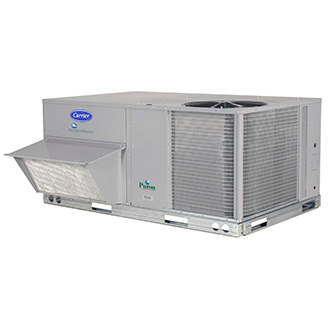
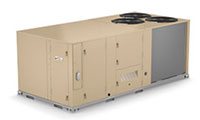
Carrier Weathermaster – 48HC Commercial Rooftop Units
-
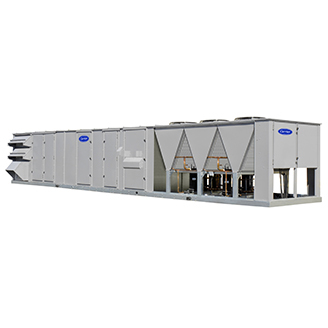
Carrier Weathermaster – 48P Commercial Rooftop Units
-
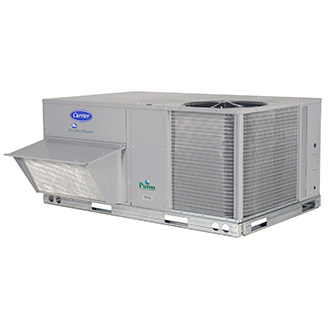
Carrier Weathermaster – 50HC Commercial Rooftop Units
-
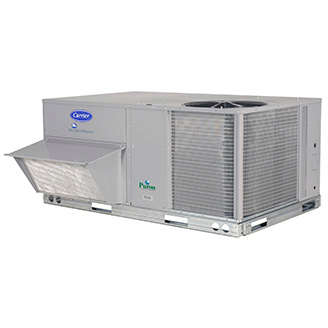
Carrier Weathermaster – 50HCQ Commercial Rooftop Units
-
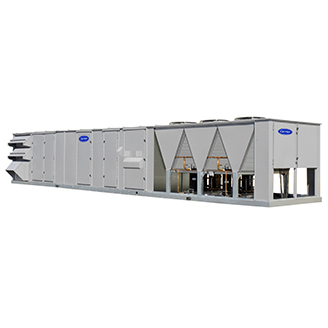
Carrier Weathermaster – 50P Commercial Rooftop Units
WeatherMaster Commercial Rooftop Units
WeatherMaster commercial rooftop units are high-efficiency packaged HVAC systems that combine heating, cooling, ventilation, and air distribution in one roof-mounted cabinet. The category includes gas-heating and electric-cooling units, electric-heating and cooling configurations, cooling-only models, and packaged heat pumps for light-commercial and larger commercial applications.
These systems are designed for properties that need stronger efficiency, broader capacity options, and more operating flexibility than a standard replacement rooftop unit. Selecting the right model requires an assessment of building load, heating source, operating hours, ventilation, airflow, electrical service, gas capacity, controls, roof structure, and curb compatibility.
When a WeatherMaster Rooftop Unit Is the Right Choice
WeatherMaster equipment is most appropriate when a commercial building can benefit from high-efficiency packaged operation and adaptable system configurations. The following factors help determine whether the additional capability provides meaningful value for the property.
Long Operating Hours
Retail, office, healthcare, hospitality, and institutional properties that operate for extended periods have more opportunity to benefit from improved efficiency. A lightly used building may not recover the additional equipment investment as quickly.
Changing Commercial Loads
Occupancy, lighting, equipment, solar exposure, and outdoor-air demand can change throughout the day. Staged or adaptable operation can reduce unnecessary full-capacity cycling when demand is below peak conditions.
Higher Comfort Expectations
Buildings where temperature stability affects tenants, employees, patients, or customers can benefit from better load matching. Accurate sizing and airflow remain essential because equipment features cannot correct an oversized system.
Rooftop Replacement Projects
The category can support replacement of existing packaged equipment while introducing improved performance. Cabinet dimensions, curb openings, utilities, weight, and controls must be verified before installation.
Electrification Planning
Electric cooling, electric heat, and packaged heat-pump options can support properties moving away from conventional gas heating. Electrical capacity and Toronto winter performance must be evaluated before conversion.
Ventilation and Economizer Needs
Available outdoor-air and economizer configurations can support commercial ventilation and cool-weather cooling. Incorrect damper or control selection can increase energy use instead of reducing it.
WeatherMaster Rooftop Unit Configurations
The correct configuration depends on available utilities, winter heating demand, cooling load, electrical capacity, operating cost, and sustainability goals. The heating source should be selected separately from nominal cooling tonnage.
WeatherMaster vs WeatherMaker Rooftop Units
Both categories provide packaged commercial heating and cooling, but WeatherMaster generally targets higher efficiency and broader application flexibility. WeatherMaker is more closely aligned with standard-efficiency replacement needs and straightforward commercial operation.
WeatherMaster vs Ultra-High-Efficiency Rooftop Units
WeatherMaster occupies the high-efficiency level between standard packaged equipment and ultra-high-efficiency rooftop systems. The more advanced alternative may offer greater modulation, humidity control, diagnostics, and high-outdoor-air capability, but these features are not necessary for every commercial building.
Choosing the Right WeatherMaster Capacity
WeatherMaster rooftop units are available across a broad range of commercial capacities. The correct model should be selected through separate heating and cooling load calculations rather than floor area, existing tonnage, or equipment availability alone.
Cooling demand is influenced by glazing, roof exposure, solar gain, occupancy, lighting, equipment, ventilation, and operating schedules. Heating demand depends on envelope losses, outdoor-air volume, door openings, ceiling height, and Toronto winter conditions.
An undersized unit may operate continuously without maintaining temperature during peak weather. An oversized unit can short cycle, create uneven temperatures, reduce moisture control, and prevent staged operation from delivering its intended benefit.
Do Not Automatically Match the Existing Tonnage
A like-for-like capacity replacement can be appropriate only when the building load and use have not materially changed. Tenant renovations, new equipment, altered occupancy, upgraded windows, additional exhaust, or longer operating hours can change the required capacity.
The New Unit Repeats the Old Sizing Problem
When an oversized rooftop unit is replaced with the same tonnage, the new equipment may continue short cycling and creating uneven temperatures. Higher rated efficiency cannot compensate for capacity that substantially exceeds the building’s actual load.
Staged Operation and Part-Load Performance
Commercial buildings rarely operate at peak heating or cooling load throughout the day. Staged WeatherMaster configurations can reduce output during moderate conditions and increase capacity as demand rises.
Longer lower-stage cycles can improve temperature stability, air circulation, and energy performance compared with immediate full-capacity operation. The value is greatest in buildings with changing occupancy, long schedules, or substantial internal heat gains.
Staging depends on compatible controls, sensors, thermostat configuration, fan setup, and commissioning. Incorrect control wiring or programming can cause the unit to operate at full capacity unnecessarily.
Commercial Applications for WeatherMaster Units
Building type affects heating and cooling loads, filtration, ventilation, pressure, zoning, and control requirements. WeatherMaster system selection should reflect the actual commercial use rather than applying one standard configuration to every property.
Retail Stores and Commercial Plazas
Retail properties can experience changing customer traffic, entrance loads, display lighting, and solar exposure. Staged operation may help manage these changes, while separate rooftop units can provide independent tenant scheduling.
Professional and Corporate Offices
Office buildings can benefit from improved efficiency during long weekday schedules. Meeting rooms, perimeter offices, server spaces, and different solar exposures may still require zoning beyond one central thermostat.
Healthcare and Clinical Spaces
Clinics and healthcare offices may need stable temperatures, controlled ventilation, and dependable scheduling. Treatment spaces, waiting areas, exhaust, filtration, and equipment loads should be included in the design.
Restaurants and Hospitality Properties
WeatherMaster equipment can serve dining, lobby, guest, and support areas where the load is properly calculated. Commercial kitchen exhaust and make-up air should be designed separately rather than addressed by increasing rooftop tonnage.
Warehouses and Light Industrial Buildings
Large doors, high ceilings, process equipment, exhaust, and variable occupancy can create demanding heating and cooling conditions. Air distribution and destratification may be as important as nominal equipment capacity.
Schools and Community Facilities
Changing occupancy and scheduled use can make staged operation valuable. Ventilation requirements and periods of high occupant density must be included because outdoor-air load can become a major portion of total capacity.
Gas Heat vs Packaged Heat Pump
The choice between gas heating and heat-pump operation affects utility demand, winter performance, emissions planning, controls, and installation cost. Toronto properties should compare performance at cold outdoor temperatures rather than relying on nominal ratings alone.
Toronto Winter Performance
WeatherMaster rooftop units installed in Toronto and the GTA must be selected for local winter temperatures, ventilation loads, roof exposure, wind, snow, door activity, and building heat loss.
Gas heating capacity should be calculated independently from cooling capacity. A unit that satisfies summer tonnage requirements may not provide enough heat for a warehouse, restaurant, or retail property with frequent door openings and substantial outdoor-air demand.
Heat-pump configurations require confirmation of low-temperature output, defrost operation, supplemental heat, and electrical capacity. The backup strategy should be established before the existing heating system is removed.
Ventilation and Outdoor-Air Selection
Outdoor-air requirements can represent a significant portion of the total rooftop unit load. The necessary volume depends on occupancy, building use, exhaust, schedules, and applicable ventilation requirements.
Insufficient outdoor air can result in stale indoor conditions. Excessive outdoor air can overwhelm the unit during Toronto winter or humid summer weather, leading to temperature complaints and higher energy use.
Outdoor-air dampers should be adjusted using measured airflow rather than position alone. Damper percentage does not directly confirm the amount of air entering the building.
Economizer Performance
An economizer can reduce compressor operation by using suitable outdoor air for cooling. It is especially valuable in commercial spaces that require cooling during mild weather because of occupancy, lighting, equipment, or internal heat gain.
The economizer must include correctly operating dampers, actuators, sensors, controls, and relief-air pathways. A failed sensor or stuck damper can introduce excessive hot, humid, or cold outdoor air.
Economizer value depends on the building’s actual operating pattern. A property with little cool-weather cooling demand may receive less benefit than a densely occupied office, retail space, or equipment-heavy facility.
Building Pressure and Make-Up Air
Exhaust systems remove conditioned air and directly affect rooftop unit performance. Restaurants, salons, washrooms, clinics, and industrial spaces may exhaust more air than a standard rooftop ventilation section can replace.
When exhaust exceeds supply, the building can operate under negative pressure. This can cause drafts, difficult exterior doors, uncontrolled infiltration, odour movement, and interference with combustion equipment.
High-exhaust applications may require dedicated make-up air. Oversizing the WeatherMaster unit does not correct an unbalanced ventilation system and can create additional cycling and comfort problems.
EcoBlue Fan Technology and Airflow
Selected WeatherMaster configurations use direct-drive fan technology intended to improve airflow control and reduce belt-related maintenance. The practical performance still depends on fan setup, duct resistance, filter condition, and commissioning.
Removing belts can reduce adjustment and replacement requirements, but filters, fan wheels, motors, electrical components, coils, and controls still require routine inspection.
The fan must be configured for the required heating, cooling, and ventilation airflow. Too little airflow can reduce capacity and cause equipment protection trips, while too much airflow can create noise, drafts, and weak humidity control.
Ductwork and External Static Pressure
The duct system must be able to distribute the selected unit’s airflow within its available fan pressure. Supply ducts, return ducts, filters, diffusers, dampers, coils, and zoning components all create resistance.
High external static pressure can reduce airflow, increase fan energy, overheat gas heating sections, freeze cooling coils, and shorten equipment life. Incorrectly low resistance or excessive fan settings can create sound and comfort complaints.
A replacement assessment should include duct inspection, static-pressure measurement, and airflow verification. Higher-efficiency equipment cannot correct an undersized or damaged distribution system.
Roof Curb and Replacement Compatibility
WeatherMaster replacement compatibility depends on the cabinet footprint, supply and return openings, airflow orientation, utility locations, equipment weight, curb condition, and required service clearances.
A replacement model may align with an established rooftop footprint, but field measurements remain necessary. Previous adapters, roof renovations, custom transitions, or non-standard installations can change the actual conditions.
A curb adapter can connect equipment with a different footprint, but it may add weight, height, airflow resistance, and project cost. The existing curb should also be inspected for corrosion, insulation, flashing, leakage, and structural integrity.
Avoid Curb and Duct Compatibility Delays
Equipment dimensions, duct openings, utility locations, roof conditions, and adapter requirements should be confirmed before the crane is booked. This reduces the risk of extended downtime and unplanned fabrication.
The Replacement Unit Arrives Without the Required Adapter
If the new cabinet and duct openings do not align with the existing curb, the unit cannot be installed as scheduled. Crane charges can increase, the roof opening may remain exposed, and the building can lose heating, cooling, and ventilation while a suitable transition is produced.
Electrical, Gas, and Control Requirements
WeatherMaster units are available with different voltages, phases, heating inputs, control arrangements, and accessory requirements. Existing utility connections should never be assumed compatible solely because the replacement has similar tonnage.
Gas-fired configurations require adequate pipe size, inlet pressure, regulator capacity, meter capacity, shut-off access, and combustion setup. Higher heating input can require a gas-system upgrade.
Electric and heat-pump configurations may require changes to breakers, conductors, disconnects, transformers, or building service capacity. Supplemental electric heat can substantially increase peak demand.
Thermostat staging, economizer control, smoke shutdown, occupancy scheduling, demand-control ventilation, alarms, and building automation should be reviewed before equipment selection.
WeatherMaster Rooftop Unit Installation
Installation requires coordination among mechanical, electrical, gas, roofing, structural, controls, crane, permit, and building-operation requirements. The complete scope should be resolved before the existing unit is disconnected.
The roof must support the operating weight of the equipment, curb, accessories, snow, and service personnel. Clearances should provide safe access to filters, fans, burners, compressors, coils, controls, and electrical components.
Commissioning should verify airflow, static pressure, temperature rise, cooling performance, refrigerant operation, gas pressure, combustion, electrical load, staging, economizer operation, ventilation, drainage, thermostat response, and safety controls.
WeatherMaster Rooftop Unit Replacement
Replacement should address both equipment condition and the causes of existing performance problems. Age, corrosion, compressor failure, heat-exchanger damage, obsolete controls, refrigerant availability, energy use, and repair history can all affect the decision.
A direct replacement can reduce construction when the existing capacity, curb, ductwork, utilities, zoning, and controls remain suitable. It can also reproduce existing sizing, ventilation, and airflow problems when these conditions are not reassessed.
Crane access, parking restrictions, tenant schedules, temporary conditioning, roof protection, permits, weather, equipment availability, and business downtime should be planned before removal.
Direct Replacement vs Efficiency Upgrade
The appropriate project approach depends on the condition of the existing installation and the property’s operating goals. A direct replacement prioritizes speed and compatibility, while an upgrade may reduce operating costs or improve comfort and control.
What Affects WeatherMaster Rooftop Unit Cost?
The total project cost depends on capacity, efficiency, heating configuration, voltage, staging, controls, outdoor-air accessories, economizer options, curb compatibility, crane requirements, roofing, duct transitions, gas work, electrical work, permits, removal, and commissioning.
A compatible replacement installed on a suitable existing curb generally requires less work than a project involving a curb adapter, structural reinforcement, electrical upgrade, gas modification, control integration, or extensive duct reconstruction.
Commercial quotations should identify equipment, crane work, removal, disposal, curb or adapter, roofing, gas connections, electrical work, duct transitions, controls, ventilation setup, permits, start-up, testing, balancing, and commissioning. Equipment price alone does not represent the complete installed cost.
Repair or Replace a WeatherMaster Unit?
Repair may be appropriate when the cabinet, coils, compressor, heat exchanger, fans, and controls remain serviceable and the failed component is available. A single motor, sensor, actuator, or control failure does not automatically require replacement.
Replacement becomes more practical when the unit has repeated failures, extensive corrosion, heat-exchanger damage, compressor problems, obsolete controls, high energy use, or costly business interruptions.
A major repair should be compared with the condition of the complete system. Replacing one expensive component does not renew the remaining equipment, and repair will not correct improper sizing, restrictive ducts, or insufficient ventilation.
Maintenance and Long-Term Efficiency
WeatherMaster rooftop units require scheduled maintenance to preserve efficiency, staging, airflow, cooling capacity, heating safety, ventilation, and service life. Maintenance frequency should reflect operating hours, outdoor-air volume, dust, grease, exhaust, and roof conditions.
Service should include filters, fan components, coils, condensate drains, burners, heat exchangers, gas pressure, refrigeration circuits, electrical connections, economizer dampers, sensors, thermostats, control sequences, and operating history.
Neglected filters, coils, or dampers can eliminate the efficiency advantage of high-performance equipment. A maintenance plan should therefore be considered part of system selection rather than an optional expense after installation.
WeatherMaster Selection Checklist
Use this checklist before choosing a model or approving a commercial rooftop replacement. Each item can affect system capacity, efficiency, compatibility, installation cost, and long-term reliability.
Confirm Before Choosing a WeatherMaster Rooftop Unit
- Complete separate commercial heating and cooling load calculations.
- Confirm whether the building’s run time justifies a high-efficiency rooftop category.
- Select gas heat, electric heat, cooling-only, or heat-pump operation appropriately.
- Verify winter heating output for Toronto and GTA design conditions.
- Compare WeatherMaster with standard and ultra-high-efficiency alternatives.
- Confirm the required cooling stages and part-load operating strategy.
- Calculate outdoor-air, exhaust, economizer, and building-pressure requirements.
- Inspect supply and return ducts for restrictions, leakage, and balancing needs.
- Measure external static pressure and confirm required airflow.
- Measure the existing curb, cabinet footprint, and duct openings.
- Determine whether a curb adapter or roof modification is required.
- Verify equipment weight, structural support, drainage, snow clearance, and service access.
- Confirm electrical voltage, phase, circuit capacity, and disconnect requirements.
- Verify gas pressure, pipe capacity, meter load, regulator, and shut-off location.
- Review thermostat, staging, economizer, ventilation, smoke control, and automation compatibility.
- Plan crane access, permits, parking control, roof protection, and weather contingencies.
- Include removal, disposal, utilities, start-up, testing, balancing, and commissioning.
- Establish a preventive maintenance plan that protects long-term efficiency.
Choose WeatherMaster for the Right Commercial Property
WeatherMaster commercial rooftop units are well suited to properties that need high-efficiency packaged heating and cooling, broad configuration choices, practical replacement capability, and stronger part-load performance than standard rooftop equipment. The category provides the greatest value in buildings with meaningful annual operating hours and properly designed ventilation, ductwork, and controls.
For Toronto and GTA projects, selection should account for summer cooling, winter heating, outdoor-air loads, electrification goals, roof exposure, snow clearance, electrical and gas capacity, curb compatibility, crane logistics, and business downtime. Accurate sizing and comprehensive commissioning determine whether the selected system delivers its expected comfort, efficiency, and reliability.
FREE In-Home Estimate