


Performance Energy Recovery
Showing the single result
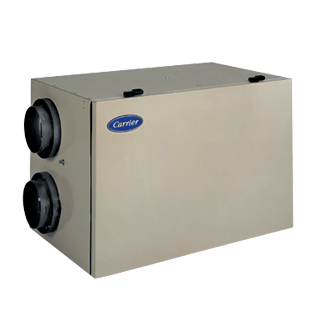
Performance Energy Recovery Ventilators: Balance Air and Moisture
Performance energy recovery ventilators exchange indoor air with outdoor air while transferring heat and some moisture between the separated air streams. They provide controlled ventilation with reduced exchange losses compared with exhausting conditioned air without recovery.
For a Toronto home, an ERV should be selected around the ventilation requirement, seasonal moisture conditions and the exact model's cold-weather suitability. It is not a stand-alone air conditioner or dehumidifier.
Decide whether moisture transfer suits the home
Compare the home's seasonal conditions before choosing an ERV instead of an HRV. The right selection depends on more than the general climate label.
Winter dryness
Moisture recovery can help limit the drying effect of ventilation in some homes. It may be less suitable where excess winter humidity already causes condensation.
Humid summer air
An ERV can transfer part of the moisture load associated with outdoor air. It does not eliminate the need for cooling or dedicated dehumidification when those are required.
Required airflow
Select for the calculated ventilation demand at the installed duct resistance. Maximum advertised airflow is not the same as the commissioned airflow in the home.
Check the exact horizontal model's application
The ERVXXLHB1200 listing belongs to a specific equipment family. Confirm the model's application guidance, operating limits and frost-control provisions before specifying it for a Toronto winter.
Do not assume every energy-recovery core has identical moisture transfer or cold-weather behaviour. Compare an ERV and an HRV using equivalent airflow and recovery data, while considering the home's occupants, moisture sources and existing ventilation.
Installation needs measured balancing
A useful installation provides suitable outdoor intake and exhaust locations, insulated ducts where required, compatible controls and access to the core and filters. Review drainage provisions in the exact manual.
Supply and exhaust airflow should be measured and balanced after installation. For replacement, existing duct diameters and connections do not prove that the new unit will perform correctly without adjustment. Include duct repairs, controls, balancing and maintenance access in the installed price rather than comparing units alone.
Review ventilation and humidity together
Provide the current ventilation arrangement and seasonal humidity observations. These checks establish whether an ERV's moisture-transfer behaviour is appropriate.
Energy recovery ventilator checklist
- Calculate required ventilation airflow.
- Review winter condensation and summer humidity.
- Verify exact-model climate and operating guidance.
- Check intake, exhaust and duct resistance.
- Plan filters, core access and required drainage.
- Include controls and measured airflow balancing.
Choose an energy recovery ventilator through a home-specific ventilation assessment. Confirm the model's suitability and compare it with an HRV before finalizing a Toronto or GTA installation.
FREE In-Home Estimate