



Comfort
Showing all 6 results
-
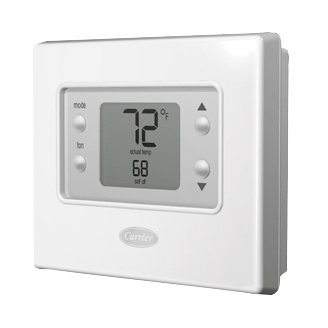
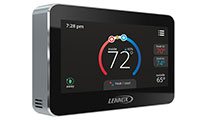
Carrier Comfort Non-Programmable Thermostat – TC-NAC01-A
-
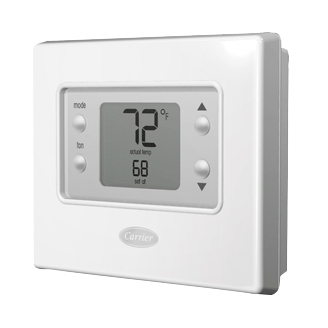
Carrier Comfort Non-Programmable Thermostat – TC-NHP01-A
-
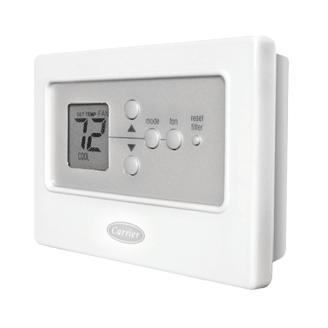
Carrier Comfort Non-Programmable Thermostat – TCSNAC01-A
-
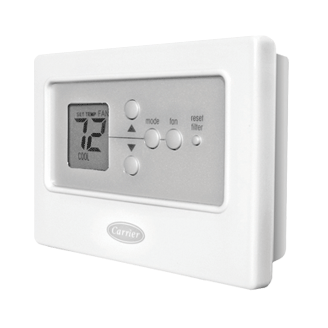
Carrier Comfort Non-Programmable Thermostat – TCSNHP01-A
-
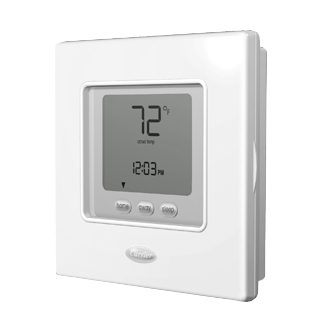
Carrier Comfort Programmable Touch-N-Go Thermostat – TC-PAC01-A
-
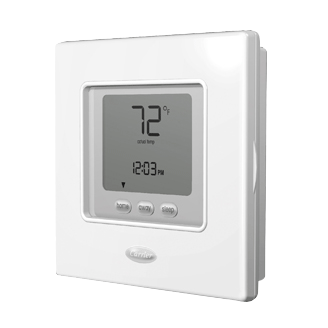
Carrier Comfort Programmable Touch-N-Go Thermostat – TC-PHP01-A
Non Wi-Fi Comfort Thermostats for Simple HVAC Control
Non Wi-Fi Comfort thermostats are conventional HVAC controls designed for homeowners who want straightforward temperature management without internet connectivity, smartphone apps or cloud-based features. The category includes programmable and non-programmable thermostats for compatible furnaces, air conditioners and heat pumps, with options suited to different equipment stages and scheduling needs.
For Toronto and GTA homes, thermostat selection should begin with the HVAC system rather than display features. System type, heating and cooling stages, heat-pump requirements, wiring and whether scheduled temperature changes are useful should all be confirmed before installation or replacement.
How to Choose a Non Wi-Fi Comfort Thermostat
The right thermostat should provide the control the HVAC equipment actually requires without adding unnecessary complexity. These factors have the greatest impact on compatibility, everyday operation and whether a programmable or simpler control is the better choice.
HVAC System Type
Identify whether the home uses a furnace and air conditioner or a heat pump. A thermostat designed for one configuration should not automatically be used for another.
Programmable or Non-Programmable
Programmable control suits households with predictable routines, while non-programmable control is often easier when occupants prefer to adjust temperature manually.
Heating and Cooling Stages
The thermostat must support the stages required by the HVAC equipment. An incorrect match can prevent part of a multi-stage system from being controlled properly.
Heat Pump Requirements
Heat pumps can require reversing-valve and supplemental-heat control that a basic conventional thermostat may not provide.
Scheduling Needs
Local programming can automate temperature setbacks without Wi-Fi. It provides the most value when the schedule reflects actual occupancy.
Power and Wiring
Power requirements vary by thermostat and HVAC configuration. Existing wires should be checked before assuming a replacement will connect directly.
Programmable vs Non-Programmable Comfort Thermostats
Both thermostat types can provide dependable heating and cooling control without Wi-Fi. The main decision is whether automatic scheduling will be useful enough to justify programming the thermostat instead of making temperature changes manually.
Non Wi-Fi Does Not Mean Non-Programmable
A thermostat does not need an internet connection to automate heating and cooling schedules. Programmable non-Wi-Fi controls can store their settings locally and make scheduled temperature changes directly at the thermostat.
The trade-off is that schedules normally need to be reviewed and changed at the wall rather than remotely. For homeowners who rarely need to adjust temperatures while away, this can provide the desired automation without paying for connected features they may not use.
Local Scheduling Without an App
Programmable Comfort thermostats can manage recurring temperature changes without requiring a smartphone, account or home network. This can suit homeowners who want predictable heating and cooling schedules with straightforward local control.
More programming is not automatically better. A simple schedule that matches the household routine can be more practical than frequent temperature changes that occupants repeatedly override.
Temperature Setbacks and Recovery
Scheduled setbacks can reduce unnecessary heating or cooling during selected periods, but their effectiveness depends on the HVAC system, outdoor conditions and length of the setback. The thermostat itself does not create a fixed amount of energy savings.
Heat pumps deserve particular attention because aggressive setbacks can create different recovery behaviour than a furnace. The schedule should be selected around how the installed equipment restores the desired indoor temperature.
Non Wi-Fi Comfort Thermostats for Furnaces and Air Conditioners
For a conventional furnace and central air conditioner, thermostat compatibility depends largely on the equipment's control requirements and number of stages. A straightforward single-stage system may not benefit from a thermostat designed for more complex equipment.
Multi-stage equipment requires a control strategy that accounts for its available stages. Choosing a thermostat only because it is inexpensive or easy to operate can be a poor trade-off if it cannot manage the installed system correctly.
Non Wi-Fi Comfort Thermostats for Heat Pumps
Heat-pump thermostats need to support the system's heating and cooling operation as well as the required reversing-valve configuration. Systems with auxiliary or emergency heat can have additional control requirements.
For Toronto and GTA homes, these details matter because heat pumps can operate through both mild shoulder-season conditions and colder winter weather. A thermostat intended only for a conventional furnace and air conditioner should not be assumed compatible with a heat pump.
Supplemental Heat and Heat Pump Control
Some heat-pump systems use supplemental heating when additional capacity is required. The thermostat and HVAC controls must be configured so the available heating stages operate appropriately.
This is one reason a basic thermostat should not be selected simply by matching visible wires. The complete heat-pump configuration determines whether supplemental-heat control is required.
Single-Stage vs Multi-Stage Thermostat Control
A single-stage HVAC system generally needs simpler thermostat control than equipment with multiple heating or cooling stages. Multi-stage systems can adjust output through different operating levels, so the thermostat needs suitable stage capability or the equipment must provide its own staging logic.
Buying a multi-stage thermostat for single-stage equipment does not create additional HVAC stages. Conversely, using an unsuitable basic thermostat with multi-stage equipment can prevent the system from being controlled in the intended manner.
Automatic Heating and Cooling Changeover
Automatic changeover allows compatible thermostat configurations to move between heating and cooling as indoor conditions change. This can be useful during Toronto and GTA spring and fall weather when cool nights and warmer afternoons occur within the same period.
The heating and cooling setpoints still need appropriate separation. Settings that are too close can cause unnecessary switching instead of maintaining a practical comfort range.
Non Wi-Fi Comfort vs Wi-Fi Thermostats
The key trade-off is local simplicity versus remote connectivity. Homeowners who mainly adjust temperatures at the thermostat can often meet their needs without Wi-Fi, while households that frequently manage HVAC settings away from home may benefit from connected control.
When a Non Wi-Fi Thermostat Is the Better Choice
A non-Wi-Fi thermostat can make sense when remote access, geofencing, connected alerts and app-based control are not priorities. It can provide straightforward local operation without making internet connectivity part of everyday HVAC control.
The limitation is equally clear: homeowners cannot expect the remote features associated with a connected thermostat. A household that travels frequently or wants to adjust temperatures before arriving home should consider whether a Wi-Fi thermostat better matches those habits.
When a Smart Thermostat Adds Features You May Not Need
Moving to a smart thermostat can add remote access and automation, but those features do not automatically improve the mechanical performance of the HVAC equipment. Homeowners who maintain predictable schedules and rarely make remote adjustments may receive limited practical value from the additional connectivity.
The decision should therefore compare actual use rather than feature count. Paying for connected functions makes more sense when those functions change how the household manages heating and cooling.
When a Non Wi-Fi Comfort Thermostat Is Not the Right Control
Simplicity should not come at the expense of system compatibility. Advanced communicating HVAC equipment can require a dedicated communicating control rather than a conventional low-voltage thermostat.
A Basic Thermostat Is Chosen for an Advanced HVAC System
The homeowner wants simple non-Wi-Fi operation and selects a conventional thermostat without checking the equipment architecture. If the HVAC system requires communicating control, installation can require additional changes or result in the loss of advanced system functions.
Thermostat Wiring and Power Requirements
Non-Wi-Fi thermostats can have different power requirements depending on the control and HVAC configuration. Some installations can use battery-assisted operation, while others require suitable system power and wiring.
The absence of Wi-Fi does not automatically mean a common wire is unnecessary. Heat pumps, multi-stage systems and different thermostat designs can change the wiring requirements, so the exact installation should be checked before replacement.
Do Not Choose a Thermostat From Wire Colours Alone
Thermostat wire colours are useful during installation, but they do not provide a complete description of the HVAC system. Equipment type, stages, reversing-valve operation and supplemental heat can all affect how terminals need to be configured.
A replacement should be selected from the HVAC requirements first and the existing wiring second. This reduces the risk of purchasing a thermostat that physically connects but cannot control every required function.
When Existing Wiring Complicates Replacement
Older Toronto and GTA homes can have thermostat wiring installed for a much simpler heating system than the equipment currently in use. Limited conductors or previous wiring changes can make a direct replacement less straightforward than expected.
A Thermostat Is Purchased Before the Existing Wiring Is Checked
The selected control is compatible with the furnace and air conditioner, but the available wall wiring does not support the intended installation. Additional wiring work or a different thermostat configuration is then required, increasing the scope of what appeared to be a simple replacement.
Thermostat Location Affects Temperature Control
The thermostat responds to conditions where it is installed, so location can influence how the entire HVAC system operates. Direct sunlight, drafts, supply registers and nearby heat sources can cause the sensed temperature to differ from conditions elsewhere in the home.
If a thermostat reaches its setpoint while occupied rooms remain uncomfortable, replacing the wall control may not solve the problem. Location, airflow and the building envelope should also be considered.
When Thermostat Replacement Does Not Fix Uneven Temperatures
A thermostat can control when compatible equipment runs, but it cannot correct every room-level comfort problem. Uneven temperatures may originate from ductwork, air balancing, insulation or heat gain rather than the thermostat itself.
Installing a new thermostat for an airflow problem can simply move the discomfort elsewhere. For example, lowering the setpoint to cool an under-supplied upstairs room can make the main floor unnecessarily cold without improving air delivery upstairs.
Non Wi-Fi Comfort Thermostat Installation
Installation requires confirming HVAC compatibility, connecting the correct low-voltage terminals and configuring the thermostat for the equipment it controls. Heat pumps and multi-stage systems require more setup decisions than a straightforward single-stage furnace and air conditioner.
A thermostat that powers on is not necessarily configured correctly. Heating and cooling should be tested after installation to confirm that the expected modes and stages operate properly.
Replacing an Existing Comfort Thermostat
Thermostat replacement should begin with the current HVAC equipment rather than the model being removed. Furnaces, air conditioners or heat pumps may have been changed since the existing thermostat was originally installed.
If the HVAC system remains compatible and the household wants the same straightforward level of control, another non-Wi-Fi thermostat can be a practical replacement. If equipment or control needs have changed, the replacement category should be reconsidered rather than automatically duplicated.
Replacing a Thermostat During an HVAC Upgrade
A furnace, air-conditioner or heat-pump replacement can change thermostat requirements. New equipment may use different stages or control architecture from the system being removed.
Keeping the existing non-Wi-Fi thermostat can avoid unnecessary replacement when it remains fully compatible. If it cannot support the new equipment's required control functions, retaining it can limit the intended HVAC operation.
Thermostat Replacement vs HVAC Diagnosis
A blank thermostat, temperature problem or HVAC system that fails to start does not automatically indicate thermostat failure. Low-voltage wiring, equipment power and mechanical faults can produce similar symptoms.
When the cause is uncertain, diagnosis should come before replacement. Installing a new thermostat will not correct a furnace, air conditioner or heat-pump problem elsewhere in the system.
Non Wi-Fi Comfort Thermostat Cost Factors
Total replacement cost depends on thermostat capability, HVAC configuration, wiring and installation complexity. A straightforward single-stage replacement can involve fewer variables than a heat-pump or multi-stage installation.
The thermostat's purchase price should therefore not be evaluated by itself. A low-cost control is poor value if it cannot operate the required HVAC functions or requires unexpected modifications to complete the installation.
Non Wi-Fi Comfort Thermostats for Toronto and the GTA
Toronto and GTA homes require dependable thermostat operation through winter heating, summer cooling and variable shoulder-season weather. Programmable scheduling and automatic changeover can be useful in this climate without requiring internet connectivity.
The best choice still depends on the individual HVAC system. A straightforward furnace and air conditioner may need relatively simple control, while a heat pump or multi-stage system can require additional thermostat capability.
Non Wi-Fi Comfort Thermostat Selection Checklist
Choose the thermostat around the HVAC equipment first, then decide how much programming and automation the household will actually use. This approach keeps the replacement simple without overlooking functions required for proper system operation.
Choose the Right Non Wi-Fi Comfort Thermostat
- Identify whether the home uses a furnace and air conditioner or a heat pump.
- Confirm the required heating and cooling stages.
- Verify reversing-valve and supplemental-heat requirements for heat pumps.
- Determine whether programmable or non-programmable operation better suits the household.
- Choose a schedule that reflects actual occupancy rather than using unnecessary temperature changes.
- Confirm whether automatic heating and cooling changeover is useful.
- Check thermostat power and wiring requirements before purchasing a replacement.
- Do not assume every non-Wi-Fi thermostat can operate without a common wire.
- Confirm that the HVAC system uses conventional rather than communicating thermostat control.
- Review thermostat location if temperatures are consistently uneven.
- Do not expect thermostat replacement to correct ductwork or airflow problems.
- Compare Wi-Fi alternatives only when remote access would provide practical value.
- Diagnose uncertain HVAC problems before replacing a functioning thermostat.
- Recheck thermostat compatibility whenever major heating or cooling equipment is replaced.
Planning a Non Wi-Fi Comfort Thermostat Installation
A Non Wi-Fi Comfort thermostat is a practical choice when a compatible HVAC system needs straightforward local temperature control without app access or internet-dependent features. The best option should match the equipment type and stages while providing only the scheduling functions the household is likely to use.
For Toronto and GTA installations, confirming HVAC compatibility and wiring before replacement helps keep thermostat control simple without compromising heating or cooling operation.
FREE In-Home Estimate